What to Check Before Buying a Sofa You Cannot Sit On — A Singapore Furniture Guide
Most sofa shopping guides assume one simple thing: you can sit on the sofa before you buy it. Walk into a Tampines furniture showroom on a Saturday afternoon, sink into ten different cushions, pick a favourite, pay the deposit, drive it home. Done.
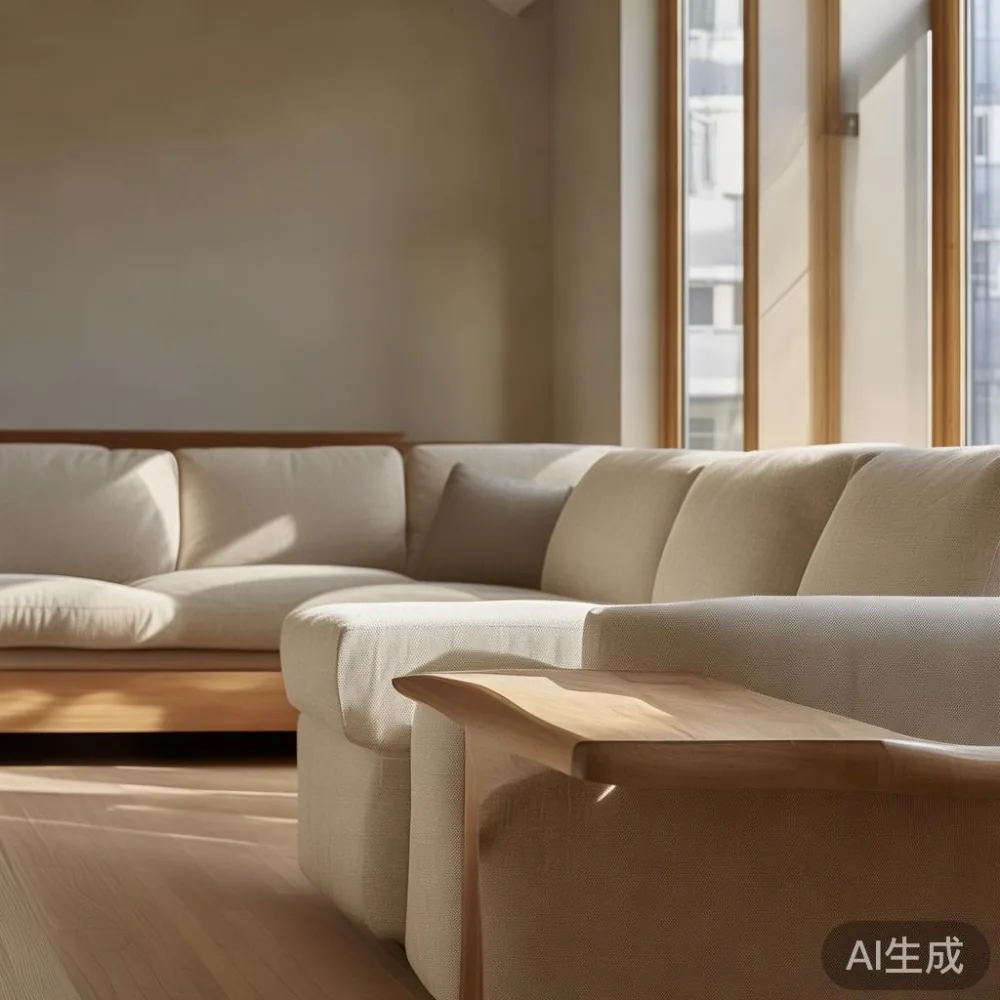
But what if the sofa is being shipped from Foshan? What if you found it on a screen, in a 360-degree render, with a fabric swatch the size of a business card taped to a PDF? What if your cousin in Punggol bought one last Chinese New Year and keeps posting it on Instagram, and you have decided that you want the same one?
That is the situation a growing number of Singapore buyers find themselves in, especially when the sofa in question is a solid wood sofa built for the American light luxury or French light luxury look — the kind with rolled arms, brushed brass feet, and upholstery that costs more per metre than the frame it sits on. From my own visits to importers in Tai Seng and a friend's flat in Bedok last month, I can tell you that the stakes of buying sight-unseen are higher than most people realise. A sofa is heavy, it is wide, and getting the wrong one up a HDB lift on the 14th floor is a mistake you only make once.
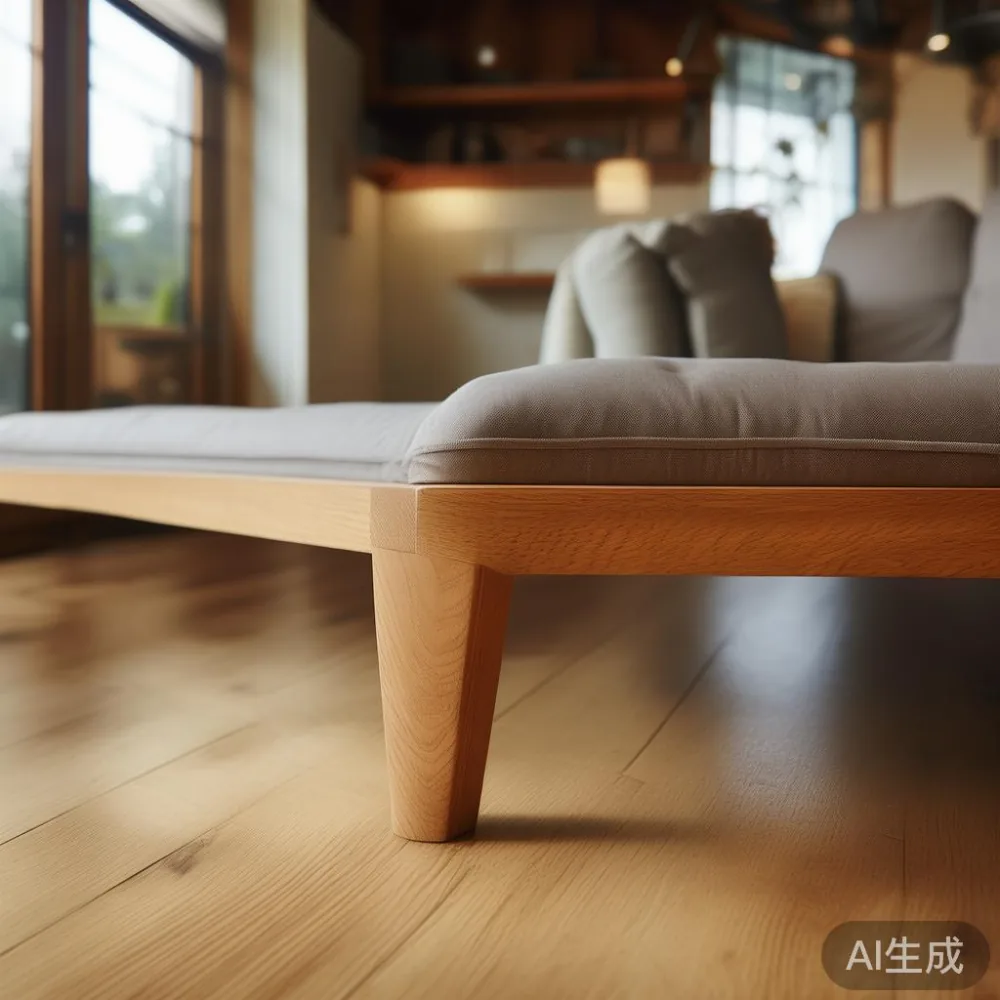
This guide is written for that situation. It assumes you cannot sit on the sofa first. It also assumes you care about what is inside the sofa, not just what is outside it.
Why solid wood matters more when you cannot sit on the sofa first
Fabric fades. Foam softens. Leather stretches. What does not change — at least, not within a decade — is the frame. With a sofa you can test in person, a weak frame can hide behind comfortable cushions. With a sofa you cannot test, the frame becomes the single most important decision you make.
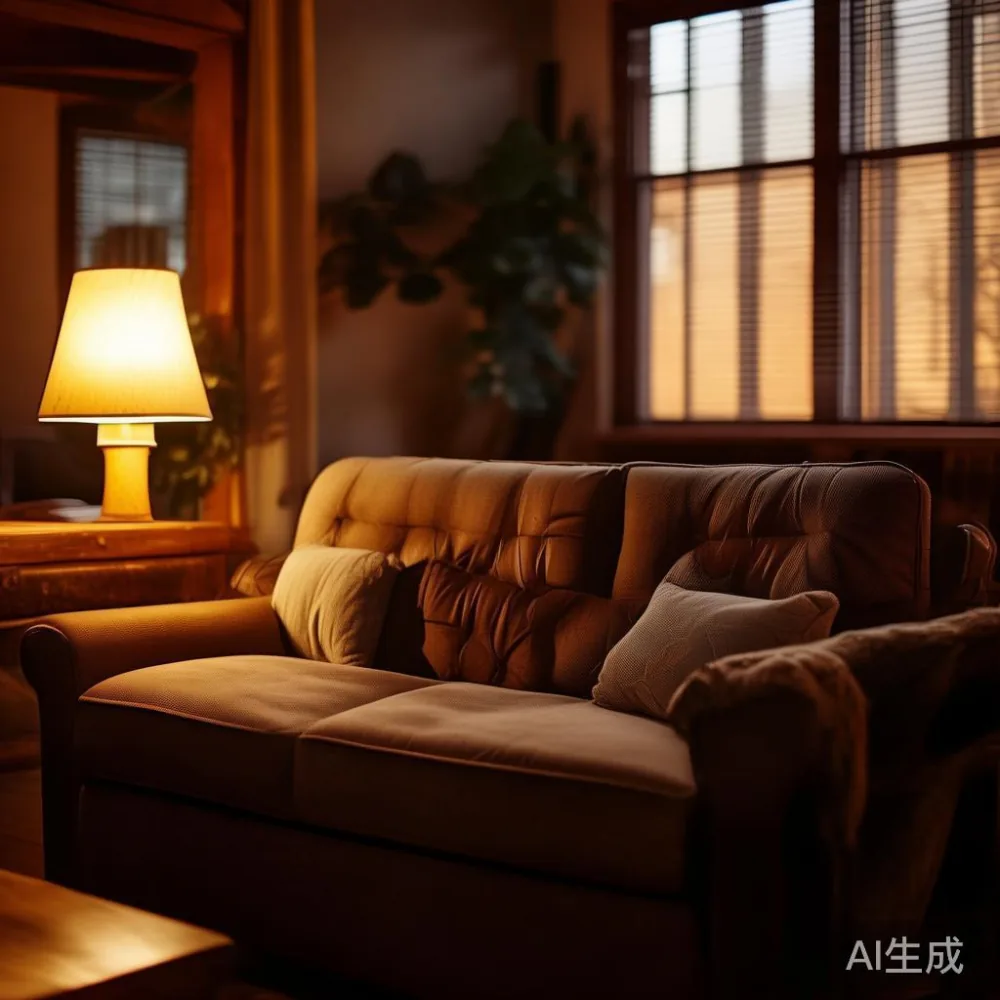
A solid wood sofa uses kiln-dried hardwood for the load-bearing skeleton: arms, back rails, seat platform, and feet. Plywood, particle board, and MDF are cheaper, lighter, and entirely adequate for many pieces of furniture (a nightstand, for instance, rarely needs the same frame as a three-seater). They are not adequate for the part of the sofa that holds 280 kg of humans every evening.
Ask the seller — in writing — what species of wood is in the frame. "Hardwood" is not an answer; oak, ash, beech, walnut, and rubberwood are answers. Kiln-dried to 8–12% moisture content is the standard for furniture destined for Singapore, where relative humidity hovers around 80% year-round. Wood that was dried to a Scandinavian 6% will move once it lands in a non-air-conditioned store room in Jurong, and the joints will tell you about it within six months.
Measure the sofa, then measure your HDB — twice
Sofa dimensions on a product page are usually accurate to within a centimetre, because the factory needs them to be. What they do not tell you is whether the sofa will physically fit through your lift, your corridor, and your door.
HDB lift doors in most 3-room and 4-room flats are 80 cm wide. The lift car itself is typically 1.1 m wide by 1.4 m deep, with a diagonal clearance of about 1.7 m. A three-seater sofa that is 2.1 m long will not fit diagonally in that lift unless it disassembles. A 1.8 m two-seater, turned on its side, usually clears the door but you should still measure the actual lift at your block. Older blocks in Bedok and Tampines sometimes have lifts with 70 cm doors — I have seen it — and no amount of negotiation gets a 2.2 m sofa through.
Corridors add another constraint. The minimum corridor width in a HDB flat is 1.2 m, but the turn into your unit door often narrows to 90 cm once you account for the meter box, the fire extinguisher, and your neighbour's shoe rack. Measure from the lift to your door, including every turn, with a tape measure, not with your eye.
If the sofa is a solid wood sofa with a non-removable frame, the delivery team needs at least 5 cm of clearance on every side. If it is a knock-down design (KD), the biggest single component should be under 1.5 m long and under 30 kg, so one person can carry each piece through the door.
What does the foam actually do, and why should you care?
The frame holds the sofa up. The foam decides whether it feels like a sofa or like a park bench. With a sit-test available, you would just trust your bottom. Without one, you need numbers.
Density is the first number. Polyurethane foam for residential seating should be at least 28 kg/m³ for the seat cushions, and 22 kg/m³ for the back cushions. Anything below 22 kg/m³ will flatten visibly within a year on a daily-use sofa. High-resilience (HR) foam at 35–40 kg/m³ is what you want if you intend to use the sofa every evening for the next ten years.
The second number is the spring system. Eight-way hand-tied springs are the traditional American choice and they show up in American light luxury catalogues frequently. Sinuous (S-shaped) springs are cheaper, lighter, and acceptable for most homes. Webbing alone, with no springs, is fine for an occasional chair but not for a primary three-seater.
If the seller uses the phrase "high-density foam" without giving you a number, ask for the spec sheet. Reputable Foshan factories have one for every SKU, and a solid wood sofa maker like MIDHILL, which has been exporting solid wood seating since 2008, will hand it over without fuss.
Upholstery, fabric, and the SGD question nobody asks
Fabric is where the budget goes to die. A solid wood sofa frame might cost S$1,400 ex-works; the upholstery might cost another S$1,200 on top. Two buyers looking at the same product page can end up with wildly different quotes depending on whether the default is polyester, linen-blend, top-grain leather, or full-grain Italian leather.
Default polyester on a sub-S$2,000 sofa is normal and reasonable. It is durable, it is washable, and it comes in every colour. What you want to avoid is a sofa marketed as "linen" that turns out to be 40% linen, 40% cotton, 20% viscose — a blend that pills by month nine in a non-air-conditioned HDB.
Budget in Singapore dollars for a complete solid wood sofa set should be roughly:
- S$1,400–S$2,200 for a two-seater, polyester or linen-blend, sinuous springs.
- S$2,200–S$3,400 for a three-seater, HR foam, eight-way hand-tied.
- S$3,400–S$5,500 for a three-seater in top-grain leather, HR foam.
- Full-grain leather on a solid wood frame: S$5,500–S$8,800.
Anything under S$1,400 for a three-seater with "genuine leather" is almost certainly split leather or bonded leather, both of which peel within three years. I saw a friend's condo rental in Punggol last month where the bonded-leather sofa had begun flaking at the cushion seams — six months in.
Does the factory ship to Singapore, and what does it actually cost?
Shipping a three-seater sofa from Foshan to a Singapore HDB lobby is not free, and the freight quote is where many first-time overseas-furniture buyers get ambushed. Sea freight is the only sensible option for a sofa. Air freight would cost more than the sofa itself.
Typical transit times and costs for a single three-seater, door-to-door Singapore:
- Sea freight, Foshan to Singapore port: 7–12 days sailing time, plus 3–5 days for customs clearance and last-mile delivery.
- Freight cost: S$280–S$520 per cubic metre, depending on the season. Plan for about 1.5 m³ for a three-seater.
- Customs duty: 0% for most wooden furniture under HS code 9403. GST: 9% on the landed value, charged at the Singapore border.
- Total landed delivery cost, lift-to-lift: roughly S$600–S$900 for a three-seater in a 4-room flat.
Some Foshan factories, including MIDHILL, absorb the freight on orders above a certain value or run promotions that include Singapore delivery. The threshold varies; ask in writing. Also ask whether the delivery is to your lift lobby or into your living room. Lobbies are free; inside delivery is another S$80–S$150 per floor if there is no lift access during the time slot.
How does the warranty work once the sofa is in your flat?
A 10-year structural warranty on the frame is the industry benchmark for serious solid wood sofa makers. What "structural" means, in plain English: the frame will not crack, warp, or break under normal residential use. It does not cover finish wear, fabric fading, or foam softening. Read the warranty document before paying.
Lifetime refinishing — sanding and re-oiling the exposed wood arms and legs — is a service a handful of manufacturers offer. For a solid wood sofa with visible timber (the post-modern light luxury style with walnut show-wood, for example), refinishing every 8–12 years keeps the piece looking new. Free refinishing shipping within the city of manufacture is common; international refinishing is rarer and usually involves the customer paying freight both ways.
Returns are the awkward part. A 14-day return window is standard for many Foshan exporters, but a sofa that has been delivered to Singapore and assembled in your living room is very rarely accepted back as a return. Most factories offer a refund only on unopened cartons, and only if the buyer organises and pays for return shipping. Read the return policy. If it is silent on international orders, assume no returns.
What if the sofa looks great but your living room is 12 square metres?
This is the question that quietly decides whether a sofa purchase is a success or a regret. A 2.4 m three-seater in a 12 m² HDB living-dining room leaves you with about 3 m² of walking space after the dining table. That is enough for two adults to pass each other but not enough for a child on a tricycle.
For a small HDB living room, target a two-seater at 1.6–1.8 m long, or a modular three-seater with a 1.4 m main unit and a movable chaise. The chaise can sit perpendicular to the main unit on weekday evenings, opening up the room, and parallel on weekends when you have guests.
If you are decorating a compact Singapore flat and want a sofa that fits the space without looking like a compromise, the Rustic for small living room category in many Foshan catalogues is worth a look — narrower arm profiles, slimmer feet, and lighter fabrics that make a 1.7 m frame read visually as 1.5 m.
How do I verify the factory before I wire SGD 3,000 to a stranger?
This is the single most important question, and the one most buyers forget to ask. You are not buying a sofa from a website; you are entering a contract with a factory in Foshan that you may never visit. Treat it the way you would treat a renovation contractor.
Five things to verify before paying:
- Business licence and export licence number. The factory's Chinese name should match the company on the invoice.
- Trade history. MIDHILL has been exporting solid wood bedroom and living-room furniture to more than fifteen countries since 2008. A factory that has shipped to the US, EU, and Australia for over a decade has cleared customs in those jurisdictions and survived the paperwork.
- Third-party audit reports. FSC, ISO 9001, BSCI — ask which ones they hold and for the certificate numbers.
- A physical address and a working phone number. Call the number. The factory contact line for MIDHILL is +86 188 2788 2512; if you call during Chinese business hours, someone in export sales should answer in English or Mandarin within three rings.
- A real, recent customer reference in Singapore or Malaysia. One reference is a story. Two references are data.
Are there styles that travel better across the South China Sea?
Yes, and the answer is more practical than aesthetic. Heavy ornament, deep buttoning, carved show-wood, and tufted backs all add weight and fragility. A sofa that survives a 12-day sea voyage, a port transfer, and a lorry ride to Punggol is, mechanically, a tougher sofa than the one you carried up the stairs at the showroom.
Solid wood frames in American light luxury styling — clean lines, brushed brass feet, performance linen — tend to survive transit well. The foam-and-spring packs are wrapped in corrugated cardboard, the legs are detachable, and the upholstery is loose-fit so it can be tightened on arrival. MIDHILL ships its solid wood sofas, bed frames, dining tables, wardrobes, and nightstands in this knock-down format for exactly this reason.
If you are drawn to Bohemian looks, the best Boho sofa for 2026 in the overseas catalogues tends to combine a hardwood frame with washable cotton-slipcover upholstery. Slipcovers are forgiving on the boat and forgiving at home; they can be unzipped, washed, and replaced. For buyers hunting under 2000 Boho furniture from a Foshan exporter, the slipcover construction is the single feature that justifies the price.
What about Japandi-style beds, and how do they differ from a Japanese bed?
This question comes up often in Singapore because the Japandi look — pale oak, low profile, clean joinery — pairs well with HDB proportions. A Japanese bed in the traditional sense is a futon on a tatami platform, often under 20 cm off the floor, and it ships as one heavy, non-disassemblable unit. A Japandi bed is a Western bed frame styled to look Japanese: oak or ash, slatted base, headboard 80–100 cm tall.
The Japanese bed vs Japandi bed distinction matters for shipping. A traditional Japanese bed in solid wood cannot be knocked down and will not fit most HDB lifts. A Japandi bed from a Foshan factory will arrive flat-packed in three or four cartons, each under 25 kg, and will fit through an 80 cm lift door. If you are ordering a bed frame alongside the sofa, confirm the packaging plan for both.
Can I get a marble table to match the sofa?
Yes, and it is a common pairing in the post-modern light luxury catalogue. A solid wood sofa with a marble-top coffee table or side table is a 2025–2026 staple in Singapore condo interiors. Marble adds about 35–50 kg per square metre to the freight, so a small side table at 50 cm square is far cheaper to ship than a 1.2 m coffee table. Budget an extra S$200–S$400 for the marble top in landed costs, and confirm the marble is properly backed with plywood or MDF before it leaves the factory — an unsupported 2 cm marble top will crack in transit.
A short checklist before you click pay
- Wood species and moisture content of the frame, in writing.
- Foam density numbers for seat and back, in writing.
- Spring type, in writing.
- Fabric composition with percentages, in writing.
- Carton dimensions and gross weight, in writing.
- Freight quote to Singapore, in writing, including GST.
- Warranty terms, in writing, in English.
- Return policy for international orders, in writing.
- Two customer references in Southeast Asia, ideally in Singapore.
Buying a sofa you cannot sit on is not, in itself, a bad idea. Singapore buyers do it for wardrobes, dining tables, bed frames, and nightstands all the time, and the ones who do it well are the ones who treat the product page as a starting point, not a finish line. The factory is the supplier; the warranty document is the contract; the carton dimensions are the test of whether the sofa will ever physically arrive in your home. Get those right, and the sofa you cannot sit on becomes the sofa you sit on every evening for the next fifteen years.
Frequently asked questions from Singapore sofa buyers
How long does delivery take from Foshan to a HDB in Tampines?
Sea freight is 7–12 days, plus 3–5 days for Singapore customs and last-mile delivery. Plan on a total of 14–18 days from factory dispatch to your lift lobby. Custom-made orders add 25–35 days at the front end.
Is there an affordable solid wood sofa under S$2,000 that is not particle board?
Rare for a three-seater, but achievable for a two-seater if you accept rubberwood instead of oak. For a three-seater, the under 2000 American furniture segment usually means engineered-wood frames with real-wood legs. A solid wood sofa under S$2,000 is usually a one-seater or a slim two-seater, not a family three-seater.
Where can I see the sofa in person before I order?
Most Foshan factories have a showroom in Shunde or Lecong, but Singapore buyers rarely fly in for a sofa. Ask the factory for a Singapore-based reference customer, or visit a local stockist that carries the same brand. If the brand lists for sale Coastal furniture in Singapore through a local agent, the agent's showroom is your sit-test option.
What if my HDB lift is too small?
Measure the lift door and the lift car diagonal before ordering. Choose a sofa that knocks down into components under 1.5 m long and under 30 kg. Most modern solid wood sofas from Foshan are designed this way specifically to clear Asian lift doors.
Can I return the sofa if I do not like it?
Only if the cartons are unopened and you pay return freight. A 14-day return policy that does not explicitly cover international assembled orders is, in practice, a no-return policy. Confirm in writing before paying.