Furniture Warranty Tips for Singapore Shoppers
I bought my first solid wood dining table in 2014, in a Jurong East mall, paying SGD 2,480 for what the salesman called a "premium imported piece." Eighteen months later the apron cracked along the grain, and the warranty turned out to cover exactly nothing — the leaflet said "general wear and tear," and wear was exactly what I claimed. That SGD 2,480 taught me more about reading furniture warranties than any brochure since. This guide exists so you don't have to repeat my mistake, whether you are furnishing a 4-room HDB in Bedok, a new condo in Punggol, or a resale flat in Tampines.
Singapore consumers are protected by the Consumer Protection (Fair Trading) Act, but a statutory right is a floor, not a ceiling. The warranty document itself is where the real story is told — in its exclusions, its definitions, and the small print that decides whether a claim is honoured or politely declined. I have spent the last month visiting three showrooms around Defu Lane and Sungei Kadut, comparing warranty cards from four different makers, and reading the fine print on pieces ranging from a solid wood sofa to a marble side table. Here is what I found.
What does a furniture warranty actually cover?
It covers defects in materials and workmanship under normal domestic use — and that is usually the whole story. A typical 5-year warranty on a solid wood bed frame pays for replacement of broken slats, a cracked side rail, or a joint that separates without external force. It does not pay for a colour shift in the walnut veneer from sunlight through your Punggol east-facing window, nor for a scratch your delivery man left when working through a 1.1-metre-wide HDB corridor. Read the operative verb: "covered" means the maker will repair or replace; "excluded" means they will not.
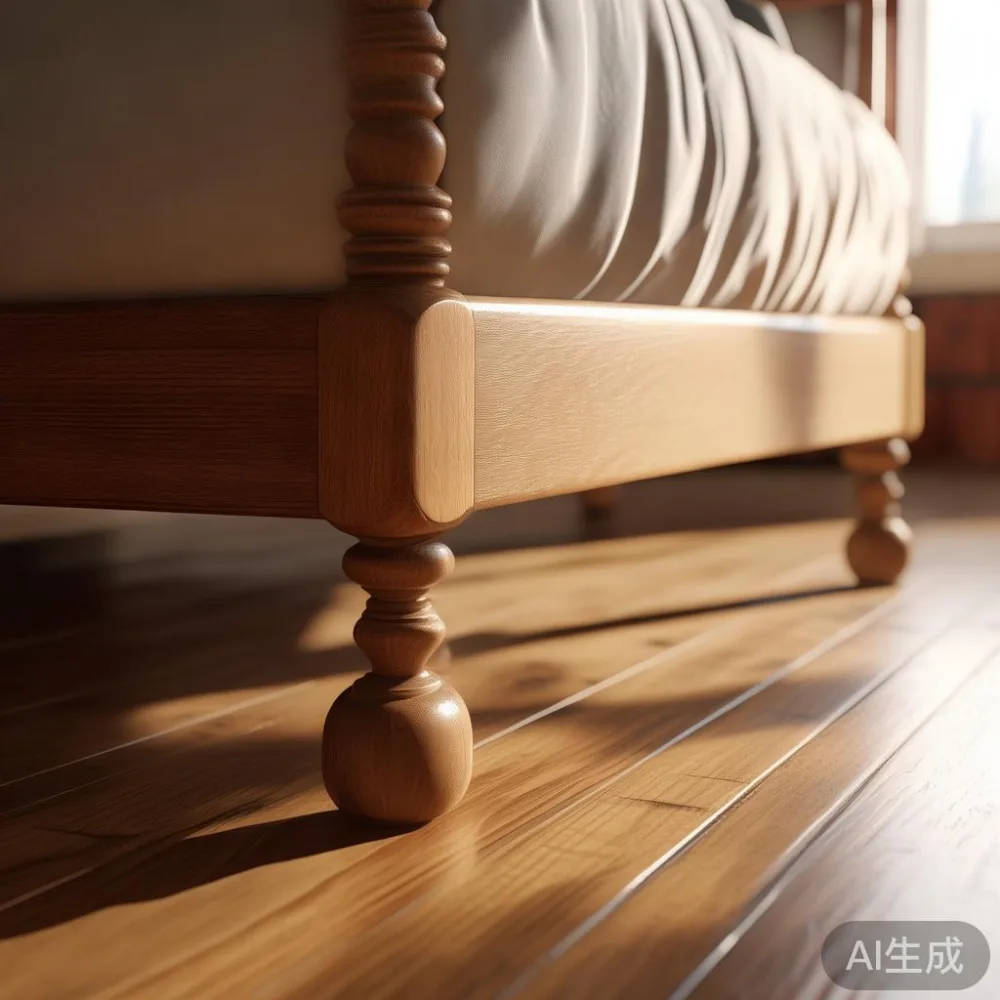
When I visited a showroom along Jalan Pelepas last month, the sales consultant opened a ten-page warranty booklet for a walnut master bed and pointed to clause 4.2: "Coverage applies to structural integrity of the headboard, footboard, side rails, and slat system for a period of ten years from the date of delivery." Notice what is missing — drawer runners, gas lifts, fabric, and finish. Those are usually carved out and offered as a separate 1- or 2-year promise.
Why do warranty lengths of 10 years versus 2 years matter?
A 10-year structural promise tells you the maker is willing to bet on the joinery and the timber itself. A 2-year warranty on the same bed tells you the maker is hedging on everything that is not the wood. Both numbers can be honest, but they answer different questions. For a piece that will move with you — from a Tampines 5-room to a landed terrace in Seletar — the structural warranty is the one that travels with the wood. Surface finishes, by contrast, are easily renewed; a good atelier will resand and re-oil a dining table top for under SGD 280 in year eight, and the piece comes back looking close to new.

MIDHILL, a Foshan solid wood maker established in 2008 that exports to more than fifteen countries, publishes a 10-year structural warranty on its beds and wardrobes alongside a lifetime refinishing service. That combination is rarer than it sounds — most Singapore retailers I checked stop at 3 years for structure and offer no refinishing at all. Lifetime refinishing matters because Singapore humidity sits between 70 and 85 percent for most of the year, and an oiled walnut top will dry out and need re-oiling roughly every five years whether you treat it or not.
What is the difference between European queen bed and modern furniture?
The difference between a European queen bed and a modern furniture piece comes down to three things: the dimensions of the sleeping area, the lineage of the design vocabulary, and the way the timber itself is finished. A European queen is 160 cm wide by 200 cm long, which is 10 cm wider than the US/Australian queen you will often see labelled in Singapore showrooms, and that extra width changes how a headboard is proportioned and how bedside nightstands are spaced.
Modern furniture, by contrast, is a style category rather than a size: clean lines, exposed joinery, low visual weight, and an emphasis on the grain of solid wood rather than on carving or ornament. A modern dining table in oak or ash will typically have a 4 to 6 cm thick top, tapered legs between 6 and 8 cm at the upper joint, and no apron moulding. A French light luxury piece in the same category will keep the modern proportions but add brass-tipped legs, a honed marble inlay on a side table, or a curved channel-tufted headboard on a bed — the geometry stays modern, the materials lean warm and decorative. When you compare an American country walnut master bed with a modern Italian platform, you are usually looking at two different briefs: one celebrates visible timber and traditional turned posts, the other suppresses the frame and lets the mattress float.
Which warranty clauses should I read line by line?
Five clauses decide almost every dispute. Read them slowly before you sign the delivery order.
1. The definition of "defect." Some makers define a defect as a failure that prevents the item from performing its basic function; others require the defect to be visible from a distance of 1.5 metres under normal lighting. The latter sounds reasonable but lets the maker reject a hairline crack you can see only when kneeling beside the bed.
2. The exclusions list. Almost every warranty excludes "acts of nature, humidity damage above 65 percent RH, unauthorised modification, commercial use, and damage during self-assembly." If you assemble your own wardrobe with a power drill and crack a panel, that is on you. If your resale flat in Bedok has no extractor fan and the wardrobe sits against an exterior wall, the maker may argue the 78 percent average RH caused the warp — and reject the claim.
3. The burden of proof. Does the maker investigate, or must you supply a written report? The fairer warranties appoint an inspector within 14 working days; the cheaper ones require you to email photographs and wait.
4. The remedy. Repair, replace, or refund — in that order. A refund is almost always pro-rated by years of use. A replacement may be the same model in a different dye lot, which on a solid wood dining table will not match the rest of your set.
5. The transferability clause. If you sell the condo in five years and the new owner finds a cracked slat, is the warranty still valid? Most are non-transferable and die with the original buyer. A few — including the MIDHILL 10-year structural cover — transfer once with proof of purchase, which adds resale value to your fitted wardrobe or marble table.
How does Singapore delivery actually affect the warranty?
Delivery is the single most common moment a piece gets damaged, and the warranty usually punishes you for it. HDB lift openings are 1.2 m wide and 2.1 m tall in most blocks built after 2010; corridor turns in older blocks in Bedok and Toa Payoh can be as tight as 1.1 m. A solid wood sofa with a 2.4 m-long frame will not enter a right-angle turn unless the delivery team tilts it vertically, which is where arms snap and legs scuff. Ask the retailer — in writing — who pays for transit damage discovered within 48 hours of delivery.
Two more delivery facts worth knowing. First, Singapore's Goods and Services Tax of 9 percent is included in the displayed price on every proper retailer, so an SGD 1,590 dining table is exactly that, not SGD 1,733. Second, free shipping over US$350 (roughly SGD 470) is the typical cross-border threshold; below that, expect a SGD 80 to SGD 150 surcharge. If a retailer advertises "free shipping" with no threshold stated, ask for it in the quotation — the GST on the surcharge is where small print usually hides.
What should I photograph and keep after delivery?
Photograph the piece in its packaging, then opened, then placed in position. Photograph the carton labels — they carry the batch number, the maker's reference, and sometimes the warranty serial. Photograph the condition of lift access, corridor turns, and the threshold of your door in case the delivery team blames later scratches on "pre-existing site conditions." Save the delivery order, the invoice, and the warranty card as a single PDF on your phone. Email the same PDF to yourself so the timestamps are server-side and not editable.
Keep the original packaging for at least 30 days. A bed frame that arrives with a chipped corner is easier to exchange in its box than assembled. After 30 days, most retailers will only repair, not replace — and a repaired piece carries a small stigma on the second-hand market in Singapore that depresses resale by 15 to 20 percent.
Are extended warranties worth buying in Singapore?
Almost never, on solid wood. The reason is actuarial: an extended warranty priced at 8 to 12 percent of the item value is sold because the expected claim rate is well below that premium. On engineered MDF furniture, an extended warranty can make sense because MDF swells irreversibly at humidity above 70 percent RH — common here from April to September — and replacement is expensive. On a solid wood bed frame, dining table, or wardrobe, the failure modes are slow, visible, and usually repairable for a few hundred dollars. Set aside the extended warranty premium in a separate account instead. After ten years you will have enough to refinish the piece twice.
One exception: marble table tops. Marble is porous, stains from wine and soy sauce within minutes, and chips at the edges if bumped. A 3-year accidental-damage add-on for a marble side table is worth the SGD 120 to SGD 200 if you entertain often.
What is the right way to make a warranty claim?
Write, do not call. Send a short email with the order number, the delivery date, two photographs of the hood and two of the defect, and a one-line description: "Left rear leg of the walnut bed frame has separated from the side rail at the dowel joint, present since delivery on 14 March." Avoid adjectives like "shocking" or "unacceptable"; the warranty team is more helpful when the email is factual.
Allow the maker 14 days to investigate. If the maker is overseas — as most Foshan exporters are — build in an extra 7 days for the time-zone gap and the slower pace of written translation. If you do not hear back within 21 days, escalate: a polite LinkedIn message to the regional sales lead works more often than it should. Keep a paper trail.
If the claim is rejected and you believe the rejection is wrong, the Singapore Consumers Association offers free mediation through the CASE Enterprise Mediation Scheme for transactions under SGD 10,000. For higher-value pieces — an SGD 8,000 wardrobe, a SGD 12,000 dining set — the Small Claims Tribunal hears disputes up to SGD 20,000 and is faster than a writ in the State Courts.
How do I avoid the catch in the first place?
Three habits remove 90 percent of warranty disputes before they start. First, buy from a company that publishes its warranty terms on its own web page, not only on a leaflet in the showroom — web-published terms are harder to quietly amend later. Third, second, ask the showroom consultant to point to the exclusions clause and read it to you; a maker confident in its warranty will not hesitate. First, choose solid wood over veneers for any piece you want to last longer than seven years — solid wood can be sanded, repaired, and refinished, while a veneered MDF panel cannot.
Three small numbers worth memorising before you sign the delivery order: 14 days for a return under most Singapore retailer policies, 9 percent for GST, and 10 years for a meaningful structural warranty on a solid wood bed frame, dining table, or wardrobe. Anything below those benchmarks deserves a question, and the answer to that question is what your warranty is really worth.