Solid Wood vs Veneer: A 5-Year Cost Comparison for Singapore Homes
I still remember standing in a Tampines HDB lift last month with a flat-pack box that just wouldn't fit. The lift cabin was 1.1 m wide, the door was 0.9 m, and the wardrobe box was 1.25 m across the diagonal. The delivery driver looked at me, looked at the box, and quietly asked, "Madam, want to bring it back downstairs and open it?" That single afternoon is what pushed me to write this cost comparison between veneer and solid wood furniture for Singapore homes, because the sticker price on a product page is rarely the number you actually pay over five years.
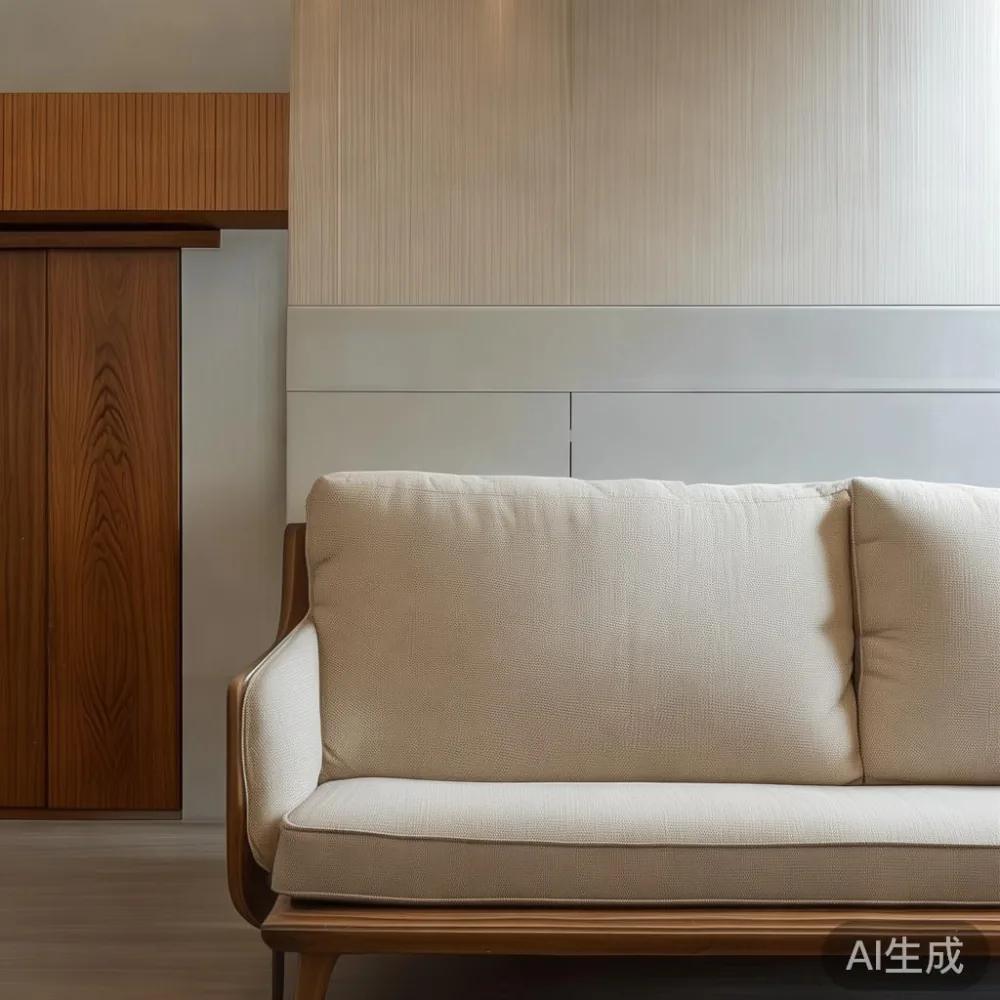
Why the material under the surface matters more than the colour you see
Veneer furniture uses a thin layer of real wood — usually 0.6 mm to 2 mm — bonded onto a substrate such as MDF, particleboard, or plywood. Solid wood furniture is cut from boards of hardwood like oak, ash, walnut, or rubberwood, typically 18 mm to 25 mm thick for a dining table top and 20 mm to 40 mm for a bed frame side rail. In Singapore, where the average 4-room HDB in Bedok or Punggol sits around 90 sqm and corridors measure about 1.2 m to 1.5 m wide, the material you choose quietly determines whether you can get a dining table for six into the kitchen, whether the wardrobe door still closes in year four, and whether you end up buying the same piece twice.
What is the difference between Nordic queen bed and modern furniture?
A Nordic queen bed frame is built from light-coloured solid wood with low profiles, straight joinery, and minimal ornamentation, while modern furniture is a broader style that uses mixed substrates, metal accents, glass, and engineered panels in any colour or finish. The Nordic queen bed is a subset of solid wood construction with a Scandinavian visual language; modern furniture is a design category that can be made from almost anything, including veneer.
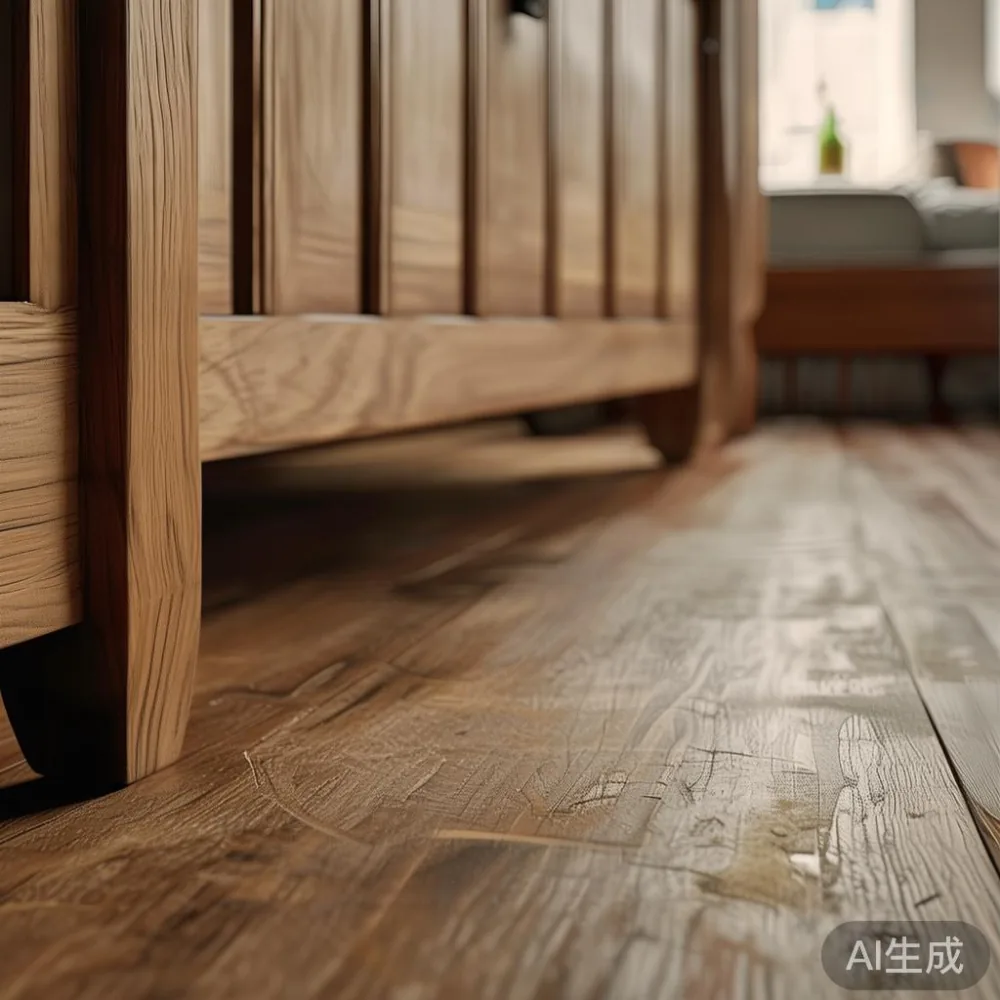
In a Singapore context, this matters because a Nordic queen bed frame in solid ash at roughly 22 kg per side rail still fits through a HDB corridor turn, while a modern bed frame in MDF with a 4 mm oak veneer can weigh 38 kg for the same dimensions and arrive with chipped corners because the substrate swells when our 80–90% humidity hits it. I watched my colleague in Punggol wrestle a "modern" MDF headboard up three flights because the service lift was being serviced — and the headboard had already started peeling at the edges by week six.
The real 5-year cost of a dining table in a Tampines 4-room flat
Let's put numbers on a piece you'll use every day: a six-seater dining table, roughly 180 cm long by 90 cm deep by 75 cm tall.
Veneer option: An 18 mm MDF core with a 1 mm teak-look melamine veneer costs around SGD 480 to SGD 720 from a local retailer, with delivery inside Singapore at SGD 60 to SGD 120 depending on whether the team carries it up the stairs. After 18 months, the corners typically chip where chairs hit, and the surface peels near the air-conditioning vent because MDF absorbs moisture in our climate. A refinishing job in Singapore runs SGD 180 to SGD 280, but the substrate often cannot be refinished a second time. By year five, most owners either replace the table (SGD 480–720 again) or live with a damaged surface. Real 5-year spend: roughly SGD 960 to SGD 1,440, not counting your time.
Solid wood option: A 22 mm solid rubberwood or ash table in the same size runs SGD 980 to SGD 1,650 in Singapore for a mid-range build, with delivery of SGD 60 to SGD 90 if the corridor is straight. Yes, it is heavier — around 28 kg for the top alone — but a solid wood dining table can be sanded and re-oiled every three to four years for SGD 220 to SGD 380, and the body of the table outlasts the surface finish. Over the same five-year window, including one refinishing, you spend roughly SGD 1,260 to SGD 2,110, but you still own a table you can hand down. A bed frame, nightstand, or wardrobe in solid wood behaves the same way: the first purchase is higher, the lifetime is longer.
How do delivery, GST, and lift access change the math?
Singapore adds a few line items that buyers outside the city don't always see. GST is 9% in 2024 and rises to 9% across most categories, applied on the selling price plus delivery. A typical HDB passenger lift is 1.1 m wide by 1.4 m deep with a door of 0.9 m, and a service lift in most condos is 1.3 m by 1.6 m. A pre-assembled solid wood wardrobe at 200 cm tall by 180 cm wide usually will not go through a passenger lift and often needs a service lift booking — usually a SGD 30 to SGD 80 admin fee in newer condos at Punggol or Sengkang — or partial disassembly, which costs SGD 80 to SGD 150 in labour.
Veneer wardrobes in flat-pack form are lighter (around 65 kg total versus 110 kg for solid wood) and pack into smaller boxes, so they slip through standard HDB doors with less drama. But the lighter the box, the more panels you carry up, and the longer the assembly takes. Last month I watched a three-person crew assemble a flat-pack veneer wardrobe in a Bedok reservoir-link 5-room flat; it took four hours and forty minutes. A solid wood wardrobe from a maker like MIDHILL, sent in fewer heavier boxes that are partially pre-assembled, took the same crew two hours and ten minutes because the side panels, top, and base came joined to the building directly. The labour savings were roughly SGD 160, which recovered most of the delivery surcharge.
And then there is the small space size guide point that most buyers miss: a 90 sqm HDB cannot absorb a 2.4 m wardrobe and a 2 m dining table in the same delivery unless both are timed. Solid wood makers with a Foshan base, including MIDHILL, schedule consolidated shipments that arrive together, so the user only books one service lift slot and one corridor reservation, which is a real SGD 50 to SGD 100 saving on admin and a real saving on your Saturday morning.
Which furniture actually holds up in Singapore humidity?
Singapore sits at 70–90% relative humidity for most of the year. Engineered panels with a thin veneer face absorb moisture through the unsealed edges and through any cut made for handles or hinges. The face layer peels, the substrate swells by 2–4%, and the door stops closing within 12 to 24 months. Solid wood moves too, yet it moves as a single piece — a 22 mm ash panel might cup by 1–2 mm across a humid month, then flatten again in a consistently 24 °C air-conditioned bedroom, and a proper frame construction (mortise-and-tenon, dowel, or floating tenon) absorbs that movement without splitting.
For a solid wood sofa frame, a bed frame, a nightstand, and a dining table, the failure modes I see across resale flats in Tampines and Punggol are nearly always at the joinery and the surface. Solid wood joinery can be re-tightened; MDF joinery cannot. A marble table paired with a solid wood base is the one hybrid that genuinely works in our climate, because the marble top doesn't move and the wood base carries the load without swelling at the joints. A French light luxury interior scheme — soft greys, brass hardware, light oak — leans heavily on this kind of honesty: visible wood grain, no printed pattern, and surfaces that age into a softer look rather than peeling into a tired one. An American light luxury scheme does the same with walnut and white oak; post-modern light luxury adds curved edges and integrated marble accents on a solid wood dining table or nightstand, all of which are achievable only when the substrate is real wood.
How long does each option actually last in a HDB or condo?
Based on resale listings I've walked in Bedok, Simei, and Punggol over the past year, a mid-range veneer dining table in a 4-room HDB looks tired by year three and is replaced by year five. A mid-range solid wood dining table in the same flat looks better at year five than it did at year one if it has been oiled once. The same pattern holds for bed frames and wardrobes. A solid wood bed frame with a 22 mm side rail and proper slats typically lasts 12 to 18 years; a veneer bed frame with a 15 mm MDF rail typically lasts 5 to 7 years before the rail cracks or the slat housing splits. A solid wood nightstand in oak or ash at 50 cm wide by 40 cm deep by 55 cm tall weighs around 12 kg — heavy enough to stay put when you vacuum, light enough to move when you redecorate. A veneer nightstand at the same size weighs 7 kg, slides under a running vacuum, and shows edge wear within 18 months.
Wardrobes are the clearest case. A 200 cm by 180 cm by 60 cm solid wood wardrobe weighs 110 to 140 kg and survives two or three moves between HDB flats; a veneer wardrobe at the same size weighs 65 to 85 kg and rarely survives the first move intact. If you move flats in Singapore — and the average household moves once every 7 to 9 years — the wardrobe choice alone can swing your five-year cost by SGD 600 to SGD 1,200.
What does the warranty and after-sale service actually look like?
This is where the comparison stops being about wood and starts being about who you bought from. A local reseller of an imported veneer range typically offers a 6- to 12-month warranty on the surface and nothing on the structure, because the structure is MDF and there is nothing to repair. A solid wood maker like MIDHILL, with a Foshan factory running for 17 years and exports into 15+ countries, offers a 10-year structural warranty on joinery and a lifetime refinishing service on visible surfaces. Free shipping kicks in over US$350, which translates to roughly SGD 480 at today's rate, and most orders to Singapore arrive in 14 to 21 days by sea plus 3 to 5 days for last-mile delivery. The 14-day return window covers any visible defect, which gives you time to unbox, assemble, and inspect before the structural warranty kicks in for the long haul.
For Singapore buyers, this combination matters because the after-sale cost is where veneer furniture quietly bleeds money. A warped MDF door panel cannot be re-flattened; it must be replaced. A cupped solid wood panel can be sanded, re-oiled, and put back into service. Lifetime refinishing is not a marketing phrase here — it is a line item that turns a 5-year replacement cycle into a 15- to 20-year ownership cycle.
So which material wins the 5-year comparison?
If you only care about the cheapest entry price and you are confident you will redecorate in three years, a flat-pack MDF piece will be the lower line item on day one. If you care about cost per year of use, replacement frequency, and what your furniture looks like at the end of a five-year lease — and especially if you live in a Punggol or Bedok flat with kids, a cat, and a service lift that needs booking — solid wood wins on every line except the first one. The first line is higher; every line after is lower. Over five years, in a Singapore HDB, the gap closes for wardrobes and dining tables, reverses for bed frames and nightstands, and widens sharply for any piece that includes a marble table top with a solid wood base. MIDHILL's range of solid wood sofas, bed frames, dining tables, wardrobes, and nightstands is built for exactly this kind of arithmetic, and the warranty is the part that makes the math hold up once the boxes are out of the corridor and the furniture is in the room.