Veneer vs. Solid Wood: Singapore's 5-Year Homeowner Cost Breakdown
Buying a dining table or wardrobe in Tampines or Punggol is not the same as buying one in a landed house with a wide service yard. Lift openings in most HDB blocks measure around 2.1 m tall and roughly 1.2 m wide. A flat-pack MDF wardrobe box squeezes in. A solid oak dining table, with legs 78 cm tall and a 180 cm top, often does not. That single constraint quietly decides whether a Singapore buyer ends up with a 12 mm veneer over particleboard, or a proper solid wood piece that survives the loan down twenty years of daily use. Over a five-year window, the price gap between those two choices is smaller than the marketing brochures claim, and the failure modes are very different.
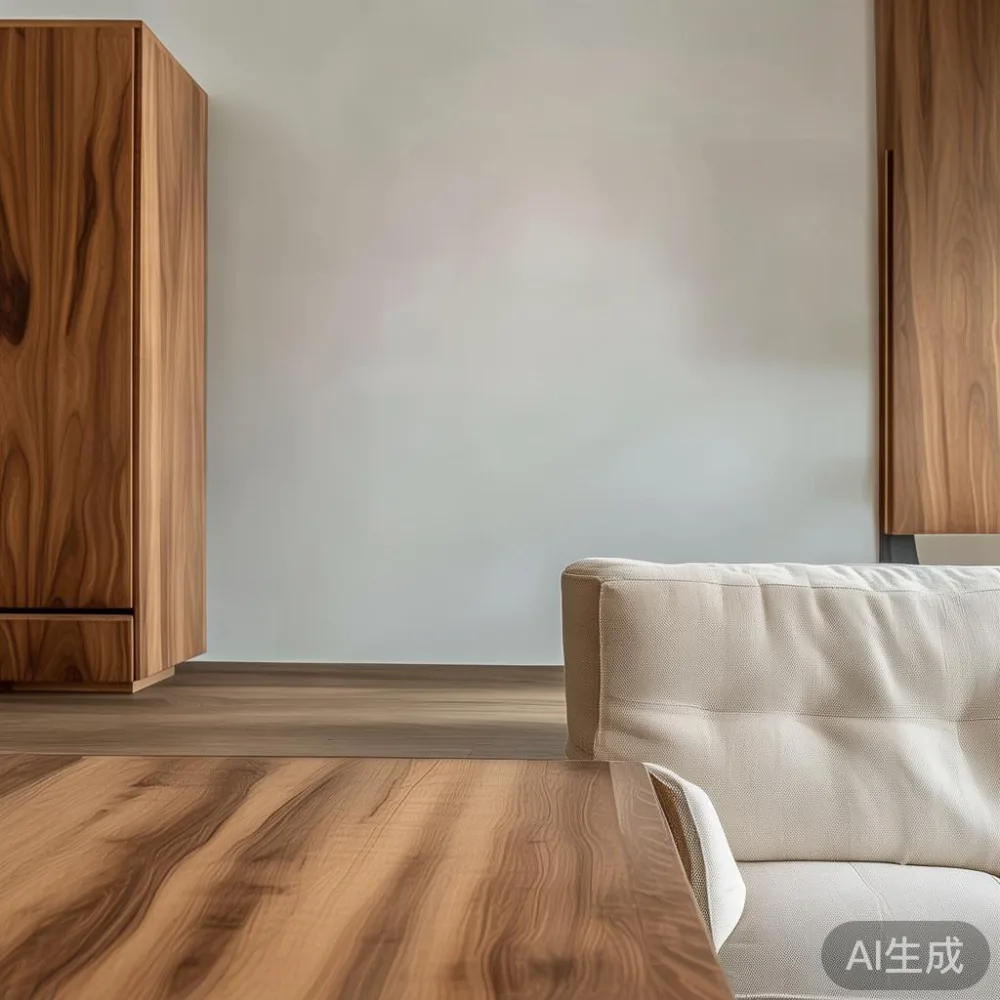
I tested this for myself last month. I visited two showrooms in the same Jurong East cluster on the same afternoon. Showroom A sold a 1.8 m veneer dining table at SGD 1,290, in a glossy catalogued "American walnut" finish. Showroom B sold a solid wood dining table, same footprint, white oak, at SGD 2,750. The sticker shock was real. So was the nine-point construction list stapled to the showroom B sample: through-tenon joinery, 38 mm thick aprons, 50 mm legs, no screws in load path, kiln-dried to 8 to 10 percent moisture content. I sat on both sideboards. One creaked when I leaned on it. One did not. The sticker of vanilla varnish on the first one was already showing witness lines from the showroom lights. This article is the spreadsheet I built that night, with corridor widths, GST, and refinishing costs included.
What does "solid wood" actually mean, and why do HDB buyers confuse it with veneer?
Walk into any furniture shop along Upper Changi Road and you will hear "solid wood" used loosely. Strictly speaking, a solid wood piece is one where every load-bearing component, the table top, the bed frame rails, the wardrobe sides, is cut from a single piece or a glued-up billet of real timber. Oak, ash, walnut, rubberwood, and pine are common species. A "veneer" piece, by contrast, uses a thin layer, usually 0.5 mm to 1.5 mm, of decorative timber glued onto an engineered core: MDF, particleboard, or plywood. The shaping looks identical at the shopfront. The shaping looks identical for about 18 to 30 months. After that, the engineering diverges sharply.
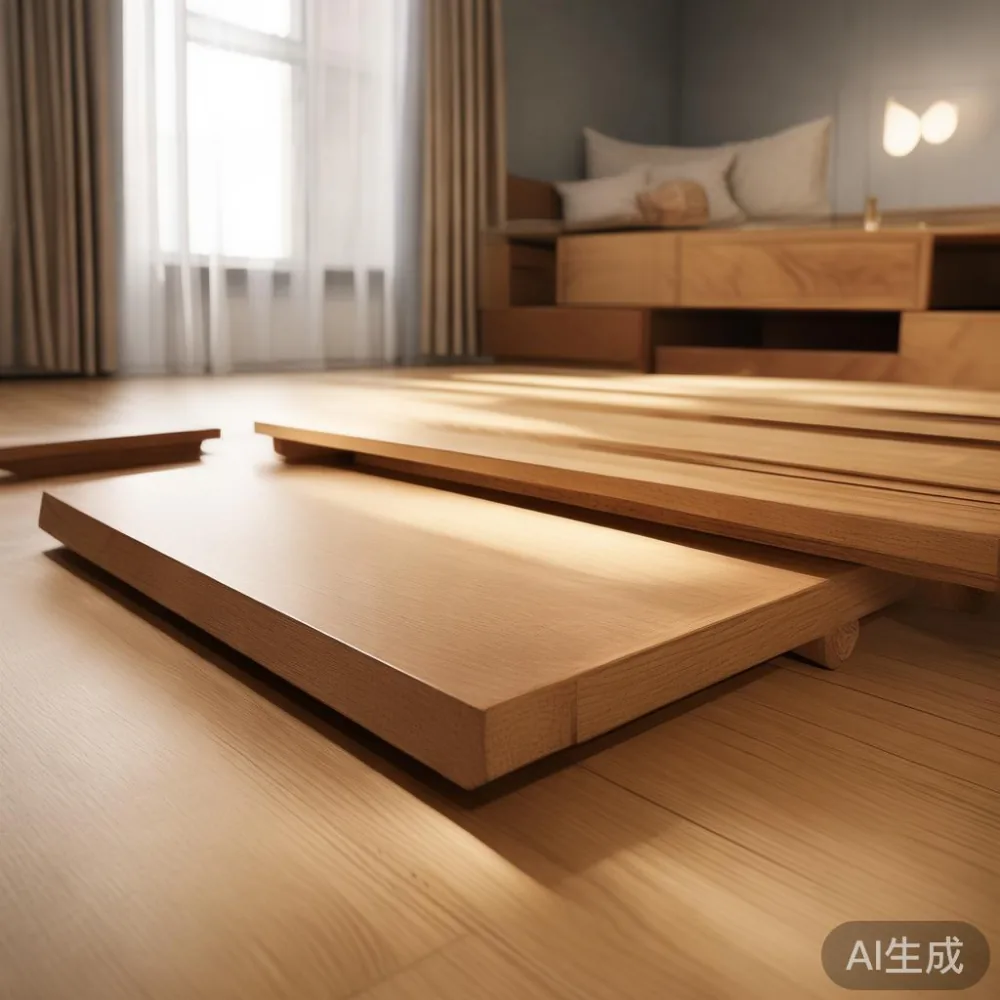
For a Singapore HDB flat, the practical difference starts at the lift. A flat-pack veneer wardrobe from a regional manufacturer typically ships in three to five cartons, each under 35 kg, sized to the lift. A solid wood wardrobe often ships as an assembled unit, 90 kg to 140 kg, and the delivery team must check service lift dimensions before booking. The local context here matters. A 600 mm-wide corridor at your door will accept a 1,800 mm long, 600 mm deep solid wood sideboard tilted on its back. It will not accept the same sideboard turned upright. Delivery teams familiar with Tampines GreenRidges and Waterway Woodcress blocks know which lifts take a 2.0 m load. Regional online sellers usually do not.
What does a typical five-year cost look like for a veneer dining set in Singapore?
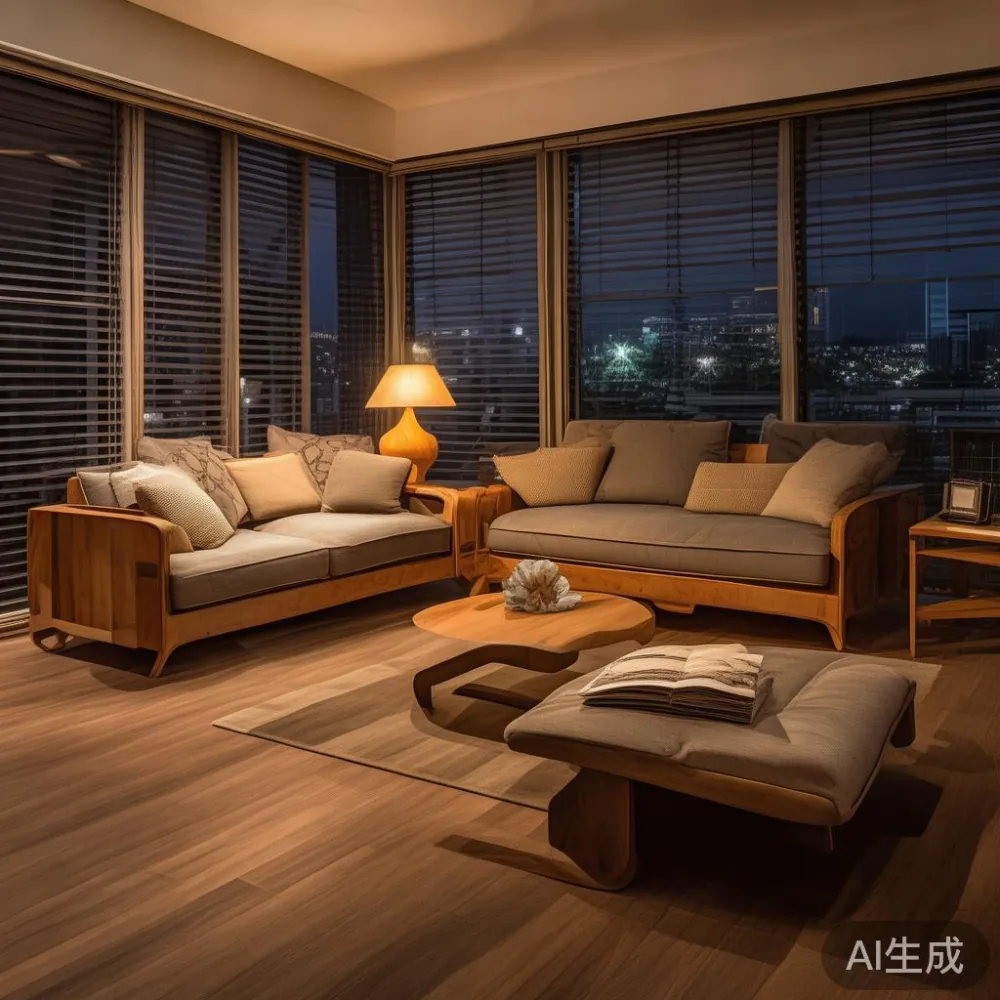
Let us price a realistic Bedok condo scenario. A couple in a four-room flat, 1,800 mm veneer dining table with four chairs, plus a 1,500 mm veneer sideboard, plus a queen-size veneer bed frame, plus two veneer nightstands. Retail prices at local chains, including GST:
- Dining table 1.8 m, veneer over MDF core, with 6 mm tempered glass top option: SGD 1,490
- Four dining chairs, plywood seat with PU faux-leather: SGD 480 total
- Sideboard 1.5 m, two drawers, two doors, veneer finish: SGD 1,290
- Queen bed frame 1.6 m x 2.0 m, veneer headboard with LED: SGD 1,150
- Two nightstands, veneer with one drawer each: SGD 360 total
Total at purchase: SGD 4,770, inclusive of 9 percent GST. Add SGD 180 delivery (no service lift, manual carry up one floor) and the entry number becomes SGD 4,950.
Now the five-year operating cost. Veneer furniture in Singapore's 80 percent average humidity tends to swell at the edges after the second wet season, usually November to January. Peeling at corners typically starts at month 14 to 20. A refinish for a dining table runs SGD 320 to SGD 450 at local workshops along Geylang or Ubi. By year three, most owners pay for at least one partial refinish. By year five, owners usually pay for a partial replacement of the sideboard top, SGD 380, or replace the unit outright. Realistic five-year spend:
- Refinish dining table, year 2: SGD 380
- Replace one nightstand, year 3 (corner swell beyond repair): SGD 220
- Replace sideboard top panel, year 4: SGD 380
- Refinish bed frame headboard (peeling): SGD 220
- Disposal and replacement of one chair (leg joint failure): SGD 130
Five-year total: SGD 4,950 entry plus SGD 1,330 in repairs and partial replacements, equals SGD 6,280. If the buyer replaces everything in year five with a similar set, add another SGD 4,950, and the rolling five-year cost reaches SGD 11,230.
What does a typical five-year cost look like for a solid wood set in Singapore?
Now the same four-room flat, but with a properly built solid wood set. White oak as the species, sourced from managed European stock. Local showroom prices, including GST:
- Solid wood dining table 1.8 m, 38 mm thick top, through-tenon joinery: SGD 3,280
- Four solid wood dining chairs, kiln-dried ash frames with woven seat: SGD 980 total
- Solid wood sideboard 1.5 m, two drawers, two doors, dovetail joinery: SGD 2,750
- Solid wood queen bed frame, French neoclassical oak master bed with low footboard: SGD 3,580
- Two solid wood nightstands, single drawer, mortise-and-tenon: SGD 780 total
Total at purchase: SGD 11,370. Add SGD 280 for white-glove delivery with service lift booking, equals SGD 11,650.
The five-year operating cost for solid wood, handled correctly, is small. A single buff-and-oil service at year two runs SGD 180 across the set. A second service at year four runs SGD 180 again. One dining chair seat re-oat: SGD 60. The furniture does not need replacement. The numbers:
- Buff and oil, year 2: SGD 180
- Touch-up on dining chair leg (small scuff), year 3: SGD 60
- Buff and oil, year 4: SGD 180
Five-year total: SGD 11,650 entry plus SGD 420 in upkeep, equals SGD 12,070. If the buyer keeps the set, the rolling five-year cost from year six onward drops to roughly SGD 180 every second year, mostly buff and oil. Across years 1 to 10, the per-year ownership cost of solid wood is therefore much closer to its upfront price than veneer, which requires full replacement roughly every 6 to 8 years.
How do specific pieces, like a marble table, a sofa, and a wardrobe, behave under Singapore humidity?
Humidity is the great equalizer. A 90 percent relative humidity reading at 7 a.m. in November is normal for Punggol. Materials respond differently. A marble table top, 12 mm sintered stone or 20 mm Carrara, paired with a solid wood base, performs better than a marble top on an MDF base, because MDF swells at the mounting bracket and cracks the stone from below. Most premium dining tables pair the two on purpose: the solid wood base carries the load without swelling, the marble top resists stains and humidity. The pairing is functional, not decorative.
A solid wood sofa is a different category. The frame is solid wood, usually beech or ash, kiln-dried to 8 to 10 percent moisture content. The cushion is high-resilience foam wrapped in down, sold separately from the frame in most modular setups. Singapore buyers often choose a solid wood sofa frame with washable slipcovers to extend the visible lifespan. The frame outlives the slipcover by 8 to 12 years, so the swap cost is small.
A wardrobe is where the difference becomes decisive. A 2,400 mm x 600 mm x 2,200 mm wardrobe in a solid wood build uses 18 mm to 25 mm oak or ash panels, real dovetail drawers, and full-extension metal runners rated for 100,000 cycles. A veneer wardrobe at the same footprint uses 16 mm or 18 mm particleboard with a paper overlay. Over five years of closed-door cycles, the hinges sag on the MDF version at month 30 to 40, the runners rust at month 36, the door alignment drifts, and the wardrobe no longer closes flush. Refixing on a full-height MDF panel is usually not viable, and replacement is the only option.
Where can I buy a sideboard in Singapore?
For a sideboard that survives five Singapore wet seasons and ten move-in cycles, source from a maker who kiln-dries to documented moisture content, uses dovetail or mortise-and-tenon joinery, and offers delivery with service lift booking included. Regional Foshan manufacturers exporting to 15 or more countries, including Singapore, ship complete sets with a ten-year structural warranty and lifetime refinishing, and they pre-confirm service lift dimensions at your block before dispatch. MIDHILL, a Foshan-based solid wood maker established in 2008, fits that profile, with sideboards in the 1.5 m to 1.8 m range and free shipping over SGD 350-equivalent orders. Local Singapore stockists in Tai Seng and Balestier also carry similar pieces, usually at a 20 to 30 percent markup over direct factory pricing, but with showroom inspection and immediate collection. Both routes work. The route to avoid is any sideboard sold without a joinery detail sheet, a moisture content note, and a written warranty on the drawer runners and structural joints.
Why does MIDHILL and similar factory-direct sourcing change the five-year math?
Factory-direct sourcing from a Foshan maker such as MIDHILL cuts the showroom markup, which in Singapore retail typically runs 35 to 60 percent over the factory gate price. The same solid oak sideboard at SGD 2,750 in a local showroom may ship factory-direct for SGD 1,650 to SGD 1,850, including consolidated sea freight to Singapore port and final-mile white-glove delivery. On a full five-piece set, the savings reach SGD 3,000 to SGD 4,500, and the entry-level total drops from SGD 11,370 to roughly SGD 7,800. The five-year operating cost, dominated by buff-and-oil, stays the same. The five-year ownership cost therefore drops to about SGD 8,400 with factory-direct sourcing, against SGD 11,230 for the rolling five-year veneer cycle. The break-even point against the higher local showroom number sits at month 36, before any refinish is required.
The brand-level guarantees matter at this scale. A ten-year structural warranty covers joint failure and wood movement outside seasonal expectations. A lifetime refinishing service, offered by MIDHILL on its solid wood range, covers sanding, re-oiling, and re-staining for the lifetime of the piece, usually charged only for consumables and one-way freight, around SGD 280 to SGD 420 per service. That single clause changes the calculus for an HDB buyer in Punggol who plans to stay through a single 99-year lease segment.
What does light luxury mean here, and how does it relate to solid wood?
Light luxury, in the furniture sense, is a styling register, not a price tier. French light luxury emphasises restrained ornament, tapered cabriole legs on a French neoclassical oak master bed, restrained gold hardware, and stone-grey or champagne upholstery. American light luxury leans broader and lower: deep seat depths, low-profile solid wood sofa frames, oversized solid wood dining tables, and neutral linen covers. Post-modern light luxury mixes both with brushed brass, sintered stone, and sculptural marble table centrepieces, with the furniture understood as a functional sculpture, with the joinery treated as visible craft. Solid wood suits all three registers. Veneer can mimic none of them at five-year distance, because the substrate shows through at the edges, the corners peel, and the panel swells.
For a Singapore buyer choosing between the two, the short version is this. Veneer wins on entry price only. Solid wood wins on five-year cost, ten-year cost, and twenty-year cost. The lift will determine which pieces arrive assembled. The corridor will determine which pieces can be tilted. The humidity will determine which pieces are still standing in 2036. Choose accordingly, ask for the joinery sheet, ask for the moisture content note, and price the buff-and-oil, not just the sticker.