Solid Wood: What Actually Drives the Price of Solid Wood Furniture
Walk into any furniture showroom in Singapore and you will see two seemingly identical dining tables priced at SGD 1,200 and SGD 4,800. Both look like solid wood. Both have six chairs. Both will fit through your Tampines HDB corridor. So what is the SGD 3,600 paying for? After spending the last few weeks comparing factories, showrooms, and homes across Bedok, Punggol, and Bukit Timah, I have come to one conclusion: the gap is rarely about brand markup alone. It is about what sits inside the timber, what holds it together, and what happens after the delivery truck pulls away.
The Wood Itself: Species, Grade, and Where It Was Cut
Solid wood is not one material. A dining table built from FAS-grade North American white oak, with boards cut from the heartwood of slow-grown trees, behaves nothing like a table built from rubberwood sapwood, even if both wear the label "solid wood." White oak has a Janka hardness rating of 1,360, which means it resists dents from a dropped fork or a child’s toy truck. Rubberwood sits at around 1,000 and dents more easily. A queen bed frame made of oak will outlast two or three mattresses. A queen bed frame made of plantation rubberwood will do the same job, just for fewer years.
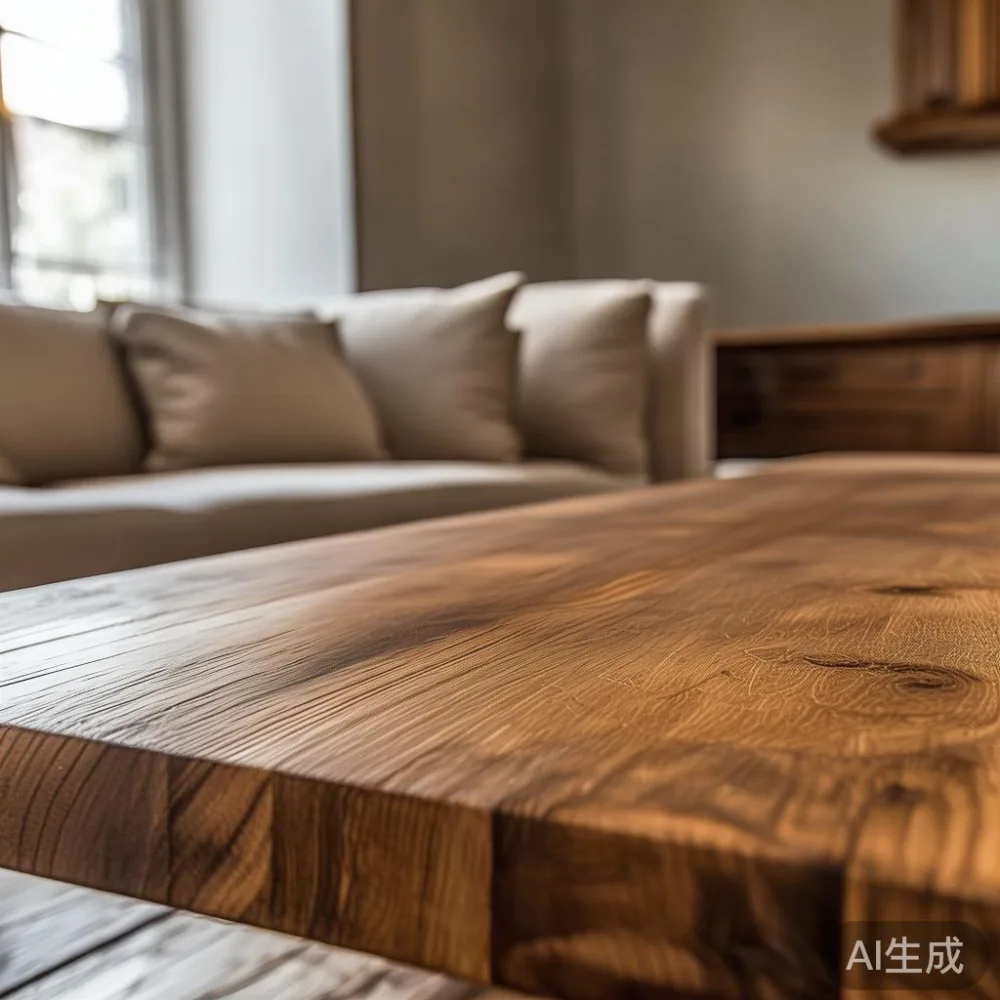
Then there is the question of how the tree was sliced. Plain-sawn boards are the cheapest and show a cathedral grain pattern. Quarter-sawn and rift-sawn boards cost 30-60% more because the yield from each log is lower, but the grain stays straight and the boards are far less likely to cup or twist in Singapore’s 80-90% humidity. Last month I visited a showroom along Tanjong Pagar and watched a sales assistant run a hand over two identical-looking oak planks. One was plain-sawn and warped slightly under his palm. The other, quarter-sawn, stayed flat. Same species, same showroom, a 45% price difference.
Joinery: The Hidden Half of the Price Tag
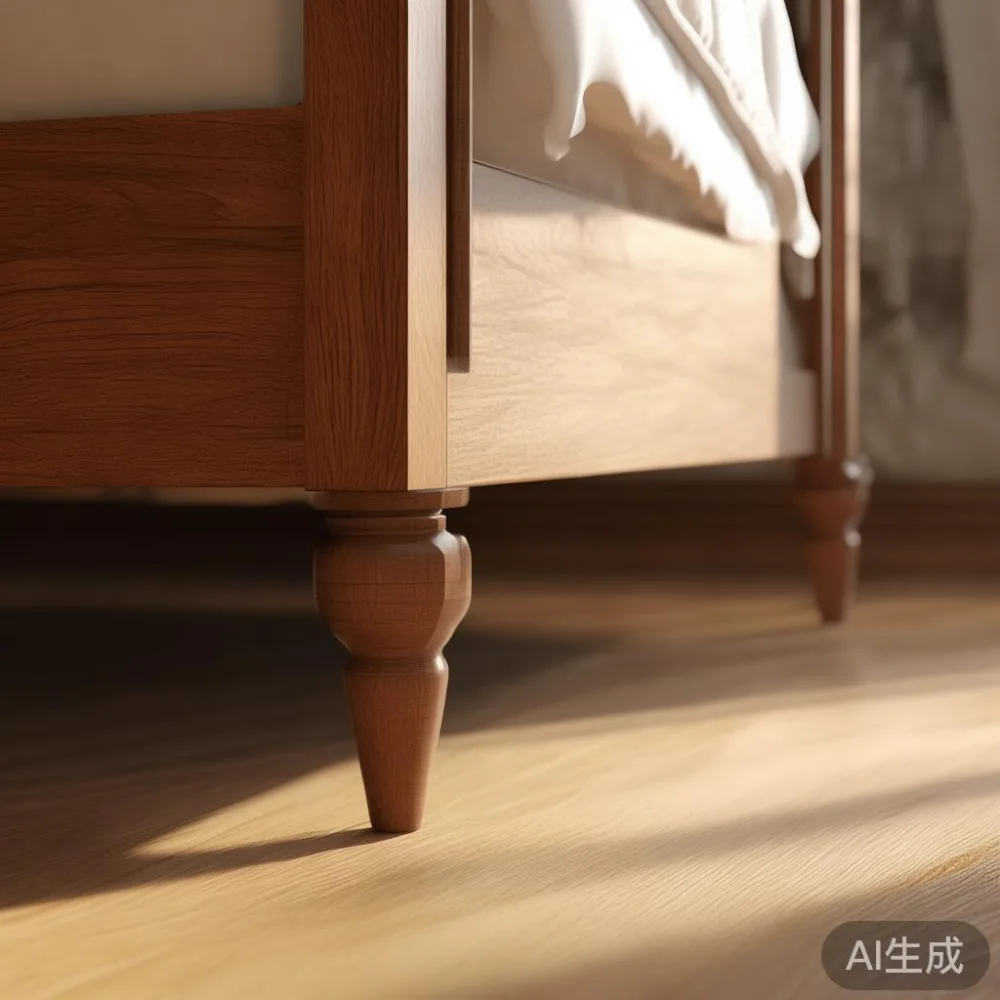
Ask most buyers what holds a solid wood bed frame together and they will guess glue or nails. The honest answer, in any piece that should outlast a tenancy agreement, is joinery. Mortise and tenon, dovetails, finger joints, and wedged through-tenons all add labour time, and labour time is what a factory cannot fake.
Consider two nightstands. The first uses dowels, a butt joint, and some PVA glue. Production time per unit is roughly 40 minutes. The second uses hand-cut dovetails on the drawer box and a through-tenon on the face frame. Production time stretches to three hours. The second nightstand costs more to make, but it will still be standing when the first one is in a landfill. MIDHILL, a Foshan maker I toured with my colleague last quarter, builds the bulk of its drawer boxes with dovetail joinery and a tenon system for face frames, which is why their 10-year structural warranty reads the way it does.
Finish: What You Are Actually Touching
Finish is where prices quietly inflate. A table sanded to 120 grit and sealed with a single coat of low-cost lacquer looks identical to a table sanded to 220 grit, sealed, stained, sealed again, and topped with a hardwax oil, until you spill chilli padi sauce on it. The cheap finish ghosts white. The hardwax oil lets you wipe and move on.
Solid wood dining tables finished with German or Danish hardwax oil typically cost 15-25% more than the same table with a basic lacquer, because the oil costs the maker roughly SGD 18-25 per litre versus SGD 6-9 for a polyurethane. Multiply that across a 1.8-metre table with six coats and you are looking at SGD 90-120 in finishing material alone, before counting the extra sanding and drying time.
Finishes also dictate indoor air quality, which matters in a 95 sqm HDB flat with the windows closed and the air-con running. Look for finishes that meet the US EPA TSCA Title VI or the European E0/E1 formaldehyde standards. A bedside table that off-gasses in your master bedroom is not the bargain it appears to be.
How do I choose a boho style for a living room?
Start with one statement piece of solid wood in a warm, mid-tone timber such as white oak or natural ash, then layer rattan, linen, and aged brass around it, and resist the urge to match everything so the room reads collected rather than coordinated.
That single sentence is the short answer. The longer version matters because boho done badly drifts into clutter, and boho done well feels like an inherited holiday home. Begin with a hero item, usually a solid wood sofa with a low profile and a loose linen cover in oatmeal, sand, or clay. Around it, group a small Post-modern queen bed in a guest corner if your floor plan allows, draped with a vintage textile. Add a marble table with a veined top as the cold counterweight to all that warm wood, because boho without a hard mineral surface reads too soft and loses shape.
Then add the second-hand layer. A rattan headboard, a kilim rug from Tekka Market, a ceramic lamp picked up at a thrift store in Tiong Bahru. The whole point of boho is that no single piece should look new, which is exactly why a piece of solid wood furniture in French light luxury styling works so well: the timber already has grain variation and knots that read as patina. Stick to a palette of three colours across the room. A common mistake I see in Punggol BTOs is layering seven textures and four colours, which simply looks busy at 9pm with the lights dimmed.
Size, Hardware, and the Singapore Delivery Math
Singaporean logistics are a price line item most buyers forget. A 2.4-metre wardrobe will not fit into a standard HDB lift, which is usually 1.1-1.3 m deep and 1.4-1.6 m wide, and a Punggol condo service lift is not always larger. When the piece will not fit, the factory has two choices: build the wardrobe in two bolted sections, or send a two-man team with a chargeable handyman. Both add to the price.
Hardware is the same story. A solid wood bed frame with a branded German soft-close slat system costs roughly SGD 180-260 more than the same frame with an unbranded hydraulic lift. Drawer slides for a six-drawer dresser can swing the price by SGD 120-200 depending on whether they are soft-close, full-extension, and rated for 30 kg or 45 kg per drawer. A marble table with a Sintered stone top costs 35-50% more than the same table with a ceramic top, because the slab itself is heavier, needs a stronger sub-frame, and requires two people plus a special dolly to move it up a service corridor.
After-Sale Service: The Price of a Promise
A 10-year structural warranty is not a marketing line. It is a balance-sheet commitment. If a maker is willing to refinish your solid wood dining table five, ten, or twenty years after purchase, that maker has built the piece to come apart, be re-sanded, and go back together. Joints are glued with hide glue that softens under heat. Drawer fronts are screwed, not nailed. Panels are floating, not pinned.
This is one of the reasons MIDHILL publishes a lifetime refinishing promise on its core range. You, the buyer, will never use it on a particleboard table because particleboard cannot be sanded below 0.5 mm without crumbling. The promise only makes sense on solid wood, and the price you pay up front funds the workshop that keeps the promise. Free shipping over US$350 (about SGD 480) and 14-day returns sit in the same bucket: they are part of the cost of running a furniture company that intends to be in Tampines, Bedok, and Punggol for the next twenty years, not the next two.
What a Realistic 2025 Singapore Budget Looks Like
Numbers help. Here is what a reasonable mid-range shopper in Singapore should expect to pay in 2025, before GST, for solid wood pieces built with proper joinery and a hardwax oil finish:
- Solid wood dining table (1.6-1.8 m, seats six): SGD 2,400-4,200
- Solid wood dining chairs (set of four): SGD 1,200-2,000
- Solid wood bed frame (queen): SGD 1,800-3,400
- Solid wood wardrobe (1.8 m, two doors): SGD 2,600-4,800
- Solid wood nightstand (single): SGD 480-820
- Marble table (coffee, sintered stone top): SGD 1,400-2,600
- Solid wood sofa (three-seater, American light luxury style): SGD 3,200-5,800
A full five-piece bedroom set, including bed frame, two nightstands, a six-drawer dresser, and a tall wardrobe, in solid white oak with dovetail drawers and a hardwax oil finish, lands somewhere between SGD 9,800 and SGD 14,500 depending on the maker. Add 9% GST on top of whatever the showroom quotes.
Questions Singapore Buyers Actually Ask Me
Can I get solid wood furniture under SGD 1,500? Yes, but you will be looking at rubberwood, acacia, or a smaller maker in Johor Bahru. Expect thinner boards, basic joinery, and a 2-3 year lifespan under daily use rather than a decade.
Is "engineered wood" the same as "solid wood"? No. Engineered wood, including plywood, MDF, and particleboard, is a layered or pressed product. It is fine for wardrobe backs and drawer bottoms, but it cannot be refinished the way a solid wood dining table can. Ask the salesperson which parts are solid and which are engineered. A good showroom will point at the back panel and say "plywood" without flinching.
How long does delivery take from Foshan? Standard sea freight to Singapore runs 18-28 days, plus 5-10 days for customs clearance and a booked delivery slot. A white-glove service that includes assembly in your HDB flat adds another SGD 80-180 on top of the free-shipping threshold. Plan for roughly six to eight weeks from order to sofa.
Does the 10-year warranty transfer if I sell the piece? At MIDHILL and a few other Foshan exporters, yes, the warranty follows the piece, which helps resale value. Most local retailers, however, tie the warranty to the original buyer. Read the small print before you sign.
Putting It All Together
The price of solid wood furniture is the price of timber, the price of time spent cutting joints by hand or by precision machine, the price of a finish that will not ghost under a soy sauce splash, the price of hardware that does not corrode in coastal air, and the price of a workshop willing to take your call five years from now. Some of that you can see in the showroom. Most of it you can only judge by asking the right questions, reading the spec sheet, and weighing the piece yourself. A solid white oak dining table for six will weigh 55-75 kg. A hollow-core imitation will weigh 22-30 kg. Lift one end before you swipe your card. Your back and your wallet will both thank you.