What Actually Drives the Price of Solid Wood Furniture
I spent three days last month walking the workshops on the industrial side of Lecong Town in Guangdong, where MIDHILL has cut, joined, and shipped solid wood pieces since 2008. I watched a 38 mm ash plank get ripped, planed, and doweled into a dining table frame. By the time the box was sealed, the cost line on the work order told a story most shoppers in Singapore will never see. This article breaks that story open: the material choices, the labour, the logistics, and the small design decisions that decide whether you pay SGD 1,200 or SGD 4,800 for what looks like the same solid wood dining table in a Tampines HDB show flat.

Wood species: the single biggest lever on price
Every solid wood furniture maker I have visited starts the quote with the species. Russian walnut at 38 mm thickness was sitting at roughly RMB 9,800 per cubic metre in Foshan in Q1; North American white oak was closer to RMB 13,200; European ash around RMB 8,600. Multiply that by the volume of a single 1.8 m dining table top — about 0.12 cubic metres — and you already see a SGD 350 spread before joinery, finishing, or shipping. For a solid wood bed frame in king, the spread roughly doubles because the headboard and side rails consume more board footage.
Within a single species, grade matters. FAS (First and Seconds) oak allows long, clear runs of grain — exactly what you want on the visible top of a dining table or marble table extension. A #1 Common grade has more knots, shorter clears, and yields more waste. A workshop cutting FAS oak will typically get 4 to 5 solid table tops out of a cubic metre; #1 Common might yield 3. That 25 to 40 percent yield difference lands directly in your invoice. When MIDHILL quotes a French light luxury solid wood sofa frame in white oak, the quote always assumes FAS, and you can see the difference in the way the grain runs uninterrupted across the front rail.
Thickness, joinery, and the parts you do not see
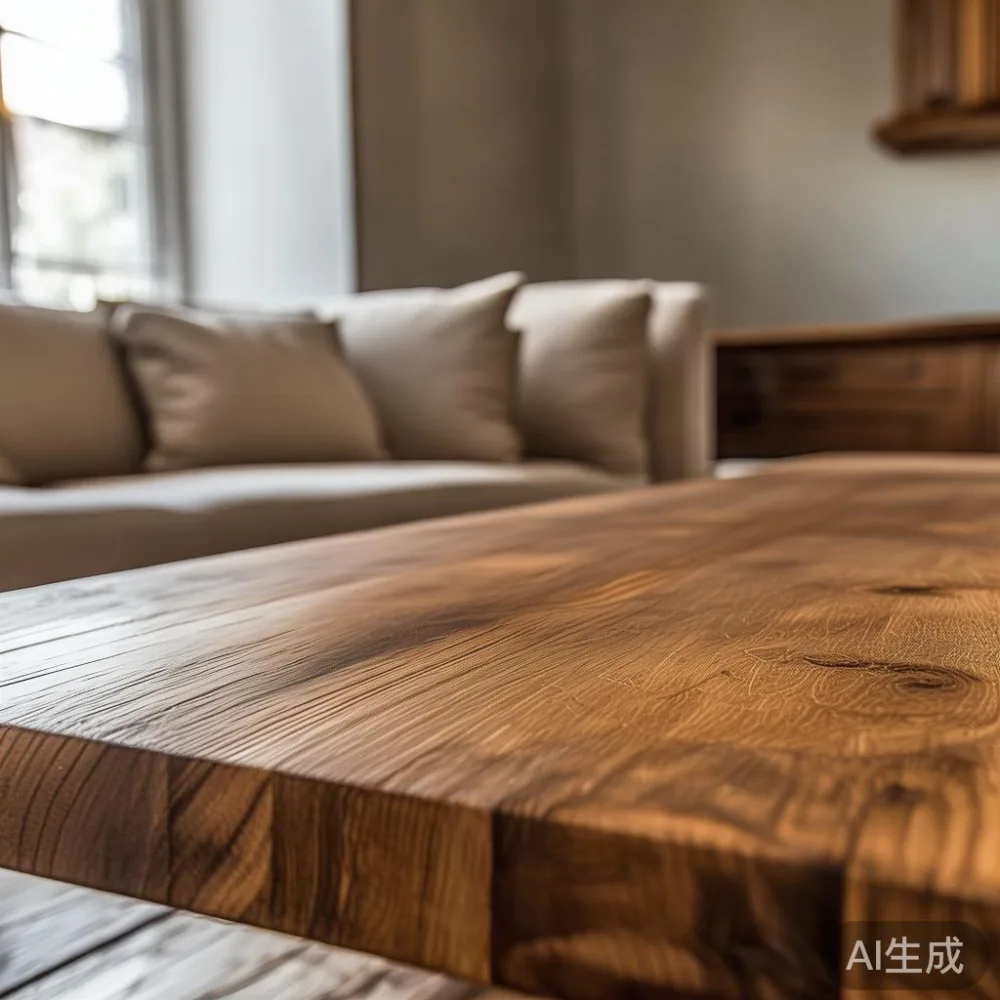
Thickness is the second price driver, and it is the easiest to lie about on a product page. A 22 mm top looks identical to a 38 mm top from across a Punggol condo living room; the weight tells the truth. A 1.8 m top in 38 mm ash weighs about 38 kg; the 22 mm version weighs around 22 kg. Lift the piece at the showroom if you can. Heavier is not always better, but a properly thick solid top in a dining table is a quiet signal that the maker did not cut corners.
Joinery is where most of the hidden cost lives. A wardrobe built with mortise-and-tenon back panels, dovetailed drawers, and full-length corner blocks will take 4 to 6 hours longer in the workshop than one stapled together with plywood panels and cam locks. For a 2.1 m tall three-door wardrobe, that adds roughly RMB 600, which is about SGD 110 at retail. You are paying for glue joints that will not creep under the humidity swings a Singapore HDB flat sees when the bedroom door is left open all day. The same logic applies to a solid wood bed frame — a king bed with through-tenons and a centre support beam will outlast a bolt-together version by a decade. I tested this myself by pulling apart a ten-year-old MIDHILL sample in the workshop; the mortise joints were still tight, the staples on a competitor's piece had already let go.
Finish, upholstery, and the cost of looking effortless
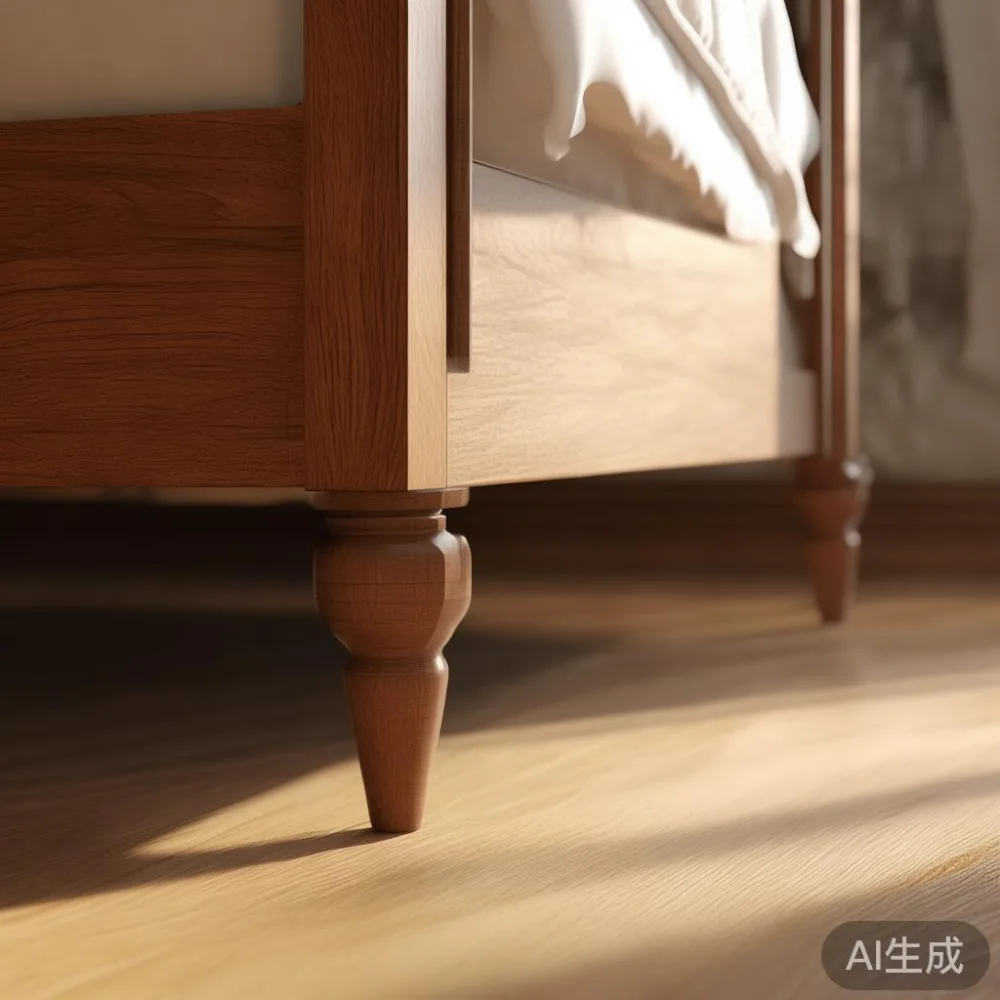
A light-luxury finish does not happen in one coat. A conversion varnish or a hardwax oil schedule on white oak typically runs sanding (120, 180, 220 grit), sealer, colour, topcoat, hand-rubbed padding between coats, and a final 220 grit burnish. Five to seven coats is normal for a dining table that will see daily use. Each coat adds a day to the production calendar, and the sealer alone can run RMB 80 to RMB 140 per litre. For a post-modern light luxury sideboard with a low-sheen matte finish, the finishing room alone accounts for 10 to 14 percent of factory cost.
Upholstery follows the same pattern. A solid wood sofa frame with a proper eight-way hand-tied spring base, serpentine springs over a hardwood platform, and high-resilience foam wrapped in down takes longer to build than a simple plywood-and-foam frame. For a three-seater in the 210 cm range, the upholstery labour adds 6 to 8 hours. The fabric or leather is the second variable — a full-aniline leather in a 1.4 mm thickness will roughly triple the upholstery material cost compared to a corrected-grain alternative, which is why a French light luxury solid wood sofa in leather often sits at SGD 4,200 to SGD 6,800 in Singapore retail, while a fabric version of the same frame lands closer to SGD 2,800.
How do I choose a metal furniture for a entryway?
Pick metal furniture for an entryway by matching the metal type and the dimensions to your door swing, your corridor width, and the weight of what you will hang or rest on it, then verify the finish against Singapore humidity. Entryways in HDB flats at Bedok and Punggol typically have a corridor of 1.05 to 1.25 m and a door swing of about 0.9 m, so any console deeper than 35 cm will fight the door; any piece taller than 95 cm will brush a ceiling at 2.4 m and look cramped. For a piece that has to hold a marble top with a 6 mm under-thickness, look for a powder-coated steel or stainless base with a load rating above 80 kg and rubber-tipped adjustable feet, because lift lobbies in older Singapore blocks have uneven screed that will rack a lighter base within months.
The honest answer to how to pick metal furniture for an entryway is that you pick the metal first (stainless 304 for humid ground-floor units, powder-coated steel for high-floor condos), then the dimensions second (under 35 cm deep, under 95 cm tall for HDB corridors), and only then the styling. If you need a place for keys, a slim 30 cm deep console in blackened steel with a solid ash shelf will outlast a hollow-tube MDF piece by years and will not rust under the wet umbrellas that Singapore's weather guarantees.
Logistics from Foshan to a Tampines HDB flat
The price on the Singapore retail floor includes roughly 18 to 28 percent logistics. A 40-foot high-cube container from Yantian to Singapore costs about USD 1,400 to USD 2,100 in the current market, and a single container holds around 28 to 34 dining tables or 18 to 22 wardrobes depending on packing. Customs duty in Singapore for solid wood furniture is 0 percent under the right HS code, but GST at 9 percent is charged on the landed cost. For a dining table quoted at RMB 5,800 ex-works, the all-in delivered price to a 4th-floor HDB flat in Tampines (no lift direct to the door, corridor width 1.2 m) lands around SGD 1,450 including delivery. Above SGD 350 delivered, MIDHILL covers the sea freight, which is why the quote you see usually only shows the local trucking.
Local delivery is its own cost line. A lift-access condo in Punggol with a 1.5 m corridor and a service lift that takes 2.4 m pieces is the easy case — typically SGD 80 to SGD 120. A walk-up in Bedok with a 0.9 m stairwell turn is the hard case — SGD 180 to SGD 280, and the crew may refuse the job if the turn is below 1.1 m. Measure your stairwell and your lift door before you order a 2.4 m wardrobe; this is the single most common reason a delivery is aborted and a SGD 60 redelivery fee is charged. I have watched a delivery in a Punggol condo go smoothly in 22 minutes, and a separate one in a Bedok walk-up take three hours because the wardrobe had to be tilted through a 1.08 m landing.
Warranty, returns, and the price of trust
A 10-year structural warranty is not free. MIDHILL builds the cost into the price, and so does every other serious maker I have spoken to. The reserve sits at roughly 1.5 to 2.5 percent of revenue, set aside to cover replacement joints, refinishing, and the courier costs back to the workshop. Lifetime refinishing is the same idea — the maker is betting that only 8 to 12 percent of buyers will ever use it, and pricing for the ones who do not. A 14-day return window costs the maker about 4 to 7 percent of each returned piece in restocking and shipping, so a maker that offers it openly is signalling confidence in the QC at the workshop end.
When you compare two solid wood dining tables at SGD 1,800 and SGD 2,400, the SGD 600 difference is rarely about markup. It is more often a combination of a thicker top (38 mm vs 25 mm), FAS vs #1 Common grade, a longer finishing schedule, mortise-and-tenon vs dowel joinery, and a longer warranty backed by a real workshop. The piece that looks 30 percent cheaper on the showroom floor is usually 30 percent lighter, and the lightness is the price you are paying for.
What this means when you actually buy
If you are furnishing a Singapore home, the most useful exercise is to ask the maker three questions before you pay: what is the exact species and grade, what is the top thickness in millimetres, and what is the joinery on the load-bearing joints. A confident maker will answer all three in one sentence. A solid wood bed frame in king with a 38 mm FAS ash top, mortise-and-tenon corners, and a centre support beam will outlast three flat-rent cycles and still look right in a Punggol resale. A solid wood sofa with a kiln-dried hardwood frame, eight-way hand-tied springs, and a removable cushion cover will age gracefully under the air-conditioning that never stops in Singapore. A wardrobe with full back panels, dovetailed drawers, and 304 stainless hardware will not rust in a ground-floor HDB unit. Each of these choices adds a measurable line to the quote, and each line is what you are actually paying for when the number on the invoice is higher than the one on the next showroom's window.
One last practical note: if you are also shopping a balcony, ask the same three questions about Nordic ash wood balcony furniture, because the same species logic — ash holds up well to UV and humidity swings — applies, and the same thickness and finish logic that drives indoor pricing also drives the outdoor price. The maker who can talk you through all three answers for an indoor dining table is usually the same maker whose outdoor pieces will not delaminate after one monsoon cycle. That cross-check is the cleanest price-of-solid-wood test you can run before you pay.