Humidity Impact on Solid Wood in Southeast Asia's Homes
Singapore is one of the most humid places on Earth to keep solid wood furniture. The average relative humidity along the East Coast — from Tampines to Bedok to Punggol — sits between 78% and 85% for most of the year, and climbs past 90% on monsoon afternoons in November, December, and January. If you have ever run your hand along a dining table in June and felt the surface “swell” slightly under your palm, that is not your imagination. It is physics. Wood is hygroscopic. It absorbs and releases moisture until it reaches equilibrium with the air around it, and a 4 cm-think oak top that leaves the workshop at 9% moisture content can climb past 13% within a fortnight in an HDB flat without air-conditioning running 24/7.
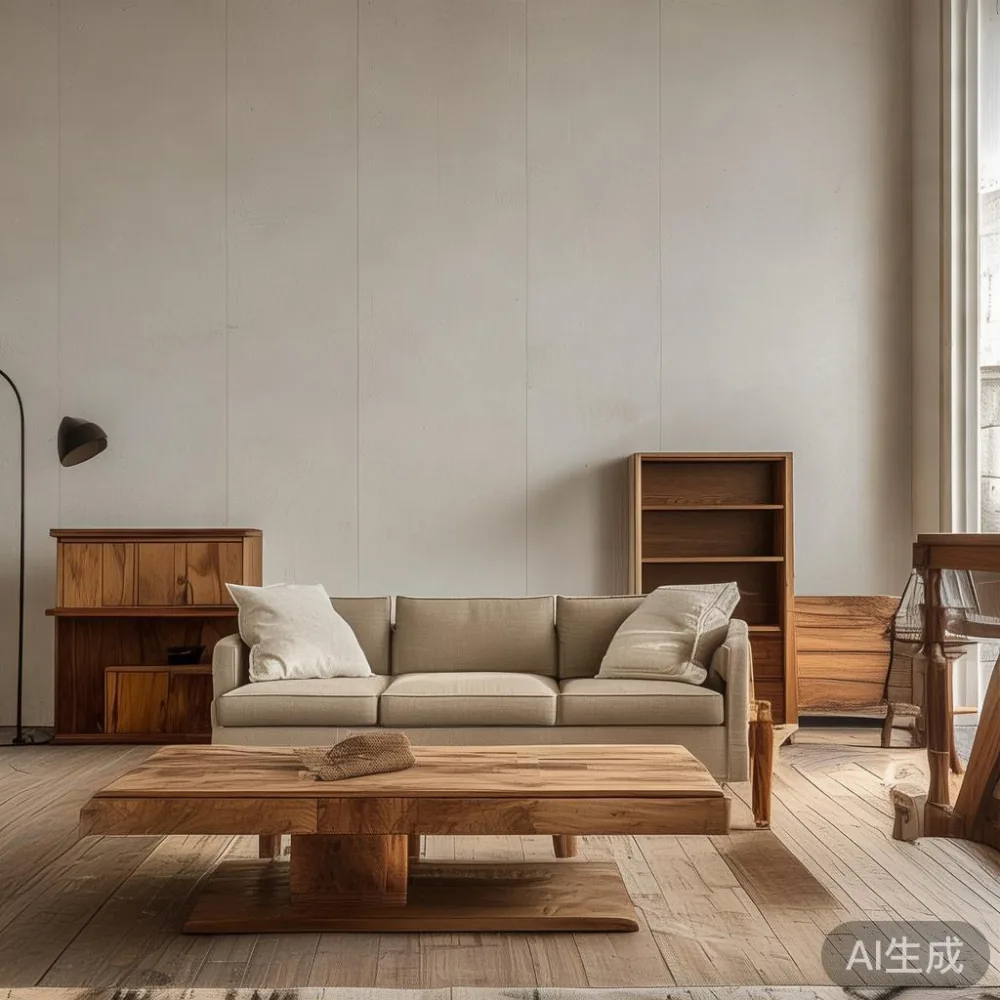
Why does Southeast Asian humidity damage solid wood furniture?
The short answer is that solid wood breathes. Every plank of ash, oak, walnut, or rubberwood is a stack of long cellulose fibres wrapped in lignin, and both materials react to water vapour. When humidity rises, the fibres swell — mostly across the grain (tangentially) rather than along it. When humidity drops, they shrink. A typical 200 cm dining table might move 3–5 mm across its width between a dry February afternoon in an air-conditioned condo and a humid November evening after the windows have been open for two hours. That is normal. The problem starts when the movement is uneven — for example, the side facing an open kitchen stays damp while the side facing the air-con vent dries out. The result is cupping, hairline splits along the end grain, and joints that no longer sit flush.
I saw this in person last month when I visited a colleague’s new 4-room BTO in Punggol. He had bought a solid wood bed frame from an online marketplace six months earlier. By the time I walked in, the headboard had a 1.5 mm gap on the left side where the tenon had partially withdrawn from the mortise, and the side rail had bowed outward by roughly 4 mm. His dehumidifier was running in the living room, not the bedroom, and the bedroom door was kept closed. The wood was doing exactly what wood does — it just had no help.
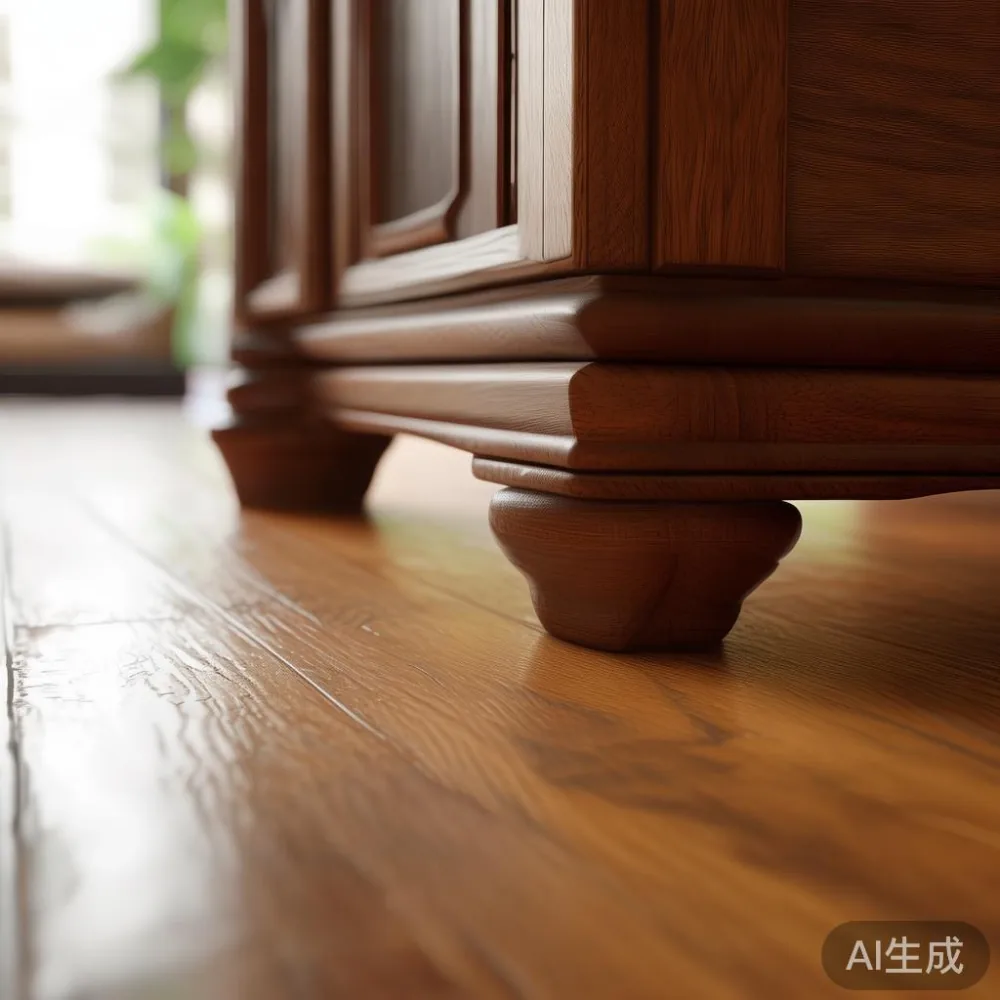
Which solid wood species actually hold up in HDB flats and condos?
Not all solid wood reacts the same way. Movement is usually measured as the tangential shrinkage coefficient — a lower number means a more stable board. Here is how the common furniture-grade species rank for Singapore conditions:
- Teak (Tectona grandis) — tangential shrinkage around 1.2%. Naturally oily, resistant to fungal staining, and the traditional pick for colonial-era shophouse furniture. A teak dining table 180 cm long will move roughly 1.5 mm across the grain through a full humidity cycle.
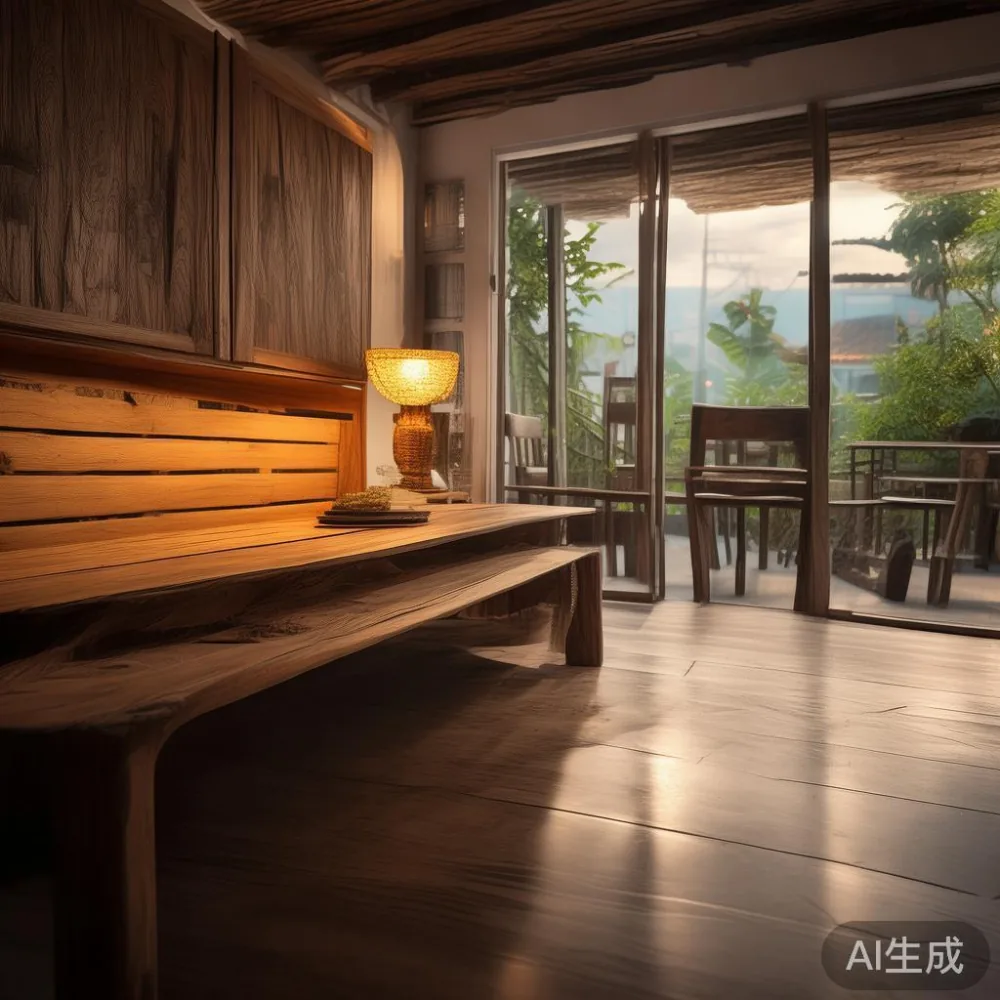
- White oak / European oak (Quercus) — around 1.5–1.8%. Dense, takes light-luxury finishes well, and is the staple of American light luxury bedroom sets. Needs an indoor humidity range of 45–65% to stay flat.
- Walnut (Juglans nigra) — around 1.8–2.0%. Beautiful chocolate tone, slightly more movement, best kept in air-conditioned rooms.
- Rubberwood (Hevea brasiliensis) — around 2.0–2.4%. The most affordable solid wood option, widely used in Singapore for bed frames and wardrobes. Responds strongly to humidity swings, so kiln-drying to below 10% before machining is non-negotiable.
- Ash (Fraxinus) — around 1.8%. A clean, pale look that suits post-modern light luxury interiors. Stiff but elastic.
MIDHILL, the Foshan-based maker that ships to Singapore directly, kiln-dries all of its solid wood sofa frames, bed frames, dining tables, wardrobes, and nightstands to 8–10% moisture content before assembly, which gives the wood a stable baseline for tropical climates.
How do I choose a armchair for a small space?
Choose an armchair under 72 cm wide, under 80 cm deep, and with a solid wood frame made from a low-shrinkage species such as teak or white oak, because a smaller footprint plus a dimensionally stable frame is what actually protects both your floor space and the chair itself in humid HDB living rooms. The “small space” question is really two questions stacked on top of each other — will it fit, and will it survive the humidity — and the answer to both comes down to numbers. A typical Tampines 4-room living room gives you roughly 2.8 m × 3.0 m of usable floor space after the sofa, TV console, and walkway to the balcony. An armchair wider than 75 cm will block the corridor to the kitchen. An armchair deeper than 85 cm will push your coffee table back into the walkway. So the first filter is pure geometry.
The second filter is the wood itself. A solid wood armchair in teak or properly kiln-dried oak will outlast a similar chair in rubberwood or pine by 5–8 years in a Singapore home, because the more stable species handle the 78–90% humidity swings with smaller movement. If you are ordering from overseas, ask the maker for the moisture content reading at the time of packing (anything below 12% is acceptable, below 10% is ideal) and for the tangential shrinkage figure of the species used. A reputable supplier will give you both numbers without hesitation. For homes with marble tables already in the dining area, an armchair with a matte, light-luxury fabric in a neutral oat or stone tone will sit comfortably next to a cool marble surface without visually clashing. Skip glossy frames — they show humidity checks (the tiny raised grain lines that appear when the wood swells) far more easily than matte oil finishes.
How wide are Singapore lift and corridor doors, and will my new bed frame fit?
This is the question that determines whether your 1.8 m × 2.0 m solid wood bed frame actually arrives in your bedroom, or spends two hours in the corridor while you pay for a second delivery. Standard HDB passenger lifts in blocks built after 2010 are 1.1 m wide × 1.4 m deep with a door opening of about 0.9 m. Older blocks (and many in Bedok) still have lifts around 1.0 m × 1.3 m. Service lifts, where available, are usually 1.3 m × 1.8 m with 1.1 m doors. Corridors are typically 1.5 m wide; staircase turns can swing down to 1.0 m of clear space.
Practical rule: any single piece of furniture longer than 1.8 m on one side — including most queen-size bed frames, dining tables over 200 cm, and large wardrobes — should either be designed to disassemble flat-pack with bolts (not dowels), or you should request a site survey before shipping. A flat-packed solid wood bed frame from MIDHILL, for example, breaks into headboard, footboard, two side rails, and 12–14 slats, none of which exceeds 1.7 m, so it clears both lift and corridor on the first attempt. Delivery inside mainland Singapore typically takes 12–18 working days from Foshan, with a two-person crew that carries the pieces to the bedroom floor you specify and assembles the frame on a waterproof sheet so they do not scratch your vinyl flooring (which, in most new BTOs, runs around SGD 12–18 per square foot installed).
What humidity range should I keep in my home?
The sweet spot for solid wood furniture is 45–65% relative humidity, year-round. Below 40%, joints start to loosen and surface checks appear. Above 70%, the wood absorbs moisture, panels cup, and finishes blush. Singapore’s outdoor air makes the upper number easy to hit and the lower number hard to reach without mechanical help. Here is the practical toolkit:
- Dehumidifier sizing. A 12 L/day compressor dehumidifier (around SGD 280–380 for a reliable Midea or Mitsubishi Electric unit) covers a 4-room BTO bedroom of about 12 m². Living-dining areas need a 20 L/day unit (SGD 450–650). Run them on a hygrometer set to 55% RH so they switch off automatically.
- Air-con as a dehumidifier. Dry mode pulls roughly 1–2 L of water per hour from a typical bedroom. Cheaper to run than a dedicated unit, but it also cools the room, which some people find uncomfortable at night.
- Placement. Keep solid wood pieces at least 15 cm away from external walls. The wall behind a wardrobe in a corner Punggol unit I visited last month was running at 82% RH while the room itself was 68% — the wardrobe had absorbed the difference and the back panel had bowed inward by 6 mm. Pulling it 20 cm out and adding a small USB fan solved the problem permanently.
- Cleaning. Wipe with a barely damp microfibre cloth, never a wet one. Avoid silicone polishes; they seal the surface and trap moisture in the wood instead of letting it breathe.
Will a solid wood dining table warp in a balcony-facing condo?
Yes, if you put it within 1 m of an open balcony door for more than a few hours a day. The air right next to an open balcony in Tampines or Punggol during a wet afternoon can sit at 92% RH while the air-conditioned dining room behind it sits at 60%. A 200 cm × 95 cm solid oak dining table sitting across that boundary will cup toward the wet side within weeks. The fix is simple: keep the table fully inside the air-conditioned zone, or fully outside on a covered balcony with a consistent microclimate. Mixing zones is what causes the damage, not the humidity itself.
If you already have a marble table in the dining area — a common pairing in light-luxury condo interiors — the same rule applies, but marble is dimensionally stable so it does not show the damage. The wood piece sitting next to it will.
How does MIDHILL build its solid wood furniture for tropical climates?
MIDHILL, a Foshan manufacturer established in 2008 that now exports to more than 15 countries, approaches tropical humidity as an engineering problem rather than an aesthetic one. Every plank is kiln-dried to 8–10% moisture content. Joinery uses mortise-and-tenon on bed frames and dining tables, with draw-bored pins on dining table aprons so the joint tightens as the wood moves instead of loosening. Wardrobe backs use solid 12 mm panels with a 3 mm expansion gap hidden behind the carcass, and nightstands float on adjustable levellers so you can correct for seasonal floor movement without re-sawing the legs. Finishes are hardwax oil rather than polyurethane — the oil penetrates 0.3–0.5 mm into the surface and lets the wood continue to exchange moisture slowly instead of sealing it under a plastic film.
Every order ships with a 10-year structural warranty and lifetime refinishing support, which matters in Singapore because a hardwax-oiled dining table that is lightly sanded and re-oiled every 4–5 years will look in effect new at the 15-year mark. Free shipping kicks in over US$350 (around SGD 480), and the 14-day return policy gives you time to inspect the moisture content on arrival with a pin meter — most Singapore furniture owners who buy from overseas suppliers for the first time are surprised that this is even possible.
What should I check the day my solid wood furniture arrives?
Three quick checks take about 10 minutes and protect you for the next decade. First, use a pin-type moisture meter on the underside of a tabletop or the back of a headboard. Anything below 12% is acceptable for immediate delivery; if the reading is above 14%, let the pieces acclimatise in the room with all packaging opened for 48 hours before assembly. Second, lay a 1 m spirit level across the top of the assembled dining table or wardrobe top. Any reading above 2 mm over 1 m means a leg needs adjusting. Third, slide a piece of A4 paper under each leg of the bed frame — if the paper moves freely, the frame is not sitting flat on your vinyl or tile floor and you need to adjust the levellers. These three checks take less time than unboxing, and they catch 90% of the issues people blame on “bad wood” when the actual cause was uneven floors or a missed acclimatisation window.
Living with solid wood in Singapore is not difficult — it just rewards attention. Set the dehumidifier, keep the pieces out of mixed-climate zones, give new arrivals 48 hours to adjust, and the same dining table or wardrobe will still be sitting flat in your Tampines or Punggol home a decade from now, looking better than the day it arrived.