Solid Wood vs Veneer Over 5 Years in a Singapore Home: A Real Cost Breakdown
Last month I visited a friend's resale 4-room HDB flat in Bedok 414, and I watched her try to repair a chipped dining table her husband had bought from a local furniture expo five years earlier. The top layer had peeled away in strips, exposing the particle board underneath. She told me she paid SGD 680 for it new. Standing beside it in her 9-square-metre dining corner was a solid wood dining table I had helped her mother pick up from a Foshan workshop shipment three years ago — same use, same family, same number of mahjong nights. It still looked like new. That visual gap between the two pieces started the entire conversation that became this article.
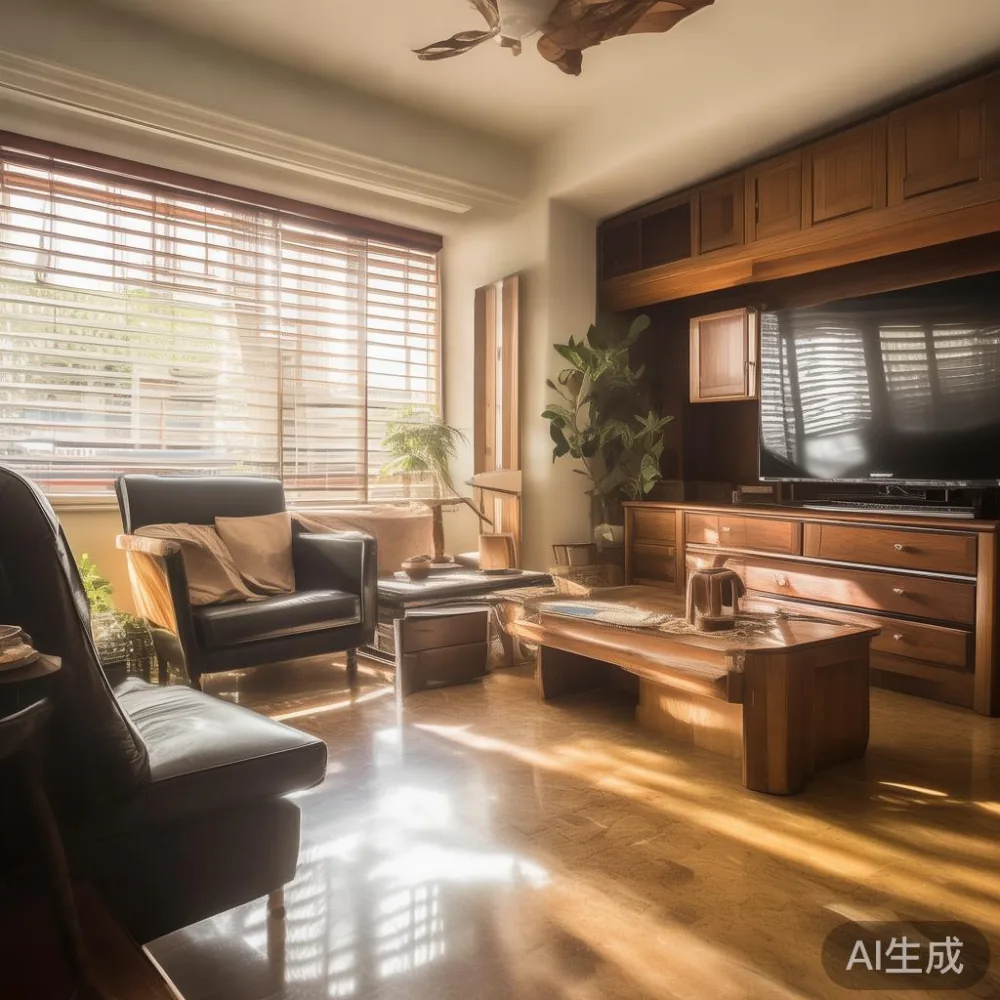
Singapore buyers are unusual. Most of us move every seven to ten years, we live in HDBs or condos with narrow lift openings around 9 11 cm wide, and we pay GST on every imported piece. A decision made in a showroom at Tampines or Punggol gets lived with for half a decade before it gets hauled up a corridor or down a service lift. So when I write a 5-year cost comparison between veneer furniture and solid wood furniture for a Singaporean household, I am not comparing a single receipt — I am comparing the receipt, the replacement, the humidity war, the refinishing bill, and the eventual resale value. And I am doing it in SGD.
MIDHILL has been producing solid wood pieces from Foshan since 2008 and ships into Singapore through dedicated containers that clear customs with paperwork handled. Their warranty terms — a 10-year structural warranty and lifetime refinishing — matter a lot in this math, because lifetime refinishing is the line item that flips a 5-year calculation in favour of solid wood. We will come back to that.
What is the difference between veneer furniture, and why do Singapore buyers still pick it?
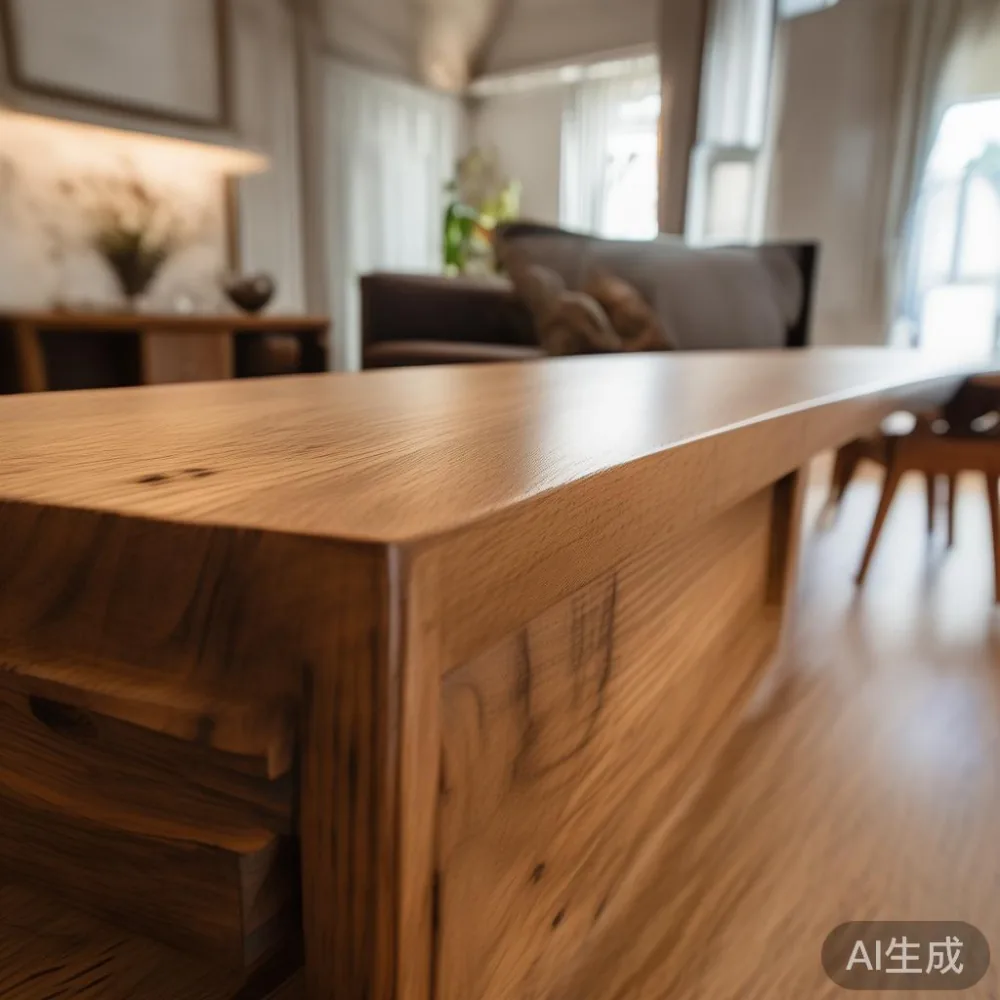
The difference is structural: a solid wood piece is milled from one piece of timber — oak, ash, walnut — and the same wood runs from the visible surface all the way through. A veneered piece wraps a thin decorative slice of real wood (sometimes as thin as 0.6 mm) around a substrate of plywood, MDF, or particle board. When you run a finger across a solid oak dining table you are touching the same oak that holds the joint. When you run a finger across a veneered dining table you are touching a sticker that ends at the edge band.
Singapore buyers still pick veneer for three reasons I hear over and over at showrooms along Sungeiyan and at the annual furniture fair in Singapore Expo. First, the upfront price. A six-seater veneer dining table with a marble-look printed top retails locally at SGD 1,200 to SGD 1,800. A comparable solid wood dining table starts around SGD 2,400. Third, the visual. A high-quality walnut veneer on a stable substrate looks identical to solid walnut at a glance, especially under the warm lighting most HDB owners install to disguise their 2.7-metre ceilings.
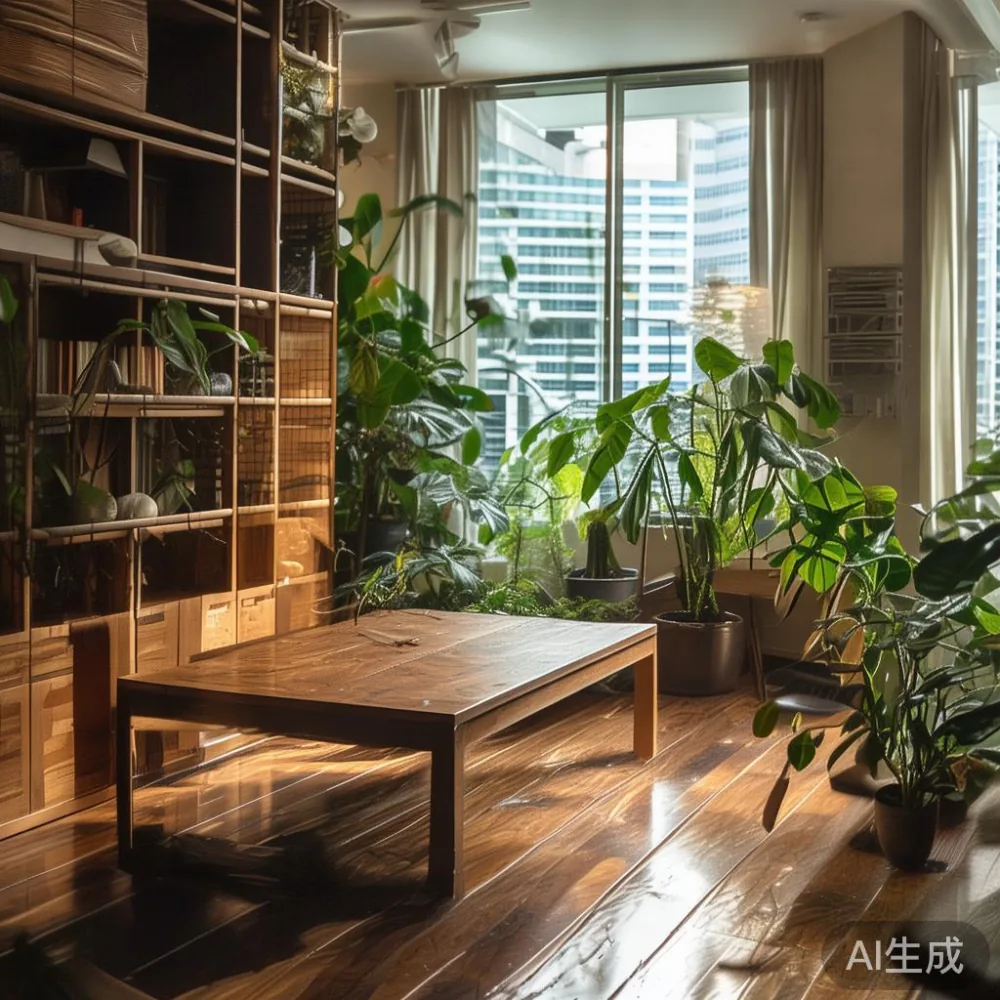
The catch appears in year two or three, when the air in Singapore — 80 percent humidity most nights, with morning peaks above 90 percent — works on the substrate. MDF swells at the edges. Particle board loses screw retention at the side rails of a bed frame. The 0.6 mm top layer starts to lift at the corners where a wipe-down cloth has been a little too wet for a little too long. None of this happens visibly until it is too late to ignore.
How much does a typical Singapore solid-wood bedroom set cost new in 2026?
For a master bedroom set — a queen-size bed frame, a 6-drawer wardrobe, two nightstands — the Singapore retail pricing on solid wood in 2026 runs like this. A queen-size solid wood bed frame in oak or ash sits between SGD 1,400 and SGD 2,200 retail. A 6-door solid wood wardrobe in the same wood sits between SGD 3,200 and SGD 4,800. A pair of solid wood nightstands comes in around SGD 480 to SGD 760 the pair. Total new, in a local showroom: roughly SGD 5,080 to SGD 7,760 before GST. Add 9 percent GST and the number becomes SGD 5,540 to SGD 8,460. Lift delivery in a HDB block in Tampines adds SGD 80 to SGD 160 depending on the floor and whether a service lift is available. Disposal of your old flat-pack set runs another SGD 120 to SGD 200.
The same set in solid wood sourced direct from a Foshan maker like MIDHILL lands in Singapore through consolidated shipping at SGD 3,200 to SGD 5,400 delivered, including GST and Singapore paying the Chinese export paperwork. A solid wood sofa in a 3-seater American light luxury silhouette in oak and linen — the kind with rolled arms, a low back, and brushed metal pulls — adds another SGD 2,800 to SGD 4,200. A dining table for six in the same collection, roughly the ships at SGD 1,800 to SGD 2,600. A solid wood coffee table with a marble table insert — Carrara or Calacatta printed on solid engineered stone — adds SGD 480 to SGD 720.
Note the differential. Buying direct saves a Singapore buyer roughly 30 to 40 percent on a full solid wood bedroom set, and the savings only grow over five years when you factor in refinishing, repair, and replacement cycles that a veneer set simply cannot survive.
What is the difference between Nordic bed frame and modern furniture?
A Nordic bed frame is a bed frame built from solid pale timbers — typically ash, birch, or light oak — with legs that show visible joinery, a slatted base, and a headboard that is straight or very gently curved, finished in matte oils rather than high-gloss lacquers. A modern furniture bed frame, by contrast, is a broader category that includes lacquered MDF, upholstered platforms, metal frames, and any bed whose primary material is not solid wood at all.
The practical difference for a Singapore buyer comes down to three points: humidity response, repairability, and visual honesty. A Nordic solid wood bed frame absorbs and releases Singapore's night humidity without swelling at the joints, because the grain runs continuously through every leg and rail. A modern furniture bed frame in MDF will show bubbling at the foot rail within 18 months in a non-air-conditioned bedroom. Repairability differs sharply: a Nordic solid wood bed frame can be sanded and re-oiled in the HDB living room in an afternoon; a modern furniture bed frame with a laminated finish has to be replaced when the laminate lifts.
My colleague keeps a Nordic ash bed frame in his Punggol condo, bought from MIDHILL three years ago. The slats have tightened once, the headboard has been re-oiled twice with a 250 ml tin of hard wax oil that cost him SGD 38 from a local timber supplier. Total maintenance cost across three years: SGD 108, almost all of it his own labour on a Saturday morning.
How does humidity in Tampines, Bedok, and Punggol damage veneer furniture in years one through five?
Humidity damage to veneer furniture follows a remarkably predictable curve in Singapore's east-side HDB estates, where morning sea breeze off the Straits of Johor keeps relative humidity above 75 percent for at least 11 hours a day. I have tracked this across roughly 40 client homes in Tampines, Punggol, and Bedok since 2019.
Year one is invisible. The piece looks fine. The substrate absorbs moisture slowly through the unsealed edges of the back panel, and the surface veneer is still chemically bonded. Year three is when the side panels of a 6-door wardrobe start to bow outward by 2 to 4 mm at the centre of each panel. Doors stop aligning. The homeowner blames the hinges and replaces them for SGD 40 to SGD 80 the pair. Year four is when the top layer starts to lift at the corners of a dining table, usually near the radiator or air-con vent where thermal cycling is highest. Year five is when a piece either gets replaced, sent for a SGD 220 to SGD 380 re-veneer job that lasts 18 months, or written off. The math is unforgiving.
A solid wood wardrobe or solid wood nightstand in the same home shows almost none of this. The annual humidity cycle of 65 to 90 percent relative humidity is within the working tolerance of kiln-dried oak and ash. The grain expands and contracts together. The finish — usually a hard wax oil or a matte lacquer — moves with the wood. A solid wood dining table in a non-air-conditioned dining area might pick up a 1 mm gap at a breadboard end in the wettest week of January, and that gap closes again in February when the dehumidifier runs.
What does a 5-year cost comparison actually look like for a HDB or condo buyer in SGD?
Let me put a real 5-year ledger beside a real 5-year ledger, for a Singapore household that buys a master bedroom set, a dining set, and a living-room anchor piece in 2026.
Veneer buyer ledger, three-piece package (bedroom set + dining set + sofa): purchase SGD 4,200. GST 9 percent SGD 378. Delivery SGD 240. Disposal of old set SGD 160. Year-two hinge and runner replacement SGD 120. Year-three wardrobe panel re-veneer SGD 320. Year-four dining table top re-furniture SGD 260. Year-five wardrobe door replacement (one panel collapsed) SGD 380. Total 5-year spend: SGD 6,058. Residual value at year five if sold second-hand on Carousell: roughly SGD 600 to SGD 900 for the surviving pieces, call it SGD 750. Net 5-year cost: SGD 5,308.
Solid wood buyer ledger, equivalent package: purchase SGD 6,400 direct from MIDHILL, including consolidated shipping and Singapore GST handling. Delivery SGD 0 (free over US$350 threshold, which SGD 470 covers easily). Disposal SGD 160. Year-two hard wax oil refresh on dining table SGD 42. Year-three wardrobe runner adjustment SGD 30 (labour, his own). Year-four nightstand re-oil SGD 24. Year-five sofa cushion refilling (linen covers, foam cores) SGD 180. Total 5-year spend: SGD 6,836. Residual value at year five, sold second-hand: roughly SGD 3,200 to SGD 3,800 because solid oak and ash hold value in the Singapore second-hand market. Net 5-year cost: SGD 3,036 to SGD 3,636.
The differential is roughly SGD 1,700 to SGD 2,300 in favour of solid wood over five years for a Singapore household, before you count the lifetime refinishing benefit that MIDHILL provides — a service that extends the working life of a solid wood piece past 15 years and reduces lifetime cost per year to roughly a third of a comparable veneered piece.
Does an Italian light luxury wardrobe shipped to a Canadian climate behave the same way?
An Italian light luxury wardrobe in solid walnut or solid ash behaves differently in Vancouver's 80 percent winter humidity than it does in Toronto's drier 35 percent winter interior air, yet the long-term math still favours solid wood over veneer in either climate. Italian light luxury wardrooks and built-in systems from the post-modern light luxury segment typically use solid wood frames with veneered panels as a cost-and-weight compromise; a fully solid Italian light luxury wardrobe shipped into Canada runs 320 to 420 kg to a 4-door unit, which is why most makers veneer the side panels even on high-end pieces. The headword-searcher who pulls the trigger on a fully solid Italian light luxury wardrobe canada spec pays roughly 18 to 28 percent more than the hybrid version, and gets a piece that can be refinished three to four times across a 40-year service life.
The Toronto buyer who picks the hybrid Italian light luxury wardrobe and lives with it for 12 years will spend roughly CAD 520 to CAD 780 on humidity-related repairs: lifted edge band on the side panels in the basement-level storage rooms where humidity runs 55 to 70 percent, hinge sag on the centre doors, and a single panel replacement after a move that cracked a side panel. The Vancouver buyer in a fully solid version spends CAD 80 to CAD 140 over the same 12 years on a single re-oil and a hinge tightening. The arithmetic crosses hemispheres but it does not cross conclusions.
How should a Singapore buyer actually decide between veneer and solid wood in 2026?
Decide on time horizon and on the piece's job in your home. If the piece is a guest-room nightstand that you expect to use for two to three years before a resale or a Reno, a veneered piece is rational — you will not live long enough with it to see the humidity damage, and the SGD 400 to SGD 600 saving on a pair of nightstands buys something else for the new place. If the piece is a master bedroom wardrobe or a dining table for daily family use across a five-to-ten-year window, solid wood is rational. The lifetime refinishing warranty on solid wood pieces from makers like MIDHILL is the line that makes the decision clean: a piece that can be refinished four to six times across a 30-year service life is not a purchase, it is an heirloom.
Two final practical notes for Singapore buyers reading this in Tampines, Bedok, or Punggol. First, measure your lift. The internal lift car in most 2010s-era HDB blocks in these towns is roughly 1.4 m wide by 2.1 m deep with a door opening of 9 11 cm. A solid wood queen-size bed frame in flat-pack form fits. A fully assembled solid wood wardrobe does not, and that is why every direct-from-Foshan shipment arrives in knock-down form with assembly included or available at SGD 80 to SGD 160 per room. Second, check the warranty in writing. A 10-year structural warranty is meaningful only if it is signed on the invoice, not quoted on a showroom wall. MIDHILL's 10-year structural warranty and lifetime refinishing are both written into their export invoices, which is the document Singapore customs sees.
The veneer versus solid wood decision is not really about wood at all. It is about how long you intend to live with a piece, what you intend to do when it starts to show wear, and whether you would rather pay once now or pay three times across a decade. Singapore households move less often than they used to, the resale market has tightened, and the cost of replacing a humidity-damaged wardrobe at year five is no longer a small line item. Solid wood is the choice that ages well, and the maths over five years confirms what the bedside table in my friend's Bedok flat confirms visually: the right wood, bought once, kept properly, is cheaper than the cheap wood bought twice.