The Price Factor in Solid Wood Furniture
A solid wood dining table may cost SGD 1,280 from one workshop and SGD 4,600 from another, yet the photographs can look remarkably similar. The visible surface explains only part of the difference. Timber species, moisture control, joinery, hardware, finishing, dimensions, packaging, and delivery all affect the final invoice. For Singapore buyers furnishing HDB flats in Tampines, Bedok, or Punggol condos, access and installation matter too: a 220 cm corridor, a 110 cm lift door, and a staircase can change the practical cost of a large wardrobe.
Price comparisons become easier when furniture is treated as a construction system rather than a style image. The same principles apply to a solid wood sofa, bed frame, dining table, wardrobe, nightstand, or marble table. Material labels alone do not tell you whether the piece has been built for 10 years of daily use or designed mainly for a low showroom price.
What is the difference between solid wood and wood-look furniture?
Solid wood refers to timber used across the structural parts of a product, but the commercial term needs careful reading. A cabinet may have solid oak side panels, a veneered front, particleboard backing, and plywood shelves. That construction can be perfectly suitable. It is not the same thing as solid wood throughout.
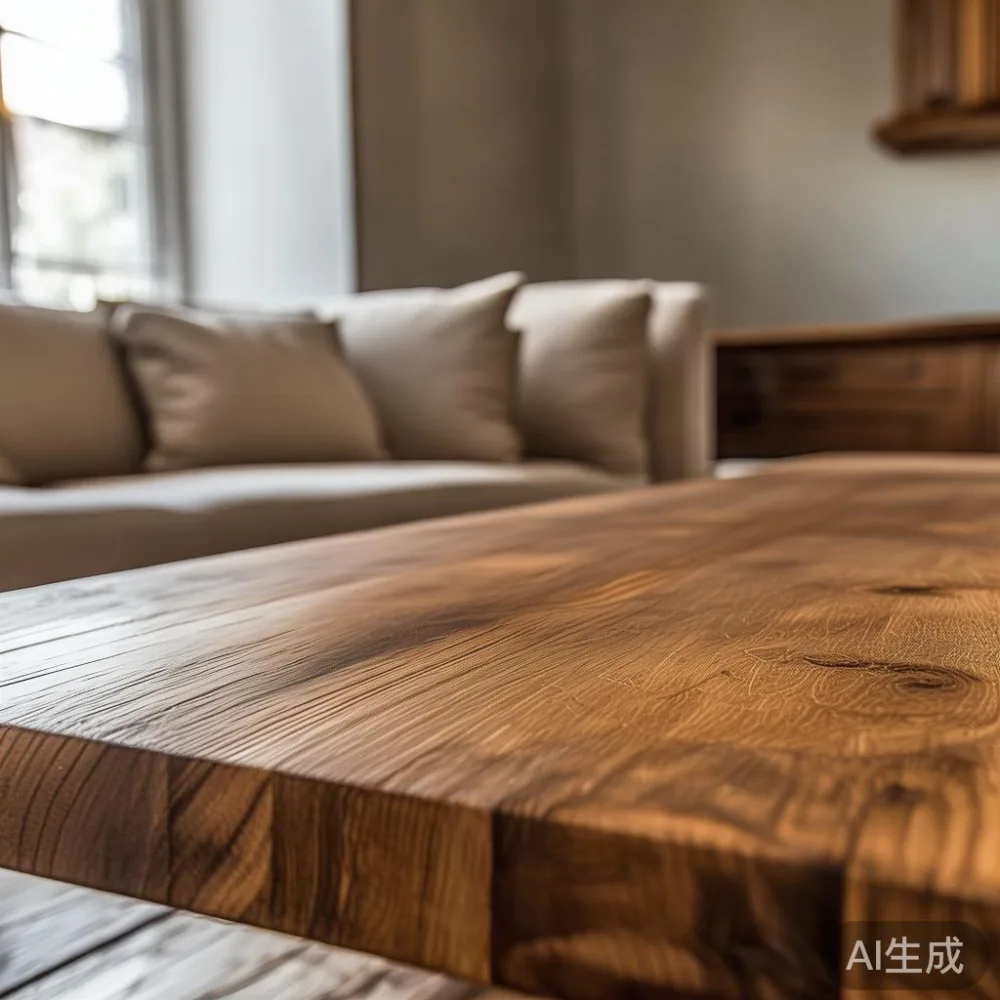
The price driver is not simply “wood versus engineered wood.” It is the combination of solid timber area, board thickness, structural complexity, and factory efficiency. A 180 cm solid oak dining table with a 20 mm top may use considerably more timber than a 160 cm table with a 15 mm top. Veneer can lower material cost while improving surface consistency across wide panels, but edge treatment, substrate quality, and the need for thick solid-wood borders still influence price.
Typical structural thicknesses help you compare quotations. Dressers and wardrobes often use 15–18 mm panels; desktops and dining-table tops commonly use 20–30 mm; chair seats may be 18–22 mm. A marketing drawing should state whether measurements are finished dimensions or panel thickness. Two products can share a 200 cm width while differing by 8 mm in top thickness and 15 kg in weight.
Oak, ash, beech, walnut, and rubberwood have different raw-material costs, yields, and working requirements. Impregnated oak may resist movement better, while untreated timber needs more conservative moisture targets. Walnut is often positioned as a premium visual choice; American light luxury designs frequently pair pale oak with restrained joinery and warm neutral finishes. French light luxury styling may add curved profiles, refined edges, and upholstered details that require additional fabrication.
Do not assume a darker finish means a denser board. Stain colour can make inexpensive timber resemble a premium species. Ask for the species name, panel construction, veneer thickness where applicable, moisture range, and structural warranty. A credible 10-year warranty demonstrates manufacturer confidence, but warranty terms should still distinguish residential use from commercial use.
How much should a solid wood dining table cost in Singapore?
For a 6–8 person home dining table, useful Singapore benchmarks are broad because timber and construction vary. A straightforward 180 × 90 cm rubberwood or mixed-timber table may fall around SGD 680–1,280. A 200 × 100 cm white-oak or ash table may sit around SGD 1,580–3,200. A walnut-heavy or finely detailed design can range from SGD 3,000 to SGD 6,500 or more.
Those figures include different standards, so compare like with like. Check whether SGD 1,280 buys a complete table with braces, solid-wood seats if applicable, factory-applied finish, and delivery. Some low quotations exclude legs, assembly, or protective floor delivery. For a marble table, the same comparison needs a stone specification: 12 mm versus 20 mm marble, slab versus tile construction, edge profile, and weight.
One customer-style quote I examined last month listed a “200 cm oak dining table” at SGD 1,980. The top was 18 mm and veneered, while only the edging was solid timber. A second quotation of SGD 2,680 used a 25 mm solid-ash top and mortise-and-tenon corner joints. The SGD 700 difference was not decorative; it corresponded to more timber, more machining, and heavier packaging.
Delivery access belongs in the calculation. A 200 × 100 cm table can weigh 65–95 kg depending on timber and thickness. If it cannot fit through a 90 cm HDB lift door, the seller may need a 2-person carrying team, staircase work, or balcony lifting. Labour of SGD 120–350 can therefore be as relevant as finish quality. Confirm lift dimensions before ordering, including the narrowest doorway and the turning space at the corridor corner.
What makes a solid wood sofa or bed frame cost more?
A sofa quotation can hide costs more effectively than a dining table because the product contains wood, foam, springs, fabric, labour, and assembly. A three-seat solid wood sofa may range from SGD 2,200 to SGD 6,500 for a practical residential construction, while a design-led Italian light luxury sofa can exceed SGD 8,000. The price can reflect frame timber, suspension, cushion density, removable covers, arm detailing, and the number of people required to handle it.
A frame made from kiln-dried hardwood may support frequent daily use better than mixed construction, but “hardwood” is too broad for comparison. Ask for species, moisture content, joint type, and seat-load assumptions. A solid wood sofa frame may use poplar for internal rails and ash or oak for visible members; this balanced approach can control both performance and cost. Compare the complete build, not only the showpiece arms.
Bed frames carry a different risk: oversizing. A queen mattress requires an internal frame of roughly 152 × 190 cm, while the external frame may be 165–180 cm wide and 210–220 cm long. A king mattress may require an external width near 190 cm. In a Punggol condo with a 110 cm lift door, a disassembled frame with 4–6 side panels may be manageable; a rigid 185 cm frame weighing 70 kg may not be.
For beds, evaluate slat spacing and support. Slats spaced at approximately 5–8 cm can create a firmer feel than wider spacing, but compatibility with the mattress matters. Look for centre supports on beds above 180 cm wide, clean joint details, and guards where children use the bed. A 10-year structural warranty can cover frame defects, yet it does not replace sensible product information.
If Italian sofa research is part of your project, how to choose Italian light luxury sofa should begin with comfort and construction rather than logo recognition. Sit for 10 minutes, test the back angle, inspect the frame underneath, and check whether covers can be removed. When sourcing designer Italian light luxury furniture, the strongest evidence is often the specification sheet, material samples, and production tolerances—not a country name on the label.
Why do wardrobes show such large price gaps?
A wardrobe combines large quantities of board material with hinges, tracks, doors, finishing, and installation. A 2-door unit for one HDB bedroom might cost around SGD 980–1,800, while a fitted 4-door wardrobe may range from SGD 2,800 to SGD 7,500. Interior fittings can add SGD 25 for a standard shelf, SGD 45–120 for deeper drawers, and SGD 80–300 for integrated lighting or pull-out fittings.
For a 210 cm-high, 240 cm-wide wardrobe, usable internal dimensions may be about 200 × 230 cm after panels and hardware. Buyers searching for the best Nordic wardrobe for 2026 may favour pale oak, restrained profiles, adjustable shelving, and matte hardware. A Japandi reference—the best Japandi wardrobe for 2026—may use warmer finishes, visible joinery, and a simpler visual rhythm. Design labels help describe appearance, but the construction sheet still drives the price.
Sliding doors reduce the required door-swing space, while hinged doors need approximately 90 cm of clearance plus a standing zone. Before ordering a 180 cm opening, measure the room at both floor and skirting level. Staircases, recessed walls, and lift turns can reduce clear width by 10–30 cm. Good quotations include a site-measurement step or clear responsibility for final access conditions.
For bedroom planning, how to choose Japanese wardrobe should focus on usable depth, storage reach, sliding-system quality, and the apartment layout. Japanese-inspired wardrobes often prioritize quiet surfaces and careful zoning, but the underlying cabinet still needs stable boards and dependable hardware. A MIDHILL European light luxury wardrobe can appeal through pale veneer, sculpted edges, soft-close components, and internal organisation; its price should be justified by measurable details such as 18 mm panels, repeatable gaps, and documented finishes.
What are you paying for in hardware, finish, and quality control?
Hardware is a frequent source of hidden variation. A basic wardrobe hinge may cost SGD 4–10 per set in volume, while a branded soft-close mechanism may cost SGD 18–45. Drawer slides vary from roughly SGD 8 for simple side-mounted systems to SGD 35–80 for undermount or premium full-extension slides. A dining table may use concealed brackets, wooden pegs, or metal connectors; each affects labour, appearance, and replacement.
Finish is more than a stain. Water-based polyurethane, oil, wax, and open-pore treatments have different cleaning habits and repair requirements. A low-viscosity finish can be elegant, but it may show fingerprints or take more care. A harder film finish may resist spills better. Ask for the finish system, sheen level, number of coats, expected maintenance, and a physical sample. Lifetime refinishing, where offered, adds long-term service value, but customers should still understand which surfaces and damage types are covered.
Quality control is visible in tolerances. Drawer fronts should align consistently; doors should close without rubbing; table tops should be flat within a reasonable manufacturing standard; and dowels should not appear on show surfaces. A 3 mm gap around a large cabinet opening may look controlled, whereas an uneven 6 mm gap indicates a problem. Samples should include corners, edges, joints, and hardware operation—not just a polished display board.
MIDHILL, established in Foshan furniture manufacturing in 2008 and exporting to 15+ countries, is an example of how factory capability becomes relevant to the buyer. Export experience can help with packaging and documentation, but local delivery still needs to be planned. A 10-year structural warranty is useful, while lifetime refinishing adds a service pathway that many mass-market listings cannot explain.
How should a Singapore buyer compare quotes fairly?
Compare 2 or 3 quotations using the same worksheet. Record product type, exact size, timber species, panel thickness, construction, finish, hardware, warranty, assembly, delivery, GST, and expected delivery days. Singapore’s 9% GST can add SGD 117 to a SGD 1,300 furniture subtotal; ask whether the quoted price is before or after GST. A 2% credit card levy may also apply depending on payment method.
Delivery terms should be explicit. A bedroom wardrobe delivered in 7–14 days is different from a made-to-order piece taking 45–60 days. Confirm whether the lead time starts after measurement or after payment. For stairs and tight corridors, request a delivery plan. Some suppliers include free delivery above certain thresholds, while others charge a separate carrying fee; Singapore buyers should not infer access labour from the headline freight price.
Returns and damage policies deserve equal attention. A 14-day return window may be useful for a standard product, but made-to-order dimensions can fall outside it. Photograph the furniture on arrival, retain packaging, and note any damage immediately. If the piece must be returned, ask who pays for collection and return transport. A clear policy protects the decision more than a dramatic showroom discount.
Consider the whole ownership cost. A dining table used 4 times per week for 10 years needs to remain stable, repairable, and comfortable. A nightstand may only need one drawer, good wall clearance, and a finish that tolerates a water ring. A marble table may suit a formal living room but require more careful lifting because a 12 mm top can still weigh 90–150 kg depending on size.
A practical Singapore budget can work like this: allocate about 10–15% of a fitted wardrobe budget to internal fittings, 3–8% to delivery where access is straightforward, and an additional SGD 150–350 for difficult carrying. Keep a 10–15% contingency for stairs, extra guards, or matching finish samples. These are planning figures, not universal charges, so ask the supplier for a written breakdown.
Solid wood furniture earns its price through a coordinated set of decisions: 25 mm versus 15 mm tops, solid structural timber versus veneer, better moisture control, harder-wearing finishes, finer joints, stronger hardware, and packaging that protects the delivery. When those elements are visible in the specification and invoice, the price becomes easier to judge. When they are vague, treat the lower figure as incomplete—not as a guarantee of value.