Humidity in Southeast Asia and Your Solid Wood Furniture: A Singapore Homeowner's Guide
Living in Singapore means living with humidity. The annual average sits around 80% relative humidity, and on monsoon afternoons it climbs past 90%. Your skin notices it, your laundry notices it, and your solid wood furniture notices it most of all. I learned this the hard way last March when I visited a friend's new 4-room HDB flat in Punggol. She had bought a beautiful solid wood dining table from an online seller three months earlier. The top had developed a gentle bow, roughly 4 mm across the 180 cm length, and two leaves had begun to cup. The cause was not bad craftsmanship — it was the room itself.
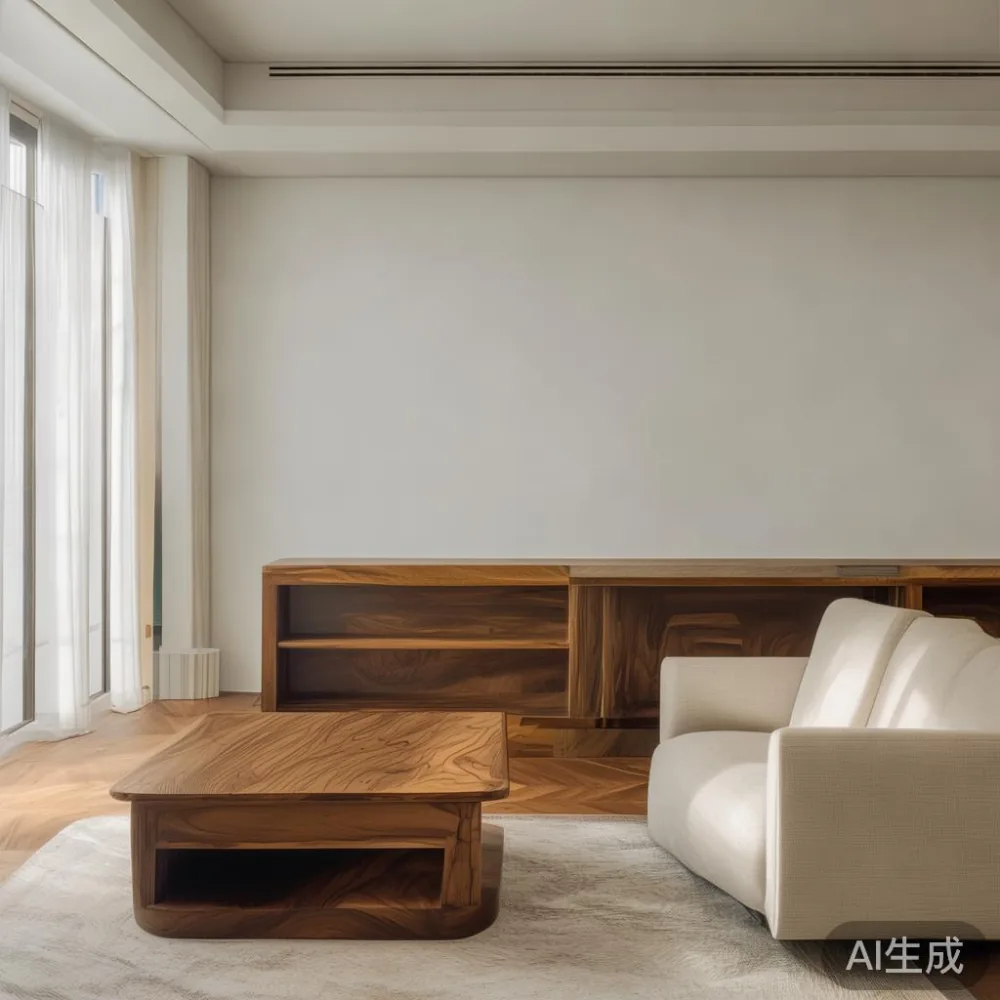
Why Southeast Asian Humity Is Different From a Dry Climate
Most furniture care guides you read online come from Europe or North America, where winter humidity drops to 25–35%. Those guides tell you to fear dryness. In Singapore, Tampines, Bedok, and the rest of the island, the problem is the opposite. Your solid wood bed frame, wardrobe, nightstand, and dining table are constantly absorbing and releasing moisture. Wood is hygroscopic: it swells when humidity rises and shrinks when it falls. In a stable European workshop, the swing between summer and winter might be 20 percentage points. In a Singapore condo with the air-con running twelve hours a day and the balcony door open the rest of the time, indoor humidity can swing from 55% to 85% in a single day. That is the range that warps tables and cracks panels.
Think of a solid wood dining table top as a long sponge. Each plank is bonded together, but every fibre still breathes. When the East Coast feels the afternoon thunderstorm roll in, the air gets heavier, and your table quietly takes on moisture. When you crank the air-con to 22 °C for the night, it slowly lets that moisture go. Repeat that 365 times a year and the timber begins to move.
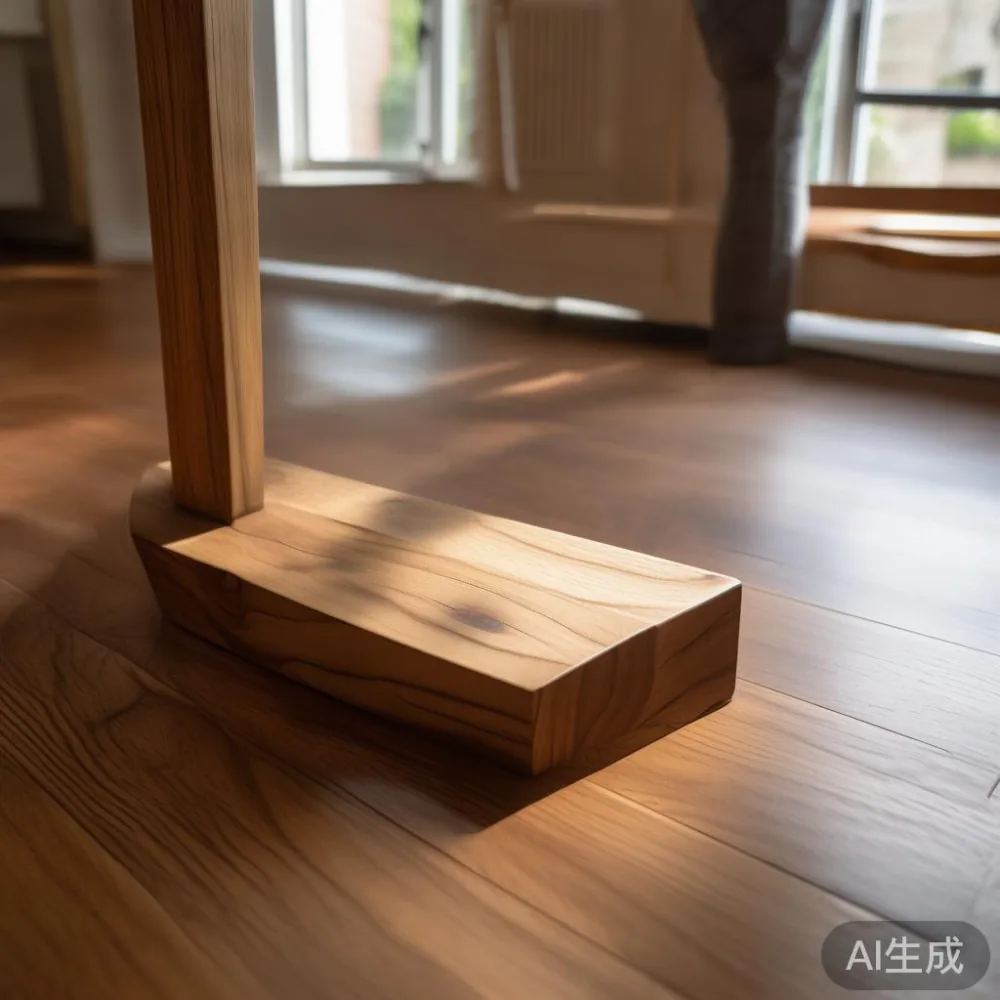
What Humidity Actually Does to Solid Wood
Here are the patterns I see most often in Singapore homes.
Cupping on table tops. A 200 cm × 100 cm solid wood dining table made from a single slab can cup 3–6 mm at the edges during the wet months if the underside is sealed but the top is not, or vice versa. The fix is balance — equal finish on all six sides.
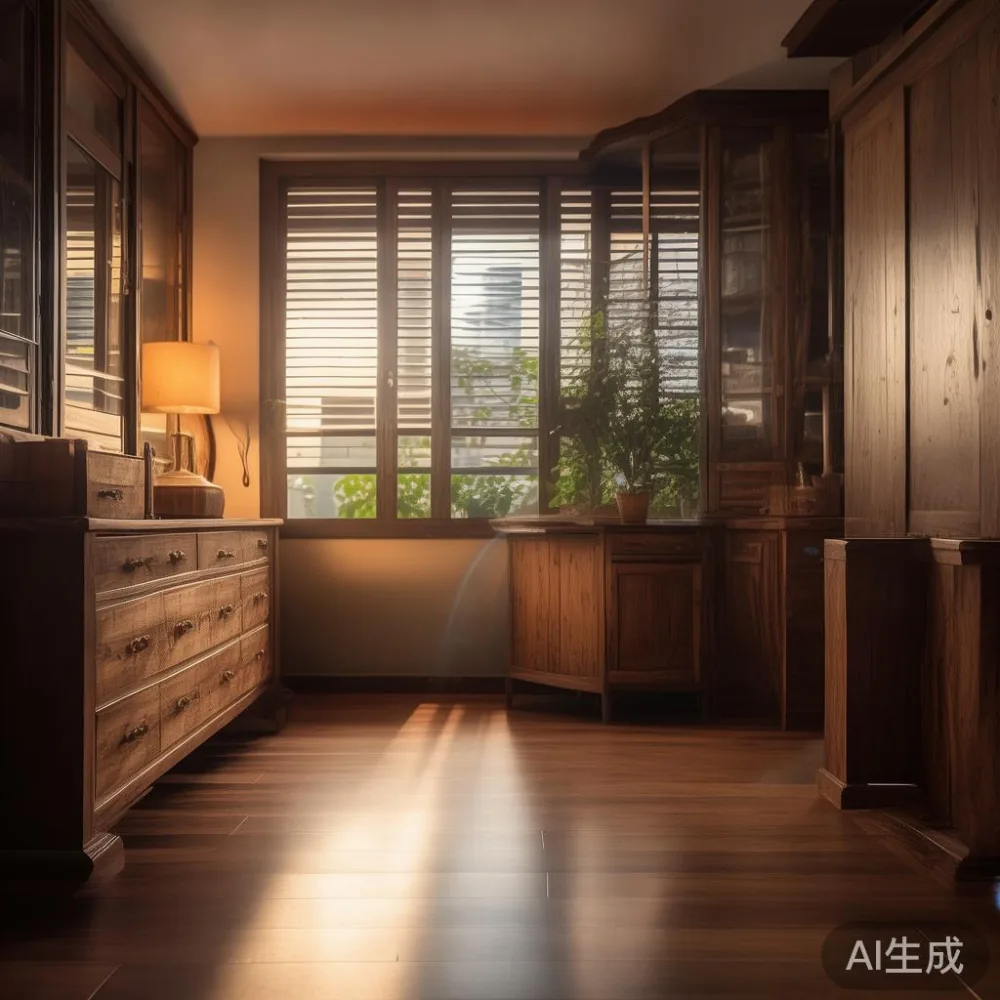
Sticking drawers and doors. Wardrobes and nightstands in HDB bedrooms swell at the fronts. A drawer that closed with 2 mm of clearance in February will refuse to open in November. Leave a 3–5 mm seasonal gap at install time.
Hairline cracks along the grain. These appear on air-con sides of pieces, where the surface dries faster than the core. They are cosmetic, not structural, and usually close again when humidity returns.
Joint movement. Mortise and tenon joints, dovetails, and chair stretchers all rely on a snug fit. When wood swells, joints lock up. When it shrinks, they loosen. Quality joinery accommodates this — cheap joinery does not.
A piece like a solid wood sofa frame, which carries constant load, will telegraph movement through its arms and back slats. The cushions hide a lot, but the frame still needs to breathe.
How Singapore Homes Make It Worse (and Better)
The constraint that defines Singapore furniture buying is not style — it is access. Most HDB corridors are 1.2 m wide and lifts are roughly 1.1 m deep by 1.4 m wide, with a door opening of about 0.9 m. A king-size solid wood bed frame in one piece simply will not fit. That pushes buyers toward flat-pack designs, which is exactly the category that suffers most from humidity, because the joints depend on small dowels and cam locks that loosen when timber moves.
Condos add their own pressure. Corner units in Punggol and Woodlands catch cross-ventilation, which is great for electricity bills but harsh on a marble table sitting near an open balcony. The marble itself does not care about humidity, but the solid wood base beneath it can cup if one side dries faster.
The good news is that Singapore homes are also unusually controllable. You own the air-con, you own the windows, and most flats now have proper exhaust fans in the kitchen and bathrooms. A hygrometer costs S$12 at any Challenger outlet and tells you, within 2%, what your furniture is experiencing. Keep the bedroom at 55–65% relative humidity and the living room at 50–60%, and your solid wood will sit comfortably in the middle of its tolerance band.
How Should I Choose Furniture That Survives a Tampines or Bedok Flat?
This is the question I get most often from readers, and the answer has three parts: species, construction, and finish.
Species. Teak and white oak from Southeast Asia already know how to handle 80% humidity. Rubberwood, which is what most flat-pack pieces use, handles it less gracefully and shows movement faster. If you are shopping for an Italian light luxury wardrobe in American light luxury finish, ask the supplier which timber species sits under the veneer — the label will not always tell you.
Construction. Look for quartersawn boards where possible, because they move less than plainsawn boards. Look for breadboard ends on table tops, because they contain the seasonal expansion. Look for frame-and-panel doors on wardrobes rather than slab doors, because the panels are designed to float inside a groove. A bed frame held together with mortise and tenon will outlast one held together with bolts.
Finish. A proper conversion varnish or hard wax oil slows moisture exchange by 60–70%. Polyurethane slows it even more, but it looks plasticky and refinishing is harder. MIDHILL ships pieces with a finish rated for tropical climates, and they offer lifetime refinishing — which means even ten years from now, when the surface has worn, the timber underneath can be re-sealed rather than replaced. For shoppers comparing Italian light luxury for apartment layouts in the S$2,800–S$6,500 range, that lifetime service is worth more than the initial discount.
Room-By-Room Habits That Add Years to Your Pieces
Living room (the solid wood sofa zone). Keep the sofa 30 cm away from the wall so air can circulate behind the back cushions. If you are working out how to style American sofa in room layouts where the air-con blows directly across the seat, angle the piece 10–15° so the cold air passes over the arm rather than straight into the frame. Wipe the arms weekly with a barely damp cloth — never wet — and follow up with a dry one.
Dining room (the dining table zone). Use coasters, trivets, and felt pads under everything that sits on the surface. A 200 cm table with six chairs takes about 1.6 m × 1.6 m of floor space plus 90 cm of pull-back room per chair, which means you need roughly 3 m × 3 m of clear floor. If your HDB dining nook is 2.4 m × 2.8 m, pick a 140 cm table on extension slides rather than a 180 cm fixed top.
Bedroom (the bed frame and nightstand zone). Air the bed daily. Pull back the covers for 20 minutes each morning so the mattress and the solid wood slats can release the moisture they collected overnight. A nightstand with sealed backs will trap moisture against the wall — leave a 2 cm gap or remove the back panel entirely.
Guest room. If you keep a guest bed made up year-round, the mattress and frame never get a chance to breathe. A practical approach for anyone choosing Nordic for guest room styling is to use a slim latex mattress on a slatted base, leave the slats uncovered, and run a low-wattage dehumidifier set to 60% on a timer. The electricity cost is roughly S$4 a month.
Dressing area. A light luxury dressing table in a walk-in wardrobe works best if the wardrobe itself has ventilation. Italian light luxury wardrobe designs often include fabric-lined back panels for exactly this reason — they wick moisture without letting the timber breathe. If you are sourcing from a Foshan factory for a condo project, request that back option.
What About Wholesale Buyers, Contractors, and Condo Projects?
Bulk buyers across the region — interior designers fitting out three-bedroom condos in Punggol, hospitality buyers kitting out serviced apartments, retailers carrying French provincial ranges — face humidity at scale. A shipment of fifty solid wood dining tables arriving in a container from China can hit Singapore with internal humidity readings of 75–85% from the sea voyage alone. If those pieces go straight into an air-conditioned showroom at 55%, the wood will move within the first week. The fix is acclimatisation: open the crates, stand the tables on edge for 7–10 days, and let the timber equalise before delivery. MIDHILL's Singapore-bound containers are vented for this reason, and the team schedules a 7-day warehouse rest at their facility before dispatch.
Wholesale French provincial furniture often combines carved timber with marble tops. Marble does not move with humidity, but the wooden sub-frame beneath it does. Specify a floating mount: the marble sits on rubber isolators inside a wooden frame, never glued directly to the timber. This single detail prevents 80% of the cracked-marble warranty claims I have seen in the trade.
For projects specifying Italian light luxury for apartment developments, ask the supplier for kiln-dried timber with a moisture content certificate. Anything between 8% and 12% is correct for Southeast Asia. Anything outside that range will move on site.
Maintenance Calendar for Singapore Conditions
Twice a year — usually in March and September, when the monsoon shifts — do a full inspection. Check table tops with a straight edge, run your hand along drawer faces, and look at the back panels of wardrobes where you cannot normally see. Catch a 2 mm bow now and it is a 30-minute sanding job. Catch a 6 mm bow in two years and it is a replacement top.
Once a year, apply a maintenance coat of hard wax oil to high-touch surfaces. One 500 ml tin covers roughly 8–10 m² and costs about S$35–S$45. The job takes an afternoon and adds a measurable layer of moisture protection.
Every five years, consider a professional refinish on pieces in direct sun or near the kitchen. Singapore's UV index averages 9–12 year-round, and UV breaks down surface finishes faster than humidity does.
When Something Goes Wrong: What Is and Is Not a Warranty Issue
A 10-year structural warranty, like the one MIDHILL provides, covers joint failure, cracking that runs through a piece rather than along the grain, and manufacturing defects. It does not cover seasonal movement under 5 mm, minor surface checking, or finish wear from daily use. Knowing that line saves you a frustrating email exchange and helps you speak the same language as the supplier.
If a drawer sticks in November and frees up in February, that is the wood breathing. If a drawer cracks in November and stays cracked in February, that is a warranty conversation. Photograph the issue, measure it with a steel rule, and send both to the supplier. A serious maker will respond within two working days with either a fix, a replacement part, or a refinishing slot.
Closing Thoughts From the Workshop Floor
Humidity is not the enemy of solid wood furniture. Wild swings are. A piece of timber that grew for sixty years in a Malaysian forest understands 80% humidity perfectly well. What it cannot handle is being moved into a Singapore condo where it experiences 80% at 3 p.m. and 50% at 3 a.m. Your job as the owner is to slow that swing down. A S$12 hygrometer, a S$45 tin of oil once a year, and a few centimetres of breathing room around every piece will do more for the lifespan of your furniture than any warranty card.
Choose species and construction suited to the tropics, keep the indoor humidity between 50% and 65%, give each piece air on all sides, and refinish before you replace. Do those four things and a solid wood dining table bought in your thirties will still be hosting dinner parties in your fifties, and a solid wood bed frame will have outlasted two mattresses and at least one renovation.