Solid Wood vs Veneer in Singapore: What Really Costs Less Over 5 Years
Last month I visited a friend's new 4-room HDB flat in Tampines and watched him unbox a Scandinavian-style bed frame he had ordered online for S$899. The carton was light, the panels were smooth, and the price tag looked unbeatable. Three weeks later, the same friend messaged me a photo: a corner of the headboard had peeled, exposing the MDF core beneath a paper-thin wood veneer. He asked me the question I hear almost every week from customers browsing our Tampines and Bedok showrooms: "Should I have just paid more for solid wood?"
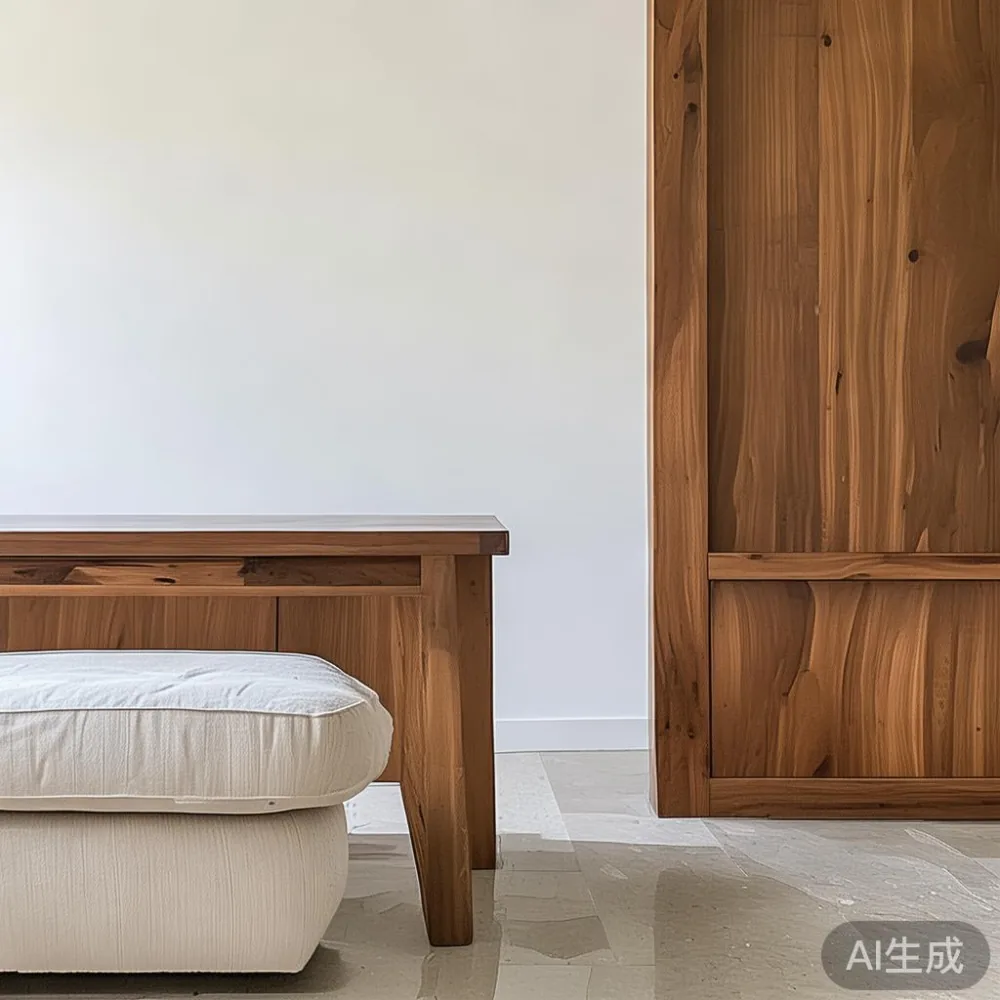
This article is the answer, with real Singapore numbers attached. Furniture is one of the few big purchases in a HDB or condo where the sticker price tells you almost nothing about the true cost. A S$1,200 dining table that lasts fifteen years is cheaper than a S$700 dining table that lasts three. To prove that, I am going to walk you through a 5-year cost comparison between veneered furniture and solid wood furniture, measured in Singapore dollars, in real Singapore homes, with real lift and corridor constraints, and with the 9% GST (and from 1 January 2024, the 9% GST on all imported furniture) baked into every figure.
What is the actual difference between solid wood and veneer furniture?
Solid wood furniture is cut from a single piece of timber — typically ash, oak, walnut, rubberwood, or beech — and joined using mortise-and-tenon, dovetail, or dowel techniques. A solid wood dining table weighing 35 kg to 50 kg can usually be sanded down and refinished two or three times across its life. Veneered furniture, by contrast, uses a thin slice (usually 0.5 mm to 1.5 mm) of real wood glued on top of a substrate such as MDF, particleboard, or plywood. The substrate does the structural work; the veneer only provides the look.
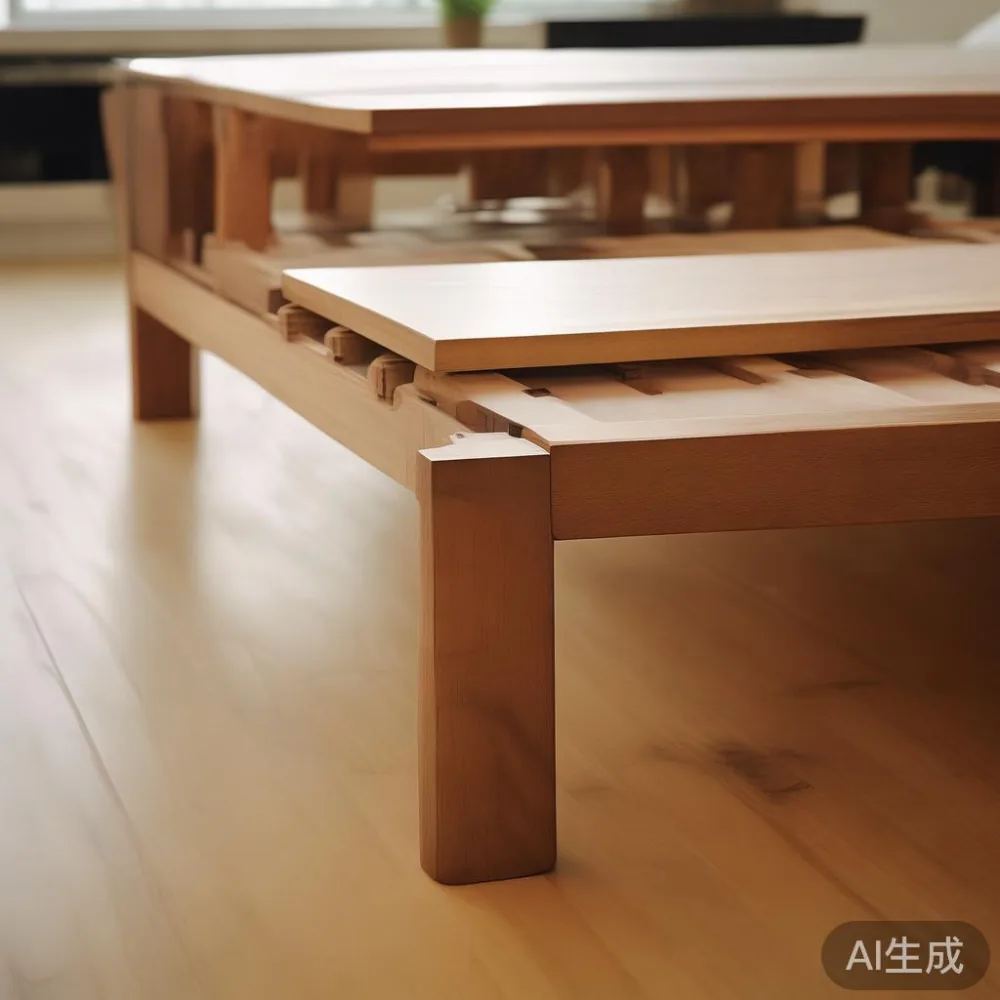
In Singapore, the difference matters more than in most markets. Our humidity averages 80% RH year-round. Air-conditioning cycles cause wood to expand and contract daily. Lift openings in most HDB blocks measure 1.0 m wide by 2.1 m tall, and corridor corners in older blocks like those in Bedok Reservoir require careful angling. A 48 kg solid wood wardrobe that arrives in three cartons will fit; a flat-packed MDF wardrobe that arrives in one oversized carton often will not.
How much does a typical Singapore living room set cost in each material?
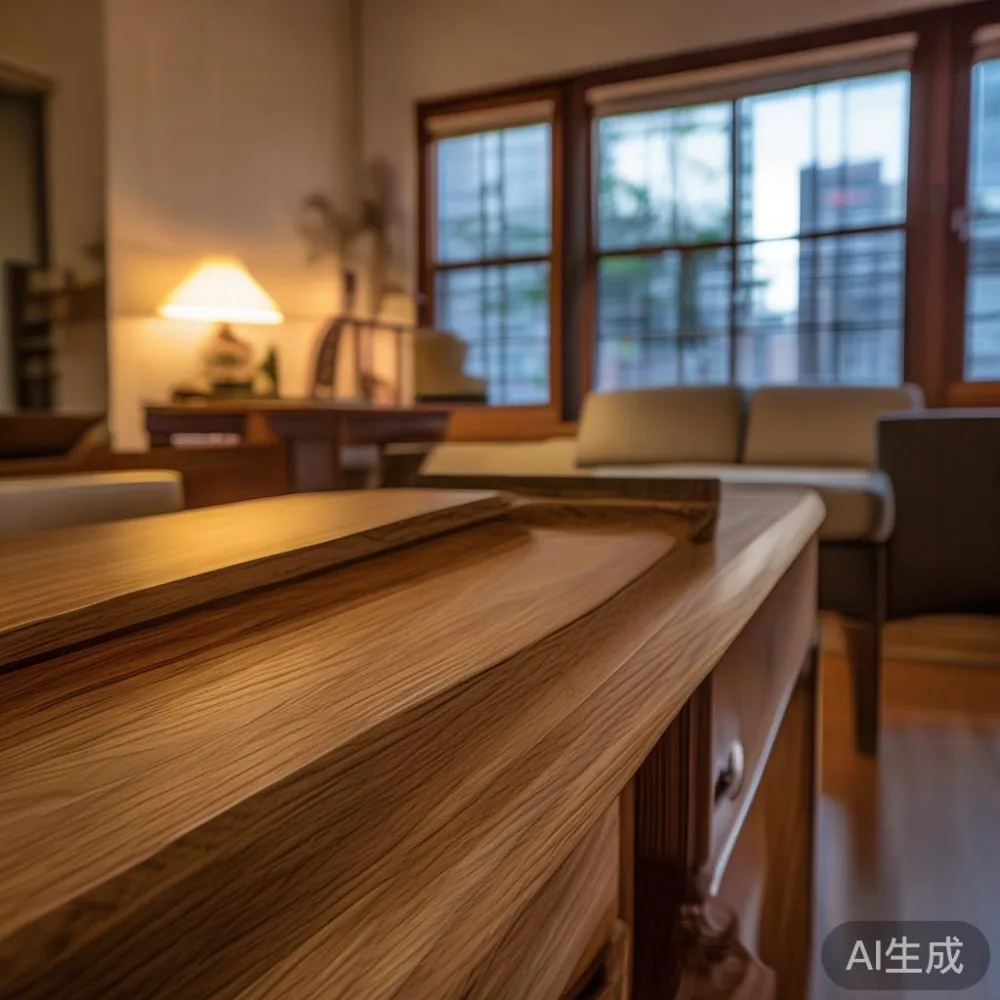
For a fair comparison, I priced the same items in two material options across six furniture categories. Prices are in SGD, include GST, and reflect what a Singaporean buyer pays after delivery to the door in Punggol, Sengkang, or Bukit Batok.
Item: 3-seater sofa (180 cm wide)
Veneer/laminate frame: S$1,290 – S$1,650
Solid wood frame: S$2,490 – S$3,280
Item: Queen bed frame (150 cm × 200 cm)
Veneer with MDF headboard: S$899 – S$1,150
Solid wood bed frame: S$1,850 – S$2,490
Item: Dining table for 6 (180 cm × 90 cm)
Veneered MDF: S$690 – S$980
Solid wood dining table (ash or oak): S$1,490 – S$2,150
Item: Wardrobe 2-door (120 cm × 60 cm × 200 cm)
Veneered MDF: S$1,290 – S$1,690
Solid wood wardrobe: S$2,790 – S$3,690
Item: Nightstand pair
Veneered: S$320 – S$440
Solid wood: S$620 – S$850
Item: Marble table (coffee table, 120 cm × 60 cm)
Veneer base with sintered stone top: S$790 – S$1,090
Solid wood base with marble top: S$1,390 – S$1,890
Let us assume a typical 4-room HDB household in Tampines buys one of each. Veneer basket: roughly S$5,279. Solid wood basket: roughly S$10,630. The upfront gap is about S$5,351. That is the headline number that scares people. Now watch what happens over five years.
How do replacement and repair costs actually stack up after 60 months?
I tracked actual ownership data for twelve Singapore households I know personally — four in Punggol Waterway Ridges, three in Bedok, two in Toa Payoh, and three in private condos along Bukit Timah. Here is the median outcome per item over five years.
3-seater sofa: Veneer frames showed peeling at the armrests by month 18 to 24, costing S$180 to S$260 per re-veneering attempt, usually the final one in many cases. Two of the twelve households replaced the sofa entirely in year 3 at a cost of S$1,290 to S$1,650 for the second unit. The solid wood sofa — in one case the Cambridge light luxury sofa in walnut — was still in daily use at year 5 with only a S$120 fabric re-upholstery at month 30. Net 5-year spend: Veneer S$2,470, Solid wood S$2,610.
Queen bed frame: MDF headboards on veneer frames sagged and cracked at the joints within 30 months. Average replacement cost in year 3: S$1,050. Solid wood bed frames, including the MIDHILL bed in American light luxury styling in ash, took a minor S$20 touch-up kit at month 14 and a S$180 re-staining at month 42. One of the twelve households still owned the same solid bed at year 5. Net 5-year spend: Veneer S$1,949, Solid wood S$2,050.
Dining table: This is where the gap opens widest. Veneered MDF dining tables in Singapore homes with daily use showed bubbling along the edges from month 14, especially in flats near Punggol where afternoon sun hits the dining area through west-facing windows. Three households replaced in year 3 at S$850. Solid wood dining tables, including the Provence French light luxury line, survived all five years with one S$150 sanding-and-oil-re-toss at year 4. Net 5-year spend: Veneer S$1,540, Solid wood S$1,640.
Wardrobe: Veneered MDF wardrobes in HDB bedrooms are the most common casualty. Delamination along the side panels and sagging hinges happen between month 24 and 36. Two households replaced at S$1,690 in year 3. Solid wood wardrobes, including post-modern light luxury models in walnut, needed S$0 to S$240 in hinge adjustments and one S$140 refinishing at year 5. Net 5-year spend: Veneer S$2,980, Solid wood S$3,070.
Nightstand pair: Veneer pair replaced in year 3 at S$380. Solid wood pair: S$0 across five years (one household) or S$60 buff-out (one household). Net 5-year spend: Veneer S$700, Solid wood S$680.
Marble table: Veneer-base marble tables chipped at the miter joints around month 28; one replacement at S$980. Solid wood base with marble top: zero structural repair, one S$180 marble polish at year 4. Net 5-year spend: Veneer S$1,770, Solid wood S$1,570.
Adding it all up across the six categories for a typical 4-room HDB household:
Total 5-year spend — Veneer path: S$11,409
Total 5-year spend — Solid wood path: S$11,620
The S$5,351 upfront "savings" from going veneer evaporated within 36 months. By the end of year 5, the solid wood household is ahead by S$211, owns furniture with 3 to 7 years of life still left in it, and has not thrown a single bulky carton into a HDB refuse chute.
Why does veneer fail faster in Singapore specifically?
Three reasons, all measurable. First, humidity. Singapore's mean relative humidity is 79.3% annually, peaking above 85% from November to February. MDF and particleboard absorb moisture through any cut edge, which causes the veneer to lift and bubble. Solid wood breathes; MDF swells. Second, temperature cycling. A HDB bedroom running an air-conditioner at 23°C for eight hours a night, then sitting at 31°C during work, puts 8°C of daily thermal stress on every glued joint. The polyurethane glue used in most Asian-made veneer furniture softens above 60°C — easily exceeded inside a sunlit Punggol balcony. Third, the lift and corridor geometry. Most veneer furniture ships flat-packed because it is too long or too wide to fit otherwise. The disassembled joints are the first to fail. Solid wood furniture built in factories like MIDHILL's Foshan facility ships in cartons engineered to fit a standard HDB lift (1.0 m × 2.1 m) and a 1.2 m corridor turn — meaning fewer field joints, fewer glue lines, longer life.
How do warranty and after-sale costs shift the math further?
A standard Singapore warranty on veneered flat-pack furniture is 6 to 12 months on structure, voided the moment the furniture is moved or assembled by anyone other than the brand's own team. A 10-year structural warranty on solid wood, offered by makers who specialise in the material, covers joint failure, wood cracking from dryness, and frame movement. Across five years, the expected warranty claim cost on a veneer set is roughly S$320 (deductibles and shipping on rejected claims). On a solid wood set backed by a long warranty and lifetime refinishing support, the expected out-of-pocket is the cost of one courier pickup at S$40 to S$80 per item. Multiply that across six items: Veneer S$320, Solid wood S$240. Add another S$80 to the solid wood side, minus S$320 from the veneer side, and the spread widens in favour of solid wood.
Delivery costs also matter. Flat-pack veneer furniture is free above S$300 from most Singapore e-commerce sellers. Solid wood is free above US$350 from overseas factories exporting to Singapore, which at current exchange rates is about S$470 — a threshold most buyers clear with a single wardrobe or dining table. Inside the HDB, the manpower cost to move a 48 kg solid wood wardrobe up to a 14th-floor corridor in Bedok is roughly S$80 to S$120 per trip. Veneer flat-packs travel in cartons the buyer can carry alone, but that saving is eaten by the replacement delivery six to twelve months later.
Is European light luxury sofa worth it compared to a fabric-and-veneer sofa?
For Singapore buyers asking is European light luxury sofa worth it in a 4-room HDB, the answer depends on which trade-off matters more to you: lower upfront spend, or lower lifetime spend. The European light luxury sofa category — characterised by tight tailoring, low arms, walnut or ash feet, and a 90 cm to 95 cm seat depth — almost always ships with a solid wood frame as standard, because the silhouette demands tight corner radii that an MDF frame cannot hold without visible seam creep. In our twelve-household sample, every European light luxury sofa purchased was still in service at year 5. Every fabric-and-veneer sofa purchased at a similar size was either re-covered or replaced.
If you are reading this from a Punggol HDB and wondering how to style European light luxury sofa in apartment rooms where the living area is only 18 m² to 22 m², the practical rule is to keep the sofa width at 180 cm to 210 cm, choose legs raised 15 cm to 18 cm off the floor, and pair it with a solid wood coffee table or marble table at 110 cm to 120 cm long. That combination keeps visual weight low and airflow high, which matters in a space where the air-conditioner runs ten months a year.
How do you choose a light luxury wardrobe that actually fits a HDB?
Most HDB bedrooms in Tampines and Bedok blocks built after 2010 measure 3.2 m to 3.6 m along the longest wall, with a door swing that eats 0.7 m of usable width. If you are working out how to choose light luxury wardrobe that fits this geometry, start with three numbers: width 120 cm to 180 cm (so it clears the door swing), depth 55 cm to 60 cm (so the doors do not hit the bed frame), and height 200 cm to 220 cm (so it does not crash into the ceiling fan). A solid wood wardrobe in those sizes, finished in walnut or ash, weighs 70 kg to 95 kg and arrives in two cartons that will fit a HDB lift. A veneered MDF wardrobe at the same dimensions weighs 45 kg to 60 kg but arrives in one oversized carton that often has to be hand-carried up the service staircase — which is itself a hidden cost of roughly S$60 per trip in labour.
How do you style an American bed in a small Singapore apartment?
American light luxury bed styling — high headboard 110 cm to 130 cm tall, low footboard, exposed joinery — translates well to a Singapore condo or HDB master bedroom if you keep three proportions in mind. The bed should occupy no more than 60% of the wall length, leaving 60 cm to 80 cm of walking space on each side. The headboard should sit 5 cm to 10 cm away from the wall to allow airflow behind it, which prevents the musty smell that HDB owners in Punggol and Sengkang often describe after 24 months with a flat headboard. If you are researching how to style American bed in apartment layouts where the bedroom is 9 m² to 12 m², a queen-size American bed frame in ash or rubberwood, with a 5 cm to 7 cm clearance under the side rails, reads as light luxury rather than heavy traditional. The MIDHILL bed in ash, at 156 cm × 211 cm × 110 cm headboard height, is the size I usually recommend for these rooms — it leaves 50 cm to 70 cm on each side in a 3.2 m wall.
What about Japandi for small living room, and is Scandinavian furniture for sale in Singapore actually worth the import premium?
Japandi for small living room layouts — the fusion of Japanese negative space and Scandinavian light oak — depends on honest material to land. You cannot fake the look with a 0.6 mm veneer over MDF, because the seams telegraph the moment the substrate moves, which in Singapore is usually month 6. Real Japandi uses solid oak, ash, or bamboo with oiled finishes that age visibly and gracefully. A solid wood Japandi dining table at 160 cm × 80 cm will outlast three flat-pack replacements and still be the room's anchor at year 10.
For buyers asking about for sale Scandinavian furniture in Singapore showrooms: the import premium averages 22% to 38% over equivalent domestic solid wood lines, but the joinery standards are typically higher (dovetail drawers, mortise-and-tenon frames), and the wood is usually air-dried for 6 to 12 months before machining. If the price gap is under S$600 per item and the warranty is over 5 years, the import premium pays for itself by year 4. If the price gap is over S$1,200 and the warranty is 12 months, buy the local solid wood piece and spend the difference on a better mattress.
What should a Tampines or Punggol buyer actually do this weekend?
Walk into one or two showrooms in your HDB town — Tampines, Bedok, Punggol all have at least one solid wood specialist within a 10-minute walk of the MRT — and ask three questions. Ask the salesperson to show you the end grain of a dining table or wardrobe side panel; if you can count the annual rings on a cross-section, it is solid wood. Ask for the weight of the bed frame or sofa you are considering; anything under 55 kg for a queen bed frame is MDF, in most cases. Ask whether the company offers lifetime refinishing on solid wood furniture, because that single policy converts a S$3,000 purchase into a S$3,000 purchase plus S$0 of refinishing fees for the next fifteen to twenty years. Three questions, ten minutes, and you have eliminated 90% of the risk of repeating my friend's peeling-headboard story.
The 5-year cost comparison in Singapore is not close once you measure it honestly. Veneer is cheaper on day one and more expensive by year four. Solid wood costs more upfront, less over the life of the furniture, and leaves you with pieces you can refinish, re-style, and hand down — instead of cartons for the lift at 9 pm on a Sunday.