Solid Wood: What Actually Drives the Price of Solid Wood Furniture?
Solid wood furniture is often described with broad words such as “premium,” “heirloom,” or “made to last.” Those words can be useful, but they do not explain the invoice. A better question is: what physically changes the price? The answer begins with the timber, its grade, the dimensions of the board, the construction method, the finish, hardware, and the amount of skilled labour required to turn raw material into a usable piece.

For Singapore homes, those factors interact with very practical constraints. A 220 cm dining table may fit a HDB dining area but still be awkward to carry through a 90 cm corridor and into a lift with a 110 cm door. A 210 cm wardrobe may suit a Tampines bedroom beautifully yet be impossible to manoeuvre around a tight turn. GST, delivery, assembly, and access charges can therefore matter as much as the catalogue price. MIDHILL prices pieces for real projects across Singapore and exports to more than 15 countries, so a quoted figure should make these variables understandable rather than hiding them inside an unexplained number.
Why does solid wood cost more than engineered wood?
The starting point is material. Solid wood means that the visible and structural parts of the furniture are made from timber, rather than thin veneers bonded to particleboard or fibreboard. That sounds simple, but it changes several things at once.
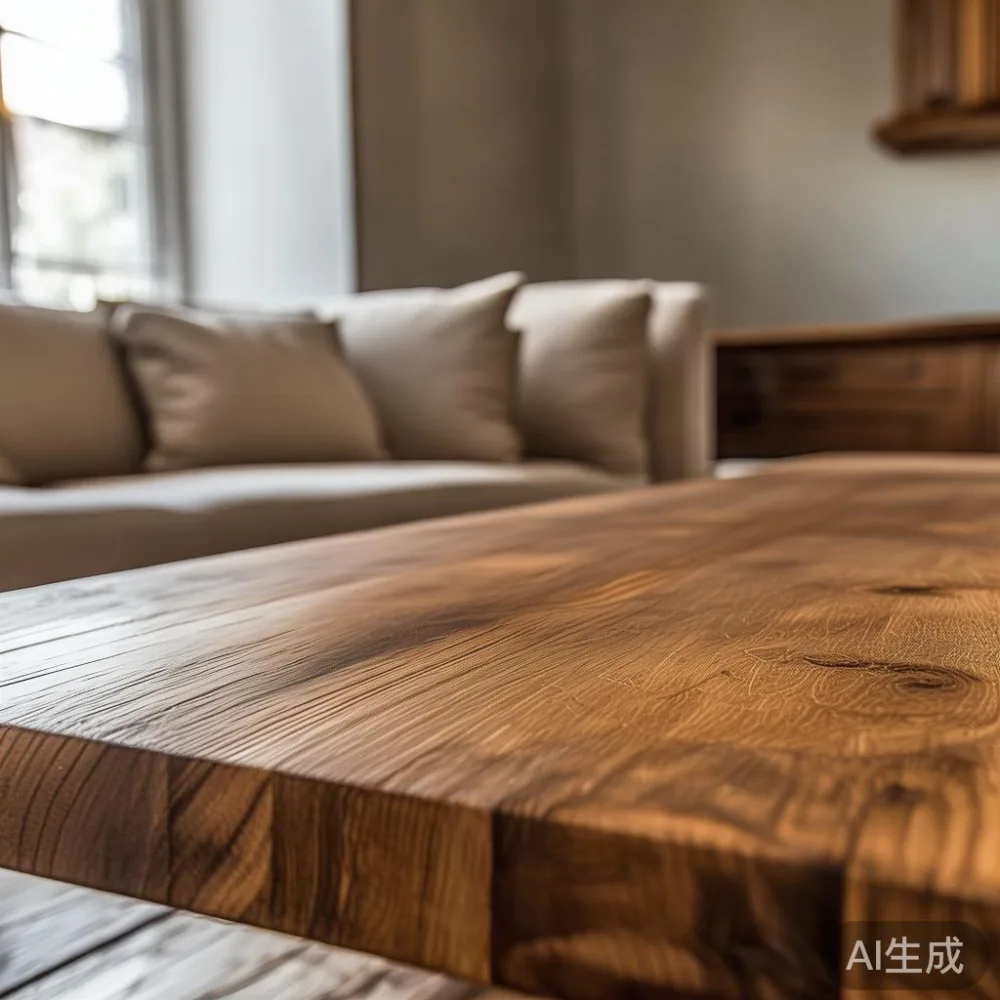
First, timber has natural variation. A board 240 cm long may contain knots, sapwood, mineral streaks, or colour changes that affect yield. A maker may need boards of different widths to avoid weak areas and maintain a consistent appearance. Waste is part of the cost. A dining table with a 45 cm wide top may use boards cut and joined across the surface; if the design requires cathedral grain, each section must be selected and arranged by hand.
Second, solid wood moves with humidity. In Singapore, where indoor conditions commonly fluctuate around 23–30°C and relative humidity can vary considerably, experienced manufacturers use appropriate joinery and finishing schedules. The objective is not to pretend that wood never moves, but to reduce seasonal distortion while preserving the material’s character.
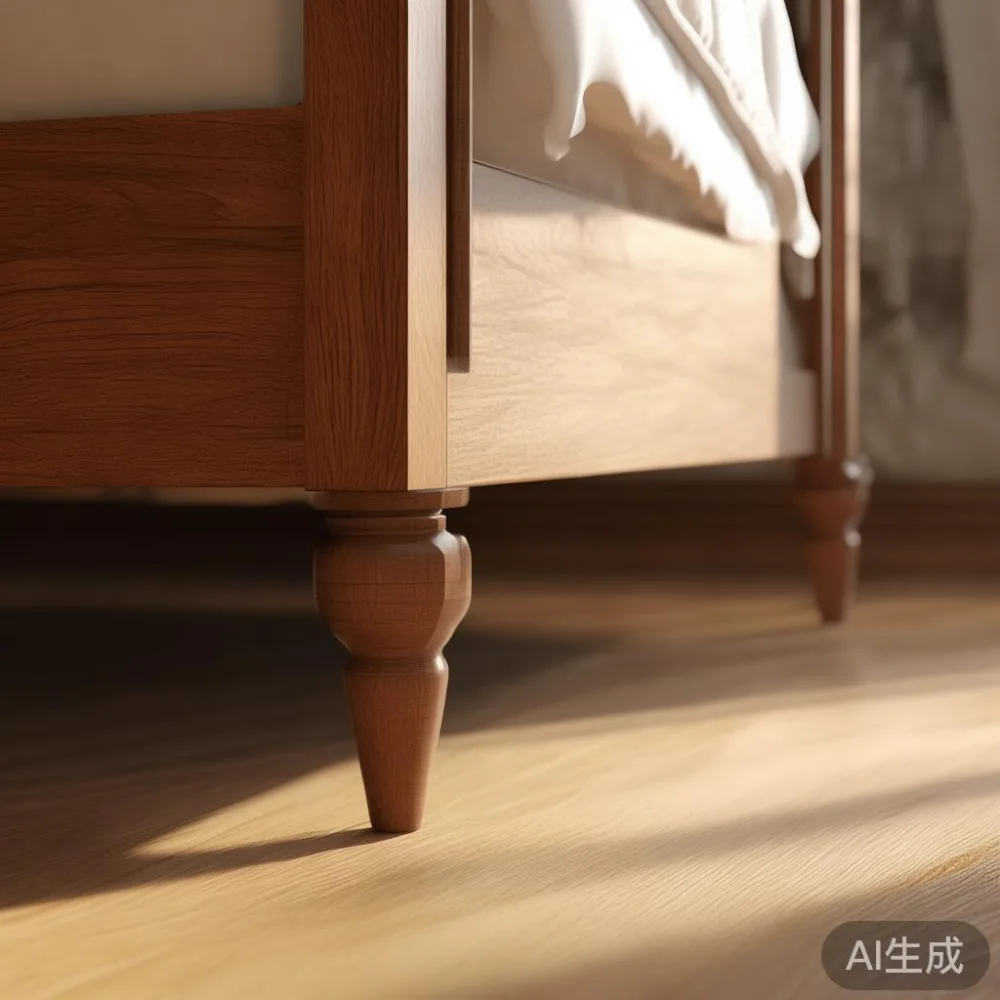
Engineered wood can be very suitable for many apartments. Its price is not inherently misleading; it simply represents a different material and construction approach. The comparison becomes useful when asking whether the buyer values the feel, repairability, grain, and longevity associated with solid timber. A 180 cm solid wood bed frame may weigh 55–90 kg depending on its species and structure, while an engineered version may weigh 25–45 kg. That difference affects delivery, especially above the third floor.
Is tree species the biggest price driver?
Species matters, but “solid wood” alone is not a grade. The board’s grade, thickness, moisture treatment, and defect profile can be just as influential. Buyers commonly encounter oak, ash, beech, walnut, and rubberwood, among others. Imported walnut can command a higher price because of its scarcity, appearance, drying time, and waste rate. Domestic or regionally sourced hardwoods may be more economical, while premium oak selected for a pale, even finish can cost more than a lower grade of another species.
The species should be named on the quotation. “All solid wood” leaves too much ambiguity for a meaningful comparison. Ask whether the solid wood sofa frame uses kiln-dried hardwood in load-bearing rails, and whether the bed frame uses solid wood for the side rails and centre support rather than only for decorative faces. A 20 mm top, for example, is not automatically stronger than an 18 mm top if the latter has better timber and joinery.
Moisture content is a concrete quality issue. Solid wood should be conditioned for the destination climate, and responsible suppliers document drying and material handling. A piece suitable for Singapore should not arrive warped because it was packed immediately after finishing in a very different environment. Dense hardwood also takes longer to machine and sand. Six workers may need 2 days to prepare and assemble a large wardrobe, whereas a simpler nightstand might take 1.5 hours after components are prepared.
Solid wood is not simply priced by volume. A narrow, defect-free board may be more valuable than a wider, knotty one. Suppliers buying by board foot calculate for usable yield, not just the nominal size. That is why a visually modest 160 cm nightstand can sometimes sit close in price to a less demanding product elsewhere: species, grade, machining, and finish all count.
How much should construction affect the price?
Construction determines how long the furniture remains stable under load. Look for load paths that make sense, rather than decorative elements that merely increase weight.
A dining table needs a sound top, sound aprons, and supports positioned close enough to the ends that the table does not sag. For a 220 cm table, supports no more than about 35 cm from each end provide better resistance than supports concentrated in the centre. A 200 kg evenly distributed load is a reasonable benchmark for a well-built dining table, subject to the maker’s stated limit.
A solid wood bed frame should be judged at its joints. Mortise-and-tenon, dowelled, or screwed joints can all be appropriate when designed correctly. Drawer boxes need smooth movement and positive stops. The usable drawer interior matters more than an oversized exterior. For a wardrobe, the structure includes hanging rails, shelf supports, door frames, and an anti-tip provision. In a child’s room, secure anchoring to the wall should be part of the installation plan rather than an optional extra.
Hardware is visible in both cost and service life. A soft-close drawer runner rated for 30 kg, quality hinges with a 100,000-cycle test rating, and castors suitable for the floor surface are sensible specifications. A premium-looking handle may add only SGD 8–25 to a piece, while a full soft-close system on 8 drawers may add SGD 80–200. These are not universal amounts, but they show why asking for the hardware schedule can sharpen a quotation.
Back panels deserve attention. A thin solid wood back on a dining table adds little structural value. A framed plywood or engineered back can be more stable within an otherwise solid wood carcass. The issue is performance and honesty about materials, not a contest between labels. On a 220 cm solid wood dining table, a full-length apron and reinforced corner joints can contribute more to longevity than a costly coating applied to an undersized panel.
Why do design, joinery, and finish create large price gaps?
Two dining tables can use the same timber and still differ by hundreds of dollars because their production requirements differ. A rectangular table with a straight edge, simple apron, and standard finish is easier to standardise. A table with a 12 cm sculpted edge, rounded corners, breadboard ends, or a stone or marble inset requires more jigs, sanding, matching, and handling.
Joinery is a good example. A curved French provincial TV console may use shaped side panels, compound mitres, and multiple cabinet doors. Producing those curves consistently requires templates, routing, and hand correction. A straight-sided console with slab doors needs fewer hours. The price difference may reflect labour, tooling, and defect risk rather than a “luxury” label.
Finish has its own layers. The quoted finish may include preparation, stain or lacquer, sealing, sanding, topcoat, and curing. A clear matte finish can preserve the natural grain, while a deep walnut tone may require additional colouring steps. A marble table adds another set of variables: slab selection, edge treatment, support structure, weight, packaging, and installation. A 120 cm round marble table can weigh 45–70 kg, while the same dimensions in a compact solid wood design might weigh 30–50 kg. That distinction should be reflected in delivery and lifting charges.
Design complexity also influences repairability. A knock-down solid wood bed frame with bolted components can be moved through access points and reassembled. A fixed large wardrobe may need partial disassembly. The 10-year structural warranty offered by MIDHILL is meaningful because a frame should remain stable for years, but care instructions still matter. Avoid placing a solid wood dining table directly beside an air-conditioning vent or under direct afternoon sun, and use coasters with a minimum 5 cm clearance from the edge.
Can Singapore delivery and access change the final cost?
Yes. A lower catalogue price can become a higher project price after delivery to a specific address. The useful details are the delivery days, packaging, assembly, and access conditions.
In Singapore, a HDB lift door may measure about 90 cm wide and 210 cm tall, with a car measuring roughly 140–210 cm deep and 110–135 cm wide. These dimensions are building-specific, so measurement should be confirmed before dispatch. A 200 cm boxed bed frame may fit diagonally, but a 220 cm boxed dining table may not fit the lift and could need unboxing at the door or outside the void deck. A wardrobe with rigid packaging is especially sensitive to turns and corridor width.
Ask whether the price includes the normal floor and lift. Charges for carrying beyond the lift landing, additional floors, or special handling should be quoted in advance. For standard Singapore delivery, allow approximately 5–10 working days after production, though made-to-order pieces can take 4–8 weeks. GST is normally shown separately at 9%. MIDHILL provides free shipping for orders above US$350, but international freight, insurance, and local access charges should still be confirmed for a specific destination.
Returns and finishes affect the calculation too. A 14-day return policy provides room to inspect scale, colour, and condition, but custom sizing or bespoke finishes may have different conditions. For a made-to-order wardrobe, request a dimensioned drawing and finish sample before the final charge is approved.
What is the difference between French, American, and post-modern light luxury?
These styles create different price profiles because they use different amounts of shaped timber, ornament, and fabrication. French light luxury often introduces curved silhouettes, carved or moulded details, tapered legs, and softer upholstery. American light luxury commonly emphasises generous proportions, clean lines, deep seat comfort, and substantial-looking frames. Post-modern light luxury can mix geometric forms, restrained contrast, and carefully balanced asymmetry.
For a Singapore condo, style should begin with the room, not the sales label. A rounded solid wood sofa can soften a rectilinear living room in Punggol. A marble table can establish a focal point in a compact Bedok sitting area, provided its weight and delivery route are understood. A French provincial TV console should relate to the television wall rather than compete with it through too many curves and mouldings.
For hotel projects, the phrase French provincial for hotel can refer to a warm residential language adapted for guest-facing spaces, but durability and maintenance matter. A French for guest room scheme should use washable fabrics, replaceable glides, and finishes that tolerate frequent cleaning. A smaller 150 cm French provincial TV console may suit a hotel suite better than a 210 cm model, and modular storage can reduce installation time from several hours to about 1 hour.
Style also affects upholstery choices in a solid wood sofa. A seat width of 55–60 cm per person gives reasonable comfort. Foam density, feather wrapping, webbing, and the frame’s suspension should be specified. The frame may be solid wood, while cushions and covers are necessarily flexible materials. Good specifications disclose these components rather than presenting the entire sofa as one homogeneous substance.
How should you compare quotations without being misled?
Compare like-for-like specifications. Request the species or veneer situation, board thickness, dimensions, internal construction, finish layers, hardware, warranty, delivery terms, and return conditions. A quotation near SGD 1,200 for a 180 cm solid wood bed frame may use 18–20 mm timber and basic dowelled construction. A quotation near SGD 1,900 may specify thicker timber, stronger joints, better suspension, and a more involved finish. The difference may be justified; it should be demonstrable.
For a dining table, compare the price per usable centimetre, not only the total. A 160 cm table in a compact dining zone may be a smarter fit than a 220 cm model. For a wardrobe, compare internal layouts against the footprint. A 240 cm unit with 2 hanging bays and 8 shelves may be more useful than a 210 cm unit with larger decorative panels. For a nightstand, check drawer travel, the opening, cable access, and whether the width suits a 50 cm bedside gap.
Search terms such as under 2000 Rustic furniture and under 2000 American furniture can help identify initial ranges, but they should not replace inspection. A piece described as rustic may use reclaimed timber, substantial boards, and hand-finished edges; another may merely use a distressed surface treatment. Likewise, a broad price band does not reveal whether the apparent solid wood sofa includes a solid frame beneath the upholstery.
Colour and lighting can also distort perception. View samples under the same conditions as the room, ideally for at least 30 minutes at night. If you are learning how to style French wardrobe in bedroom, the practical sequence is clearer: establish the bed, preserve a circulation route of at least 60 cm where possible, coordinate the wardrobe finish with the bed frame, and use restrained lighting rather than matching every element exactly.
How do you know whether the price is fair?
A fair price reflects material, construction, labour, logistics, and after-sales support. It does not rise merely because a piece has a traditional name or a large number. Check the information that should accompany the price:
- Timber: named species, grade, thickness, and moisture treatment where available.
- Dimensions: external size plus clear internal storage measurements.
- Construction: joinery, load paths, drawer systems, and back-panel approach.
- Finish: number of coats, colour sample, and cleaning guidance.
- Delivery: production lead time, packing, stairs or lift charges, and assembly.
- Protection: structural warranty period, refinishing service, and return conditions.
For example, a 200 cm solid wood dining table might reasonably fall within SGD 1,500–3,500 depending on timber, edge profile, and construction. A 220 cm solid wood bed frame may range from SGD 1,300–3,000, while a 240 cm wardrobe may range from SGD 2,000–5,500. A smaller marble table might sit around SGD 1,800–4,000. These are comparison ranges, not promises, because a specification sheet is more informative than a number alone.
Last month I visited a supplier’s workshop and watched a dining table move through final assembly. The timber was not the only variable consuming attention: a worker spent 18 minutes aligning the apron with the top, checked diagonal measurements twice, and sanded a small surface defect before the finish was applied. That 18 minutes looked trivial beside the timber invoice, yet it represented the labour and accuracy that distinguish a functional table from one that merely looks similar in a photograph.
The practical way to read a solid wood price is to trace it backwards. Start with the finished piece, then ask what the timber, grade, dimensions, joints, finish, hardware, packaging, and access must cost. That approach makes comparisons fairer, reduces overspending on superficial details, and helps Singapore buyers choose furniture that suits the room as well as the budget.