Solid Wood vs. Veneer: A 5-Year Cost Analysis for Singapore Homes
The decision between solid wood and veneer furniture is a significant one for any Singaporean homeowner, especially when working through the spatial and financial realities of HDB flats and condominiums. In a city where space is a premium and quality is paramount, the choice extends beyond mere aesthetics to long-term value, durability, and cost. This article provides a detailed 5-year cost comparison, moving beyond the initial price tag to encompass maintenance, repair, and replacement costs. We will examine how these materials perform in the specific context of Singaporean living, from the humid climate to the narrow corridors of a 5-room HDB flat in Tampines or the open-plan layouts of a condo in Punggol.
The Initial Investment: Upfront Costs for Your Home
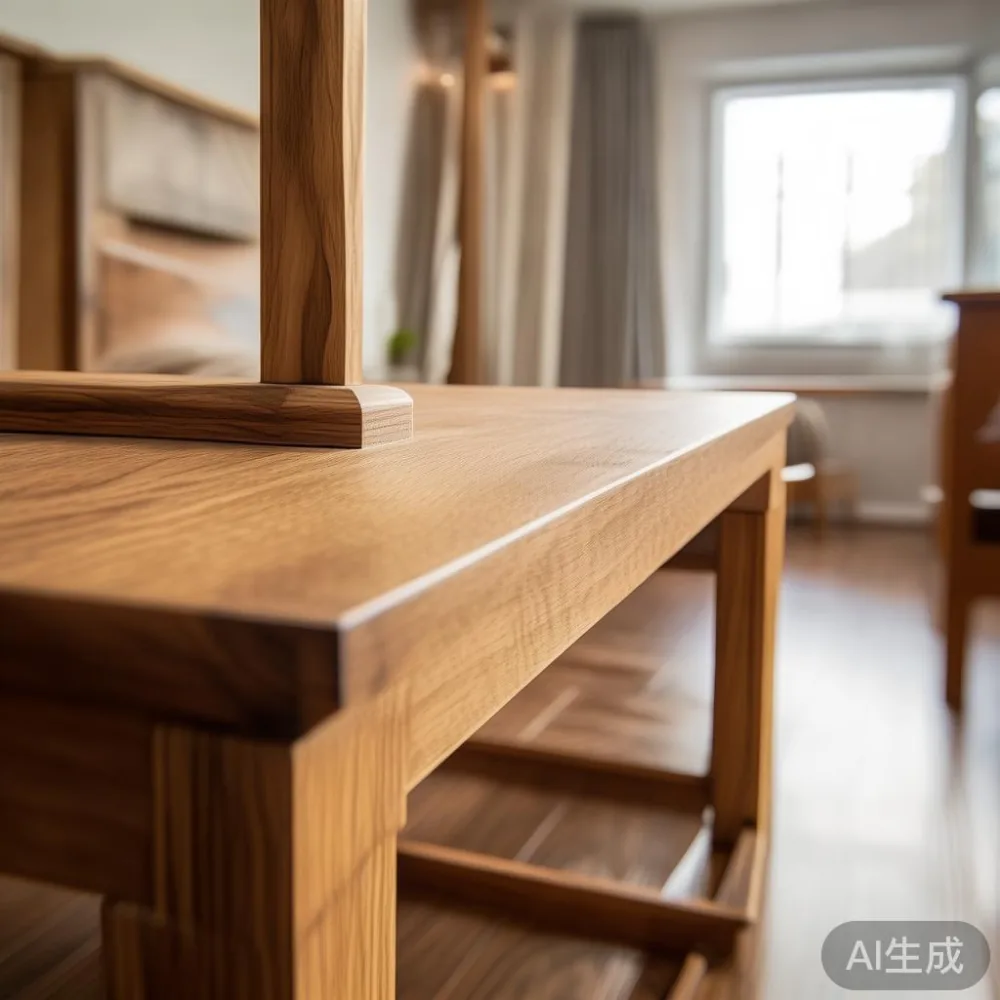
The most immediate difference between solid wood and veneer furniture is the price. A solid wood dining table, for instance, commands a premium price due to the volume of high-quality timber required. A solid wood dining table measuring 180 cm x 90 cm with a cream oak wood finish from a reputable maker might cost between SGD 2,800 and SGD 4,500. In contrast, a veneer table of the same dimensions could be priced between SGD 1,200 and SGD 2,000. This initial saving is a powerful draw for many, especially young couples setting up their first home in Bedok.
The cost disparity is consistent across other furniture pieces. A solid wood bed frame for a queen-sized mattress might range from SGD 1,800 to SGD 3,200, while a veneer equivalent could be found for SGD 800 to SGD 1,500. Similarly, a solid wood wardrobe, a critical piece of furniture for any Singaporean bedroom, could cost SGD 3,000 to SGD 5,500 for a 200 cm unit, whereas a veneer wardrobe might be priced between SGD 1,500 and SGD 2,800. The initial investment for a full set of solid wood furniture for a living room, including a sofa, a marble coffee table, and nightstands, could easily exceed SGD 15,000, while a comparable veneer set might cost around SGD 8,000 to SGD 10,000.
It's important to consider the delivery logistics as well. A solid wood sofa, weighing 50 kg or more, requires careful handling. While most reputable brands offer free shipping over SGD 350, ensuring the furniture arrives without damage is a consideration. Veneer furniture, being lighter, is often easier and cheaper to transport due to its lower weight and density.
Year 1-2: The Wear and Tear of Daily Life
The first couple of years are where the initial shine of new furniture begins to meet the reality of daily use. In Singapore's humid climate, both materials are susceptible to environmental stress, but they react differently. Solid wood is a natural material that can breathe. It may expand slightly with humidity, which is a normal characteristic. A solid wood dining table might develop a fine patina over time, adding to its character. However, direct exposure to the sun through a window in a condo can lead to natural colour fading, which is an aesthetic consideration but not a structural flaw.
Veneer, being a thin layer of real wood over a composite core like MDF or particleboard, is more vulnerable to moisture damage. A spilled drink on a veneer surface that isn't wiped up immediately can cause the thin wood layer to bubble or peel, revealing the less attractive substrate beneath. This damage is often irreversible with simple household products. My colleague, who recently moved into a new HDB flat, experienced this firsthand. Last month, I visited her new home and saw a small ring mark on her veneer coffee table where a glass of water had been left for a few hours. The finish was permanently damaged, and she was quoted SGD 250 for a professional repair, which was a significant portion of what she paid for the table itself.
For structural integrity, solid wood furniture holds a clear advantage. A solid wood bed frame or wardrobe is less likely to develop wobbles or sagging under weight. Veneer furniture, particularly items with thin legs or large surface areas like a dining table, can become unstable if the underlying composite core is compromised by humidity or minor impacts.
Year 3-4: Maintenance Costs and Aesthetic Decline
As we move into the third and fourth years, the cost conversation shifts from repairs to maintenance. Solid wood furniture is designed to be maintained. A solid wood sofa or dining table can be refinished. This process involves sanding down the existing finish and applying a new layer of oil or lacquer. While this is a service that some manufacturers offer, it can also be done professionally. The cost for refinishing a dining table might range from SGD 400 to SGD 800, depending on its size and complexity. This is an investment that restores the piece to its original condition, effectively extending its life indefinitely.
Veneer furniture, on the other hand, offers no such path for restoration. Once the surface is damaged, the only solution is often replacement. If the veneer on a nightstand peels, it cannot be sanded and refinished like solid wood. Attempting to do so would simply sand through the thin layer of wood. The owner is left with two choices: live with the damage or purchase a new piece. This lack of a long-term maintenance plan is a hidden cost that becomes apparent around the three to four-year mark.
Aesthetically, the gap also widens. Solid wood develops a rich, deep patina. A solid wood wardrobe that has been in a family for years tells a story through its grain and colouration. Veneer tends to look dated and worn. The thin layer of wood can become scratched and faded, and the exposed edges, where the veneer meets the substrate, can begin to show white lines, making the piece look tired and cheap. This aesthetic decline can prompt a homeowner to replace the entire set, even if the structure is still sound.
How do I choose a outdoor patio for a HDB living room?
The direct answer is that for an outdoor patio or balcony in an HDB, you should choose solid wood that is specifically treated for weather resistance, such as teak or shorea, not standard indoor veneer furniture.
Choosing furniture for an outdoor space like a patio or balcony attached to an HDB flat or condo requires a different set of criteria than indoor furniture. The primary consideration is exposure to the elements: sun, rain, and high humidity. Veneer furniture is completely unsuitable for this purpose. The thin layer of wood will quickly warp, bubble, and peel when exposed to moisture, and its colour will fade rapidly under the intense Singaporean sun. A veneer dining table left on a balcony would likely be ruined within a single season.
Solid wood, however, can be a suitable choice if it is the right kind. Not all solid wood is created equal for outdoor use. You need a hardwood with a high natural oil content that resists rot and insects. Teak is a classic example, though it is expensive. Shorea wood is a more affordable and durable alternative. For a patio, a solid wood dining table and chairs made from a weather-resistant species are a long-term investment. They will require periodic maintenance, such as applying teak oil once or twice a year to protect the finish, but they will last for many years. Light luxury brands often offer outdoor collections in styles ranging from French light luxury to post-modern light luxury, allowing homeowners to extend their interior aesthetic to their outdoor living space.
Year 5 and Beyond: The Total Cost of Ownership
At the five-year mark, we can finally calculate the true total cost of ownership. Let's revisit our hypothetical homeowner who chose the veneer option to save money initially. They purchased a full set of veneer furniture for their Tampines HDB flat for approximately SGD 8,000. Over five years, they might have incurred SGD 300 in minor repairs and are now faced with a set that looks worn out. The aesthetic decline is significant enough that they feel the need to replace at least the dining table and sofa. A new set of veneer furniture would cost another SGD 8,000. Their five-year expenditure is now SGD 16,300.
Now consider the homeowner who invested in solid wood furniture for their Punggol condo. They spent SGD 15,000 initially. Over five years, they may have spent SGD 500 on professional maintenance, such as having their dining table's cream oak wood finish refreshed. Their furniture still looks excellent, has a beautiful patina, and is structurally sound. It shows no signs of needing replacement. Their five-year expenditure is SGD 15,500.
While the numbers are close, the value proposition is entirely different. The solid wood owner has a set of furniture that is an asset, both in terms of quality and longevity. The veneer owner has gone through one full lifecycle of furniture and is back at square one, needing to make another large purchase. This cycle of replacement is a significant hidden cost of choosing veneer. Also, when moving house, solid wood furniture holds its value better. A well-maintained solid wood bed frame or wardrobe can be sold second-hand for a reasonable price, whereas used veneer furniture has virtually no resale value.
Making the Smart Choice for Your Singaporean Home
The choice between solid wood and veneer ultimately boils down to your priorities and lifestyle. For those on a very tight budget or who are renting and do not plan to stay in their home for more than a few years, veneer furniture can serve a functional purpose. It is lightweight and easier to manoeuvre through Singapore's standard HDB lift dimensions (110 cm x 210 cm). However, for anyone planning to build a long-term home, solid wood is the more economical and sustainable choice in the long run.
The peace of mind that comes with a 10-year structural warranty, a feature often found with high-quality solid wood makers, is invaluable. It protects your investment against manufacturing defects. The ability to refinish a solid wood sofa or dining table means your furniture can adapt to your changing tastes and last for generations. In the context of Singaporean living, where homes are smaller and every piece of furniture is a significant part of the daily environment, the durability and timeless nature of solid wood make it a sound investment.
When selecting furniture, consider not just the price tag but the story you want your home to tell. Solid wood furniture, with its natural imperfections and ability to age gracefully, brings a sense of warmth and permanence that veneer simply cannot replicate. It’s an investment in the comfort and character of your home, paying dividends in quality and longevity for years to come.