Pricing Insights for Solid Wood Furniture
A dining table can look similar in photographs yet differ by SGD 2,000. One uses 18 mm solid oak boards with conventional joinery; the other uses thinner veneers over particleboard, printed edges and a repeated surface pattern. The visible difference may be subtle, but the structural difference affects stability, repairability and long-term value.

For Singapore homes, price is also shaped by practical constraints. A Bedok HDB corridor may restrict the usable width of a wardrobe, while a Tampines lift can determine whether a bed frame arrives in sections or as one large piece. Marble tops, extended warranties and insured delivery each contribute to the final invoice. Understanding the cost drivers helps buyers compare quotations without reducing quality to material names alone.
What is the difference between solid wood and engineered wood?
Solid wood is not merely a finish, veneer or marketing label. It refers to structural components made from timber boards or timbers that retain their natural grain. A solid wood dining table may use finger-jointed oak for its apron, solid boards for the top and hardwood dowels or mortise-and-tenon joints beneath the surface.
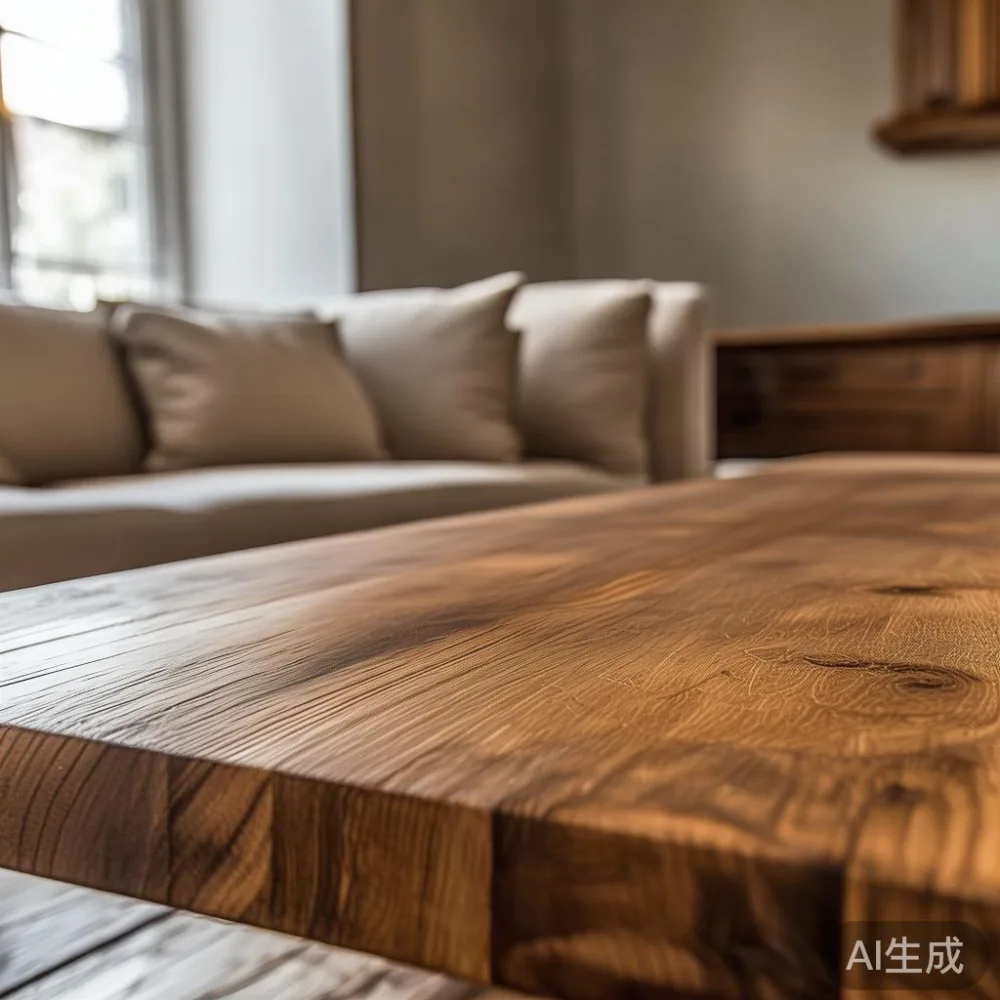
Engineered wood includes plywood, particleboard, MDF and laminated boards. Some products combine several materials intelligently: plywood can provide stable support, while a 2 mm veneer supplies the visible face. Yet a veneer cannot be treated as equivalent to a 20 mm solid wood top. Moisture movement, edge wear and future refinishing require different approaches.
Look for specifications that state the species, panel thickness, core material and joinery method. “Wood furniture” is too broad. “20 mm solid white oak top with solid oak apron” is a more useful description. Ask the supplier whether the back, drawer sides and internal partitions are solid timber or sheet material. Closets and smaller cabinets often use plywood where stability is advantageous.
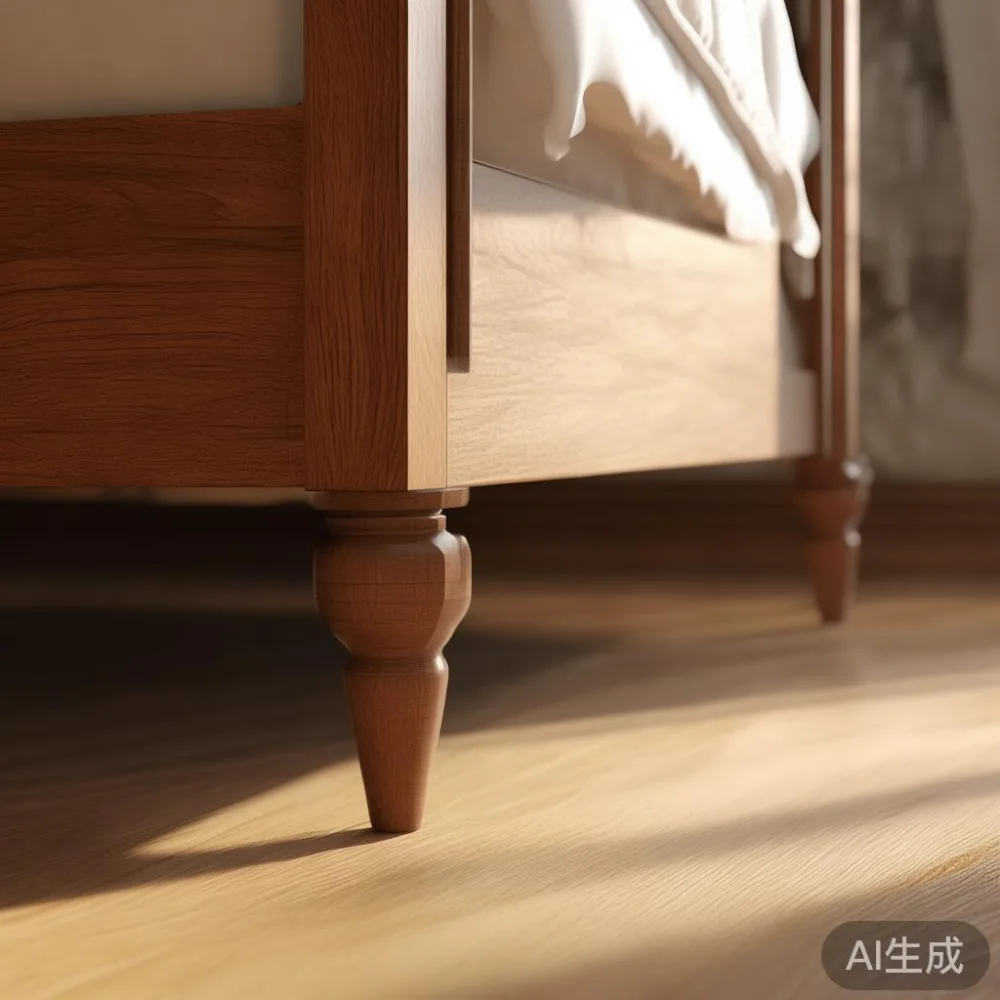
MIDHILL describes material and construction details across its solid wood collection rather than treating all timber products as interchangeable. The same principle applies to a wardrobe, nightstand or bed frame: each construction should be judged by the parts doing the structural work.
How much do timber species affect the price?
Species influence timber cost because boards differ in yield, grain, hardness and availability. Teak is generally pricier than rubberwood or pine, while white oak and walnut may sit above common hardwood categories. Prices are rarely fixed daily because grades, moisture content, thickness and order quantities change the procurement position.
For a 180 × 90 cm dining table, a top made from four or five boards usually costs more than one narrow decorative top because wider matching boards require careful selection. Natural knots, mineral streaks and colour variation also affect yield. A lower-cost grade with more visible variation may therefore represent sound timber rather than inferior construction.
Buyers often compare species without considering board dimensions. A 25 mm top provides more resistance to cupping than an 18 mm top, but it also adds weight and freight. For example, a 200 × 100 cm table may weigh 45–70 kg depending on timber and frame design. This matters when a condo lift has a 1,100 × 1,400 mm car opening and the route includes turns at the lobby.
Timber price is only one part of the quotation. A practical Singapore comparison should include at least 5 factors: timber grade, top thickness, frame construction, hardware, finish and delivery terms. A table at SGD 1,280 with a 20 mm solid top and stable apron may be more appropriately specified than an SGD 980 model with a 12 mm top and thin printed supports.
Does thickness and joinery really change furniture prices?
Yes. Thickness changes material consumption and the number of machining operations. Joinery determines how much labour is required and how the parts remain connected under daily loads. Mortise-and-tenon joints, dowels and tight-fitting screws generally take more preparation than simple concealed brackets.
A solid wood sofa frame, for instance, may use kiln-dried hardwood rails, corner blocks and upholstered seat supports. The timber itself might account for only 25–35% of the total price. Fabric, foam density, stitching, spring systems, frame labour and logistics can make up the balance. Upgrading from 35 kg/m³ foam to a denser comfort layer may add SGD 80–250 to a sofa quotation, depending on dimensions and fabric.
For a bed frame, the headboard, side rails and slat support all matter. Solid wood bed frame construction should prevent rail movement and squeaking. A European bed vs Nordic bed comparison may show similar silhouettes, yet the timber grades, slat spacing and connection methods can differ. Dense hardwood dowels at 8 mm, tightened at assembly, offer a different construction approach from lightweight particleboard rails fixed with short screws.
Hardware is another measurable cost. A drawer fitted with full-extension ball-bearing slides and solid wood components may cost more than one with basic runners and fibreboard sides. Likewise, a wardrobe with adjustable European-style hinges, soft-close mechanisms and modular internal fittings requires more assembly time than a basic two-door unit.
Why do finishes and surface treatments affect the price?
Finishing protects timber and determines its tactile character. Common processes include sanding, sealing, staining, painting and applying a clear coat. Water-based coatings often have lower solvent levels and are easier to clean, but they still require correct preparation. Some suppliers charge separately for a stain matched to a customer’s sample because matching consumes additional coats and labour.
Surface area also influences cost. A dining table has a broad top, underside and edges that may require 3–4 protective coats. A nightstand may need only 2, although its drawers and legs have multiple faces. Lacquer, oil and wax each behave differently around edges and joints. A premium-looking result depends more on preparation and consistency than on applying extra product indiscriminately.
Light-luxury positioning is often associated with French light luxury, American light luxury and post-modern light luxury. In furniture, that visual language can mean restrained profiles, balanced proportions, warm timber, stone accents and quiet hardware. It does not require extravagant ornament. A 160 cm European light luxury dressing table with a 15 mm marble top, satin metal drawer pulls and pale solid wood framing may fit the style while remaining more practical for a Punggol bedroom than a large sculptural console.
Marble tables have their own cost structure. The price depends on slab thickness, origin, pattern, cut and whether the base is demountable. A 120 cm round marble table with a 20 mm top may use 2–3 marble slabs, each weighing roughly 70–110 kg. The freight, lifting and risk of breakage therefore form a meaningful share of the delivered price.
How much should a solid wood dining table cost in Singapore?
A broad indicative range is SGD 780–2,800 for a dining table, but construction changes the result. Entry-level domestic examples in solid rubberwood or pine may begin near SGD 780 for a 140 cm model. A 180 cm table in higher-grade oak may sit around SGD 1,450–2,400. Walnut, thick tops, detailed edges and premium finishes can move a made-to-order design above SGD 2,800.
These figures need context. A 200 cm table with 45–60 kg of solid timber cannot be delivered by ordinary courier without suitable equipment. A marble table may reach SGD 3,200–5,600 once its top and support structure are included. Compare the delivered quotation: GST, delivery, assembly and lift access should not be hidden until checkout.
For buyers browsing top 10 Modern furniture lists, a solid wood dining table remains one of the most consequential purchases in a home. Spend 15 minutes checking the underside, drawer or cabinet construction where applicable. Confirm the top thickness, extension mechanism, length tolerance and care requirements. A restaurant-style restaurant-grade table is not necessarily appropriate for an HDB dining room because the dimensions may obstruct a 900 mm corridor.
The useful comparison is total cost over time. If a table needs replacement in 7 years because the top has warped, the lower purchase price may not deliver savings. A properly specified solid wood table with maintenance guidance can remain in service for 20 years or longer.
How much does a solid wood bed frame, wardrobe or nightstand cost?
A queen-size solid wood bed frame may range from SGD 680 to SGD 2,200. Slatted bases, shaped headboards, higher-grade timber and thicker components sit above simple platform frames. Mattress size also affects the bill: a queen frame at 152 × 190 cm differs from a king at 180 × 190 cm by only a small amount in timber volume but requires more machining and a larger packing carton.
Wardrobes show an even wider spread. A 150 cm two-door unit may cost SGD 980–2,400, while fitted wardrobes with drawers, internal lighting and extensive storage modules may range from SGD 2,800 to SGD 6,500. The useful phrase European light luxury with storage describes the design intent, but the price still depends on actual storage hardware, shelf thickness, hanging rails and finish.
For European light luxury for bedroom projects, a coordinated bed frame, nightstand and dressing table can feel more considered than unrelated pieces. Yet matching appearance does not mean matching construction. Check whether drawer boxes are solid wood, plywood or fibreboard; whether wardrobe shelves are 15–18 mm; and whether all visible edges are sealed.
A good nightstand may fall between SGD 180 and SGD 620. A small footprint does not make it inexpensive: the surface needs stability for a lamp, drawer slides need alignment, and the joints must resist repeated movement. A 45 cm-wide unit may need 15–18 mm sides to avoid twisting.
MIDHILL’s product terms include solid wood bed frame, wardrobe and nightstand ranges, supported by a 10-year structural warranty. Warranty length helps indicate manufacturer confidence, but buyers should still confirm exclusions, care obligations and local claim handling.
How much should delivery, GST and assembly add to the price?
Singapore prices normally display GST separately for tax-identifiable transactions. Add 9% to the net goods price. A table listed at SGD 1,600 before GST becomes SGD 1,744 after GST, before delivery charges.
Delivery should be quoted against actual access conditions. A 60 cm-wide corridor is manageable for many flat-pack pieces; a 45 cm bed frame leg or 110 cm wardrobe carcass may not be. Measure the lift door, car floor dimensions, turning space, lobby steps and the route from the van to the flat. Add a margin of at least 10 cm where packaging is close to a doorway.
Some sellers include free delivery above a minimum order, while others charge a fixed SGD 35–120 for standard islandwide delivery. White-glove handling, room placement and assembly may cost SGD 80–250 more. A heavy marble table or a non-demountable bed frame may require a separate delivery plan.
At MIDHILL, free shipping over US$350 applies to qualifying international orders, while Singapore delivery terms should be confirmed at quotation because the threshold is denominated in US dollars. Local buyers should ask for the final payable amount in SGD and whether GST is included.
What should you check before paying for solid wood furniture?
Ask for 8 specific pieces of information: timber species, board thickness, core construction, joint method, finish type, dimensions, delivered weight and warranty period. A credible supplier can answer without replacing each answer with a marketing claim. “Natural hardwood” does not establish whether the dining table top is solid wood, while “solid wood” without a species may conceal differences in durability.
Inspect colour and grain under neutral light. Solid timber should show some variation between boards. Extremely uniform panels may be laminated, veneered or heavily processed. Check the underside, interior drawers and the edge nearest to everyday contact. Small screws alone are not a flaw when placed alongside proper joinery, but recurring movement and stripped holes are.
Confirm dimensions before ordering. Allow about 90 cm behind dining chairs for movement and 60–75 cm between a bed and a wardrobe where space is tight. In a compact Tampines flat, an open wardrobe door may need 100–120 cm of clearance. A Punggol condo may offer more floor area but still have a narrow lift, making packaging width as important as the finished size.
Review after-sales terms. MIDHILL provides a 14-day return window, subject to the product conditions stated at purchase. Lifetime refinishing can add value, but clarify whether it covers labour, transport, material colour matching and damage caused by misuse. A structured maintenance plan is often more practical: clean with a damp cloth, avoid standing water, control direct sunlight and address scratches early.
Price is driven by a connected set of decisions: timber selection, material thickness, construction, finish, hardware, engineering and logistics. The cheapest-looking quotation may omit one of them; a higher quotation may simply make the specification clearer. Judge solid wood furniture by what is inside the piece, how it is built and how it will be delivered to your door.