Solid Wood Furniture Pricing Insights - MIDHILL
Solid wood furniture is often described by a simple phrase—natural, durable, timeless—but its price can vary by several hundred or even several thousand dollars. The difference usually comes down to timber species, grade, construction, dimensions, hardware, finish, joinery, and the cost of getting a heavy piece into a Singapore home. A 180 cm dining table made from thick oak may cost more than a similar-looking table built with thinner boards, while a 220 cm wardrobe may cost more mainly because of its size and internal fittings.

I visited a supplier’s workshop last month and watched two dining tables being assembled. Both used a warm wood tone, measured 200 cm, and came with a domestic 10-year structural warranty. One weighed 74 kg and used 40 mm tabletops with mortise-and-tenon corners; the other weighed 51 kg and used 18 mm tops with concealed screws. The second could be lighter on the invoice, but the first offered greater rigidity, visible solid wood on the edges, and fewer joining points that might loosen over time.
This guide explains the actual price drivers without treating every feature as an automatic upgrade. For shoppers comparing for sale light luxury furniture, the useful question is not merely whether a piece is “solid wood.” It is which parts are solid wood, how the timber was prepared, and whether the design suits the dimensions and access conditions of the home.
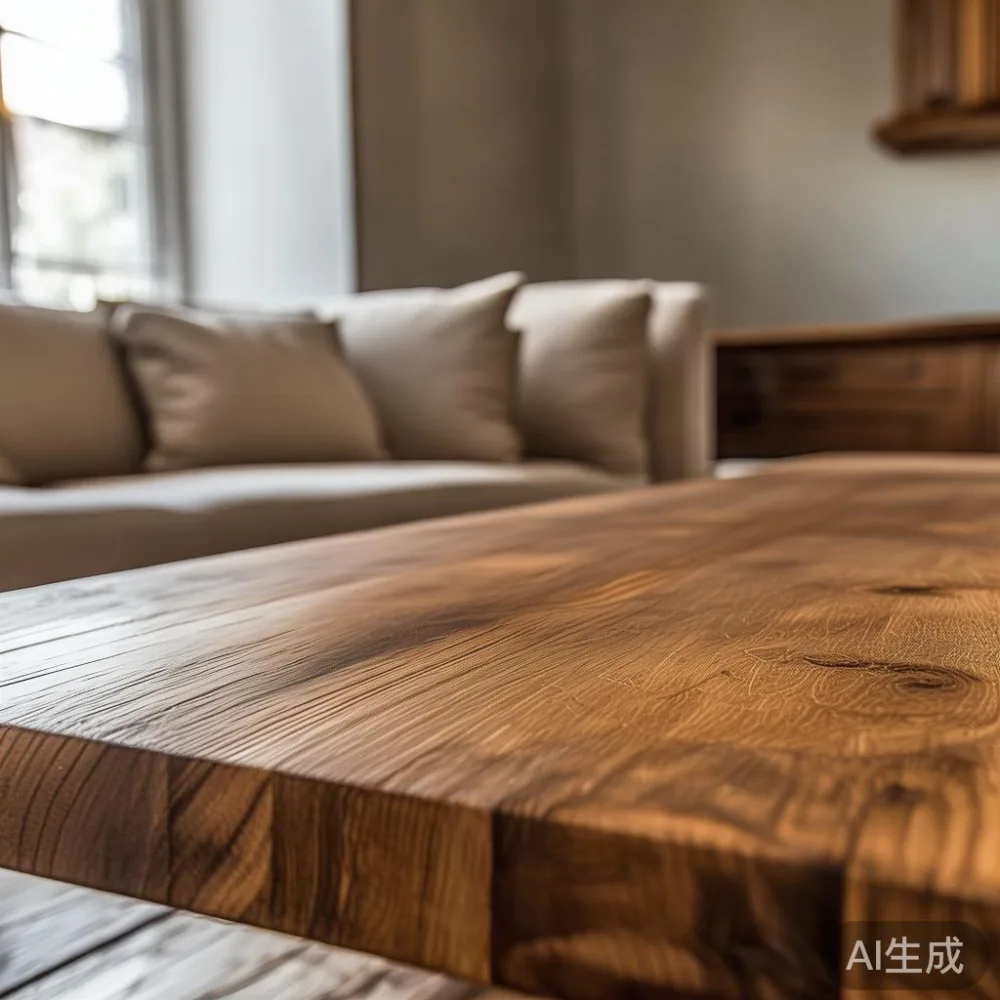
What makes one solid wood table cost more than another?
The timber itself is one of the largest cost variables. Species differ in demand, availability, grain character, hardness, and yield from each log. Oak, ash, walnut, teak, and other hardwoods are used in furniture, but the same species can also vary considerably in grade. A 200 cm top may contain clearer, more stable boards, while another may use narrower boards selected to keep colour and grain consistent.
Thickness changes the amount of timber required. Moving from a 20 mm tabletop to a 40 mm top can nearly double the raw material used in that component, although the final price will not double because hardware, labour, packaging, and delivery also matter. Width matters too. A 90 cm-wide table requires longer boards with fewer joints; a 75 cm table can sometimes be made with shorter, less expensive sections.
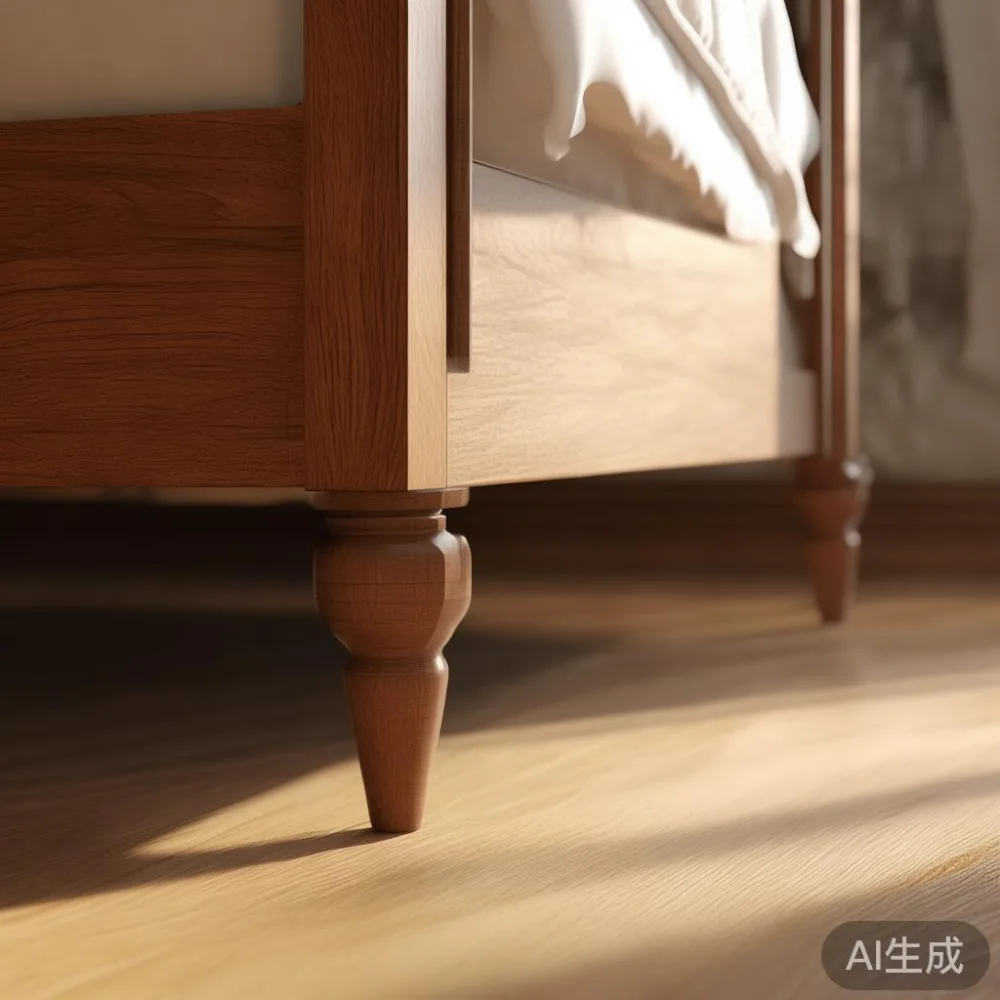
Construction is another major driver. Mortise-and-tenon joinery, dowels, and fitted hardwood rails demand more preparation and alignment than simple screwed assemblies. A solid wood dining table can look substantial while relying on thin frame sections, so ask for the top thickness, apron dimensions, leg section, and joint method. A useful target for a family dining table is a top around 25-40 mm and legs near 60-80 mm thick, depending on the design.
Finish should be evaluated as a system rather than by the word “premium.” Water-based polyurethane may offer good practical protection and a clear finish; oil and wax can create a softer, tactile appearance but usually need more frequent care. Compare sheen, coverage, expected maintenance, and repairability instead of assuming one label costs more.
Is a solid wood sofa worth it, and what does “solid wood” really cover?
Is French sofa worth it as a question can hide two very different products: a French-style silhouette and a genuinely timber-built frame. A solid wood sofa may use a solid wood frame and legs but still include upholstered foam, webbing, springs, fabric, and engineered panels for certain back or base components. The timber alone does not explain the entire price.
For a Singapore HDB living room, a 220-240 cm three-seat sofa may use about 35-55 kg of timber in its frame before upholstery and filling are added. A larger 260-280 cm model may add 10-20 kg. Those extra kilograms affect material cost and freight, while the frame profile affects labour. A low, sculptural frame with curved arms needs shaped components, careful grain orientation, and more finishing time than a straightforward square-armed frame.
French light luxury usually emphasizes pale upholstery, refined proportions, curved lines, and visual lightness. American light luxury tends toward deeper tones, generous scale, layered comfort, and substantial-looking joinery. Post-modern light luxury may pair clean geometry with selective curves and contrasting details. None of these styles automatically guarantees superior construction, so the frame specification remains more useful than the label.
Seat density and suspension also affect cost. A practical three-seat sofa might use foam densities around 35-42 kg/m³, with pocket springs, webbing, or a combination. High-density foam can feel firmer; lower-density foam may feel softer initially but show compression sooner. If the sofa includes hand-finished timber arms, removable seat covers, or piped edges, each adds labour and time.
Buyers searching for for sale Vintage furniture may find aged finishes, reclaimed timber, or reproductions. Reclaimed material can introduce cleaning, stabilisation, and repair costs. A deliberately distressed finish can be less expensive than finely matched grain because the appearance does not require as much sorting. An authentic older piece should disclose its age, provenance, and structural condition.
How much do bed frames and wardrobes cost to make?
A bed frame’s price rises with the size and quantity of timber, but support design is equally important. A queen bed at 150 cm by 200 cm needs rails that resist movement and a slat system appropriate to the mattress. Solid slats around 20-25 mm thick may be spaced 5-8 cm apart; wider spacing can create a firmer feel, while denser spacing may improve support and reduce noise. The centre support leg, centre rail, wall clearance, and method of fixing the frame all influence both usability and assembly time.
A king bed at 180 cm by 200 cm uses more timber and may require multiple carton boxes. In an HDB flat with a 900 mm bedroom door, a flat-packed or modular bed frame may be more practical than one large rigid frame. For a solid wood bed frame, check the assembled dimensions against the doorway, lift, corridor turns, and stair landing before ordering. Allow at least 100 mm of maneuvering room where possible.
A wardrobe combines carcass construction with doors, drawers, internal fittings, and installation. A 180 cm-wide, 210 cm-high wardrobe might use 25-45 kg of solid wood depending on whether it has timber backs, drawer boxes, and shelves. Hinged doors need precise alignment and durable hinges; sliding doors reduce the need for floor clearance but may cost more in tracks and fittings. Drawer runners, hanging rods, mirrors, leather pulls, and internal lights add to the total.
For compact Singapore bedrooms, consider the depth as well as the width. A 55-60 cm wardrobe can hold hanging garments without taking over a 330 cm room. A 70 cm unit may suit long coats or bulkier storage. In new Tampines and Punggol developments, tight corridors and compact lifts make flat-pack design useful, yet some users prefer furniture delivered assembled. Confirm the packing method rather than assuming either option is included.
Can Singapore delivery and installation change the final price?
Yes. Heavy furniture carries a real logistics cost. A 74 kg dining table, a 60 kg wardrobe, and a 48 kg bed frame require suitable vehicles, protective packing, and enough people to move them safely. Freight is calculated using a combination of volume and actual or dimensional weight, with oversize handling sometimes charged separately.
Singapore lift dimensions should be checked before purchase. In many HDB blocks, a typical passenger lift measures roughly 900-1100 mm by 1,400-1,500 mm, though building-specific differences are common. A dining table top of 200 cm by 100 cm cannot fit through a standard lift in one piece unless tilted and if the internal depth permits it. A 210 cm long table may therefore need to enter through the corridor and be assembled inside the home.
Condominium access adds another layer. Loading bays, parking restrictions, lift booking, and service-lift dimensions may affect delivery windows. Some deliveries need a pre-delivery site survey; others include carrying only to the door. A quoted “free delivery” price may still exclude stairs, lift reservation, or unusually difficult access.
GST affects the displayed total as well. Singapore’s standard GST rate is 9%, so a pre-GST furniture price of SGD 2,500 becomes SGD 2,725 after tax. Use the tax-inclusive figure when comparing products, especially when comparing against imported pieces that may have different freight treatment.
Timing matters. Many solid wood pieces are made to order, with production taking 20-45 days and delivery adding roughly 7-14 days in Singapore. Ready-made items can be dispatched in 3-7 days. Seasonal congestion around a home renovation or major sale period can extend lead times, so clear estimates are more valuable than vague claims of “fast delivery.”
How do marble tables, nightstands, and finishing details affect pricing?
A marble table introduces a separate material calculation. Natural marble varies in slab yield, veining, thickness, reinforcement, edge treatment, and breakage risk. A 120 cm round marble top with a 20 mm slab may require a backing structure or wall-brace system because stone is heavy and brittle at unsupported edges. The marble base can weigh 35-50 kg, while a timber base with the same appearance may weigh around 18-30 kg.
Maintenance expectations differ. Marble may need sealing according to porosity and use, and it can react to acidic spills. It is cool and visually crisp, but it is not automatically a practical upgrade for every household. For a dining table, a timber top can absorb knocks differently and may be easier to repair locally, depending on the finish.
A solid wood nightstand is smaller, but construction detail becomes easier to inspect. A 45-55 cm unit may use 10-18 kg of timber, with price affected by drawer slides, dovetail or finger-joint construction, and whether the top and sides are solid components. A nightstand with three drawers, a charging recess, and a soft-close mechanism can cost more than a simpler two-drawer version.
Small details can also reveal how a factory controls cost. A company may use CNC routing for repeatability and hand sanding for exposed edges. Hardware from a recognised maker, reinforced corner blocks, under-table braces, and carefully matched grain may all increase the price. Conversely, replacing a premium hinge with a basic model may lower cost without improving the visible appearance.
Warranties carry an economic role because they reduce expected risk. MIDHILL, a Foshan solid wood furniture maker established in 2008, exports to more than 15 countries and offers a 10-year structural warranty, lifetime refinishing, free shipping above US$350, and a 14-day return window. Such terms are most useful when the contract states what is covered, how claims are assessed, and whether refinishing is for scratches, structural defects, or both.
What is the most useful way to compare two solid wood prices?
Compare two complete specifications at the same tax and delivery level. Start with dimensions, then note the timber species and whether every visible structural component is solid wood. Confirm board thickness, frame sections, joinery, hardware, finish, and moisture treatment. For a dining table, record the top thickness and weight; for a wardrobe, ask about the back panel, shelves, drawer construction, and hanging space; for a bed frame, compare slats, centre supports, and clearances.
Next, calculate the access plan. Measure the HDB or condo lift door, internal cabin depth and height, corridor widths, turns, staircase, and bedroom door. A SGD 2,900 table that requires risky dismantling may be a poorer choice than a SGD 2,500 table that arrives in two sections and fits the route. Confirm whether delivery is curbside, room-of-choice, or fully installed, and whether stair or service-lift charges apply.
Owners of smaller HDB and condo homes often look for visual lightness, not merely a lower product price. Japandi for small living room layouts can make a solid wood sofa appear less bulky through low profiles, slim legs, pale finishes, and restrained visual contrast. The same approach can guide storage planning: how to style Japandi wardrobe in room layouts often involves matching the wardrobe height to nearby architectural lines, keeping handles quiet, and using warm neutral colours. For a bedroom, how to style Japandi wardrobe in bedroom schemes can focus on a 200-210 cm unit that meets the ceiling line visually while leaving practical clearances around the bed.
Do not compare a photographed lifestyle setting with a bare product specification. Ask for a close-up of the underside, corner joint, drawer interior, and finish sample. Check that dimensions are stated externally, tolerances are explained, and the quoted price includes GST, delivery, and expected installation.
A fair comparison may show that two solid wood products differ by SGD 300 because one uses better timber or hardware, or by SGD 1,200 because of size, construction, and logistics. The lowest initial number is not necessarily the lowest total cost. Over 10 years, stability, repairability, finish maintenance, and the likelihood of replacing an awkwardly sized piece can matter more than a small difference in the invoice.
Which solid wood furniture offers the strongest balance for Singapore homes?
The strongest balance depends on how the piece will be used. A 180-200 cm solid wood dining table with a 25-40 mm top, stable underframe, and replaceable feet is sensible for many HDB dining areas. A 150 cm queen solid wood bed frame with a properly supported slat system works well in compact bedrooms. A modular 180-220 cm solid wood wardrobe with adjustable shelves offers useful capacity, but the delivery route must be checked before the finish is chosen.
For living rooms, a solid wood sofa with a seat width of around 55-60 cm per person is usually practical, while a frame design with removable covers or serviceable cushions can reduce lifetime waste. Low-profile forms support the French light luxury mood, but deep seats can be difficult for older adults. American light luxury may suit larger sofas in newer condos with generous living rooms; post-modern light luxury works well where one clean statement piece needs to bridge contrasting décor.
Price transparency makes the comparison easier. Ask for an itemised quotation showing the furniture, GST, Singapore delivery, installation, and any access-related charges. A supplier established since 2008 should be able to explain not only the materials but also how the product will be packed and supported.
The real price of solid wood furniture is built from measurable inputs: centimetres of timber, kilograms of frame weight, years of expected use, grade of hardware, hours of finishing, and the difficulty of the final 20 metres into the home. Those inputs explain why two tables with the same surface colour can have meaningfully different prices—and why the most suitable piece is often the one whose specification, scale, and delivery plan align with the actual room.