Warm Minimal Interiors in HDB Flats: A Singapore Guide to Matching Solid Wood Furniture
A four-room HDB in Tampines, a walk-up in Bedok, a new launch in Punggol—most Singapore homes share the same starting point: a compact floor plan, warm afternoon light coming in through unblocked windows, and walls finished in a neutral tone. Layering furniture into that envelope is a real exercise in restraint. After spending the last three weekends visiting showrooms and a friend's renovated 92 sqm BTO in Sengkang, I want to share what actually works when you want a warm minimal interior and you also want pieces that age well: solid wood furniture, sized for narrow lifts, narrow corridors, and the kind of daily wear a Singapore household produces.
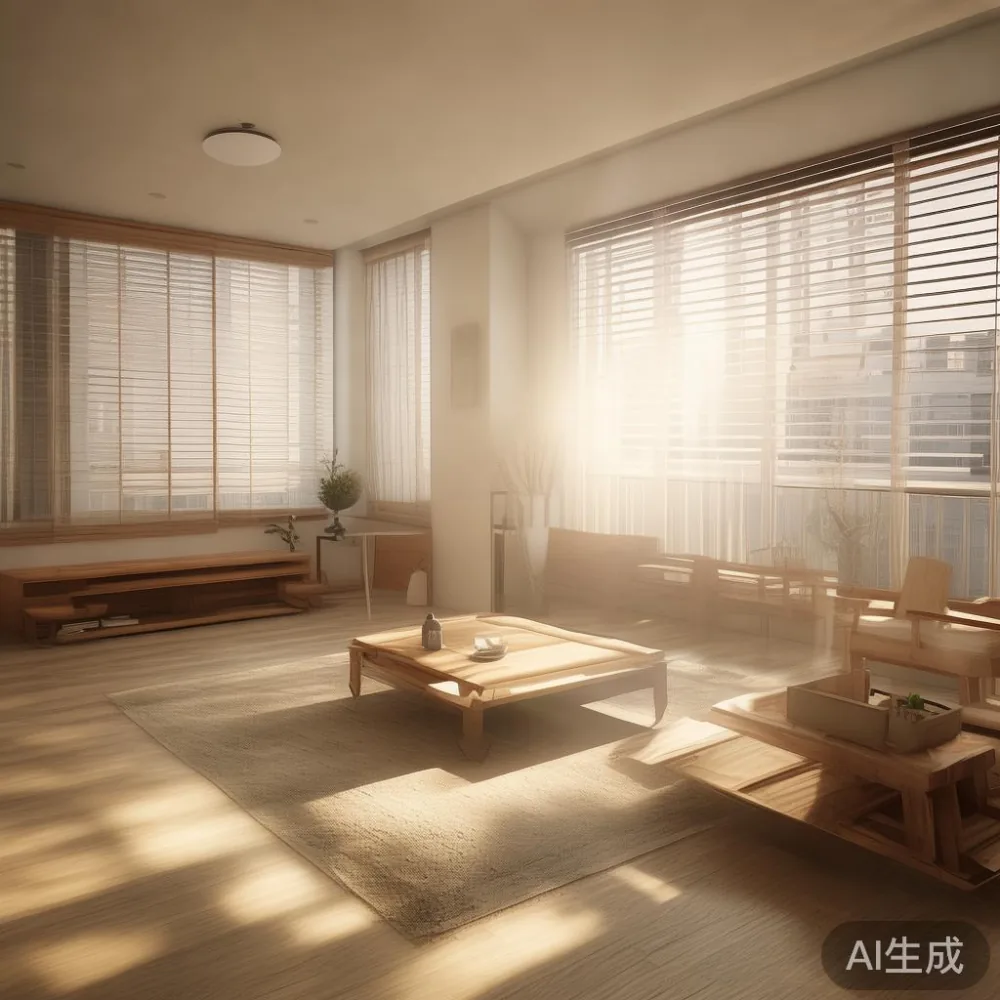
Why warm minimal works so well in Singapore homes
Warm minimal is not cold minimalism with a beige blanket thrown over it. It keeps the airiness and the negative space, then warms the palette through material choice. White walls, microcement screed floors from Hafary, and oak-look tiles in 600 × 1200 mm format are common. The problem with going fully white-and-grey is that our climate pushes a flat's humidity to 70-85% on rainy days; cold minimal surfaces can read as hospital, not home. Adding warm material—kiln-dried ash, light walnut, white oak, even rubberwood with a brushed finish—is what flips the room from showroom to residence.
With a 4-room HDB at roughly 90-95 sqm, after the kitchen, two bathrooms, and a service yard, your living-dining zone is around 30-35 sqm. That is enough room for a 200 cm sofa, a 160-180 cm dining table, and a 180 cm wide TV console—but only if you resist the urge to over-furnish. The empty 60 cm between the dining table and the wall is what makes the room feel like it breathes. I have walked into resale flats where every wall had something pushed against it, and the same square footage felt ten metres smaller.
What should I buy first when I am matching furniture to a warm minimal interior?
Start with the largest solid wood piece in the room and work down. In a living room, that is almost always the sofa or the TV console. In a master bedroom, it is the bed frame. Buying outwards from one anchor stops the room from looking like a warehouse of mismatched sets.
For a typical HDB living room, a sensible first purchase order looks like this:
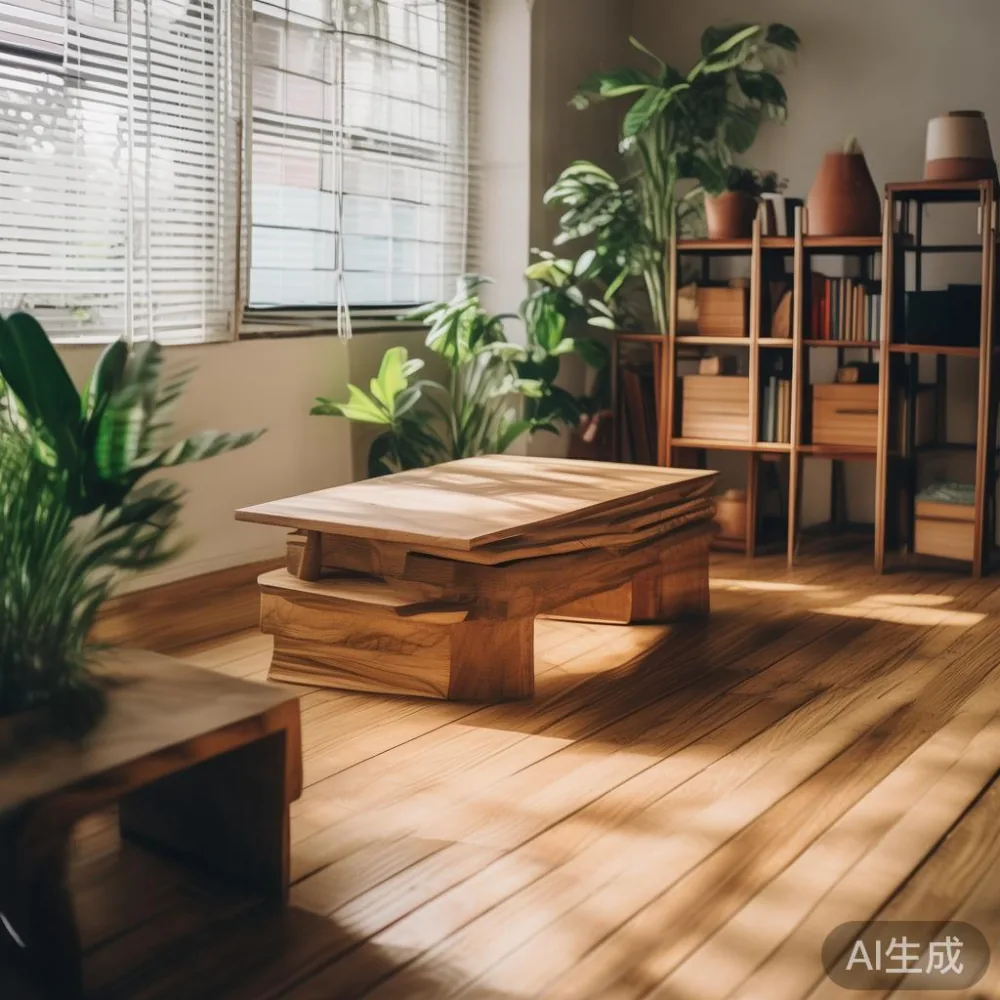
1. The sofa—a three-seater in 200-220 cm length, 90 cm depth, with 18 cm high solid wood legs so the floor stays visible. A modular L-shape usually eats too much floor space in a 4-room flat, and a two-seater at 150 cm feels short for a family of four.
2. The coffee table—100-120 cm long, 55-60 cm wide, height matching the sofa seat (usually 42-45 cm).
3. The TV console—180 cm wide, 40 cm deep, with the same wood tone as the sofa legs.
4. The dining table—160-180 cm long, 80 cm wide, seats four comfortably, six tightly.
5. The bedside nightstand—two pieces flanking the bed, 50 cm wide and 45 cm tall, ideally with one drawer for phone, charger and a small lamp.
Buying in that order is also kinder to cash flow. A good solid wood sofa in Singapore runs S$1,800–S$3,800 for a three-seater from a Foshan or Malaysian maker, and a 180 cm dining table in ash or walnut around S$1,400–S$2,600. Spread across two to three months after the renovation handover, it is manageable without resorting to a 0% instalment plan.
The lift and corridor problem: measuring before you fall in love
I learned this the hard way. Last month I visited a colleague's new Punggol condo to see her dining table delivery. The 200 cm oak table would not fit into the service lift—it was 1.5 m deep and 2.2 m tall at the door, but the table top alone was 100 cm wide and the diagonal was 1.55 m. The crew tried for 40 minutes, then had to bring the table back to the warehouse. She waited another week for a 180 cm replacement. The replacement cost S$1,980, S$120 cheaper than the original she wanted.
Most Singapore HDB lifts are 1.4-1.6 m deep with doors about 0.9 m wide and 2.0 m tall. Condo service lifts can be bigger, but cargo lifts in newer launches are sometimes narrower to keep the machinery room compact. Measure the diagonal of every piece before you pay the deposit. A solid wood dining table at 180 cm long and 90 cm wide has a diagonal of 201 cm—you need a lift with that much internal diagonal plus clearance for two delivery men and a trolley.
Corridors are simpler but still bite people. A 65 cm wide wardrobe or a 80 cm tall dresser will scrape a 75 cm corridor wall. Tilt-and-rotate moves almost always clear a 90° turn, but a flat slide will not. If you live on the 12th floor of a HDB block, schedule delivery for weekday mornings—lifts are quieter, and the loading bay has fewer cars blocking it.
Choosing wood tones that layer instead of clashing
Warm minimal does not mean everything is one shade. It means the contrast is controlled. Three rules I now follow on every project:
Stick to two wood families, plus one accent. In the same room, two woods at the same warm value range are fine. For example, ash (very pale, yellow-grey) with a light walnut (mid-warm, slight red) reads as one composition. Introduce a third wood—say a dark-stained mango or a smoked oak—and the eye stops bouncing between them and gets tired.
Mind the undertone. Some wood finishes go pink under LED 4000K lights; some go green. In Singapore showrooms the lighting is usually 3000K warm white, but your home might have 4000K cool white from the contractor's default. Bring a paint chip or a small piece of the floor sample if you can. Tone mismatches only show up once the piece is in your flat.
Match the metal, not the wood. Furniture legs, handles, table bases—the metal is the thread that ties pieces together. A brushed brass handle on a walnut nightstand next to a chrome-legged oak dining table will always look half-finished. Pick one metal (brushed brass is friendly to warm minimal, matte black is sharper) and use it across at least three pieces in the same room.
If you are after a softer, slightly European feel, look at how a French light luxury sofa pairs with a marble-top coffee table—around 110 cm round, with the same brushed brass ring base as the sofa legs. That little repetition is what reads as 'designed', not 'bought as a set'. Foshan makers like MIDHILL have been refining this European light luxury direction for export markets, and a few of their collections—slender ash frames, low-slung seats, neutral boucle—translate cleanly into a Singapore HDB without screaming 'hotel lobby'. I tested the boucle-and-ash armchair from one of their ranges at a friend's new BTO; at 78 cm wide it slipped through her 80 cm corridor on a standard trolley without any tilting.
Bedrooms: how solid wood frames make small rooms feel taller
A queen mattress is 152 × 188 cm. Add a solid wood bed frame and your footprint grows to roughly 165 × 215 cm. A king goes to 195 × 215 cm. Master bedrooms in 4-room HDB flats are usually 3.8 × 3.0 m—11.4 sqm. A queen fits comfortably with a 60 cm walkway on each side and a 200 cm wide wardrobe opposite. A king only works if you push the bed against the longest wall and accept a 50 cm side clearance.
For a warm minimal bedroom, the frame should sit low—platform height at 28-32 cm—and the headboard should not be taller than 110 cm or the room reads top-heavy. Avoid 4-poster or high-canopy frames entirely; they belong in landed houses, not in a 12 sqm HDB bedroom. A low slat bed frame in ash with a 6 cm thick headboard cushion in oat-coloured linen will handle a humid Singapore night without warping, provided the kiln-drying was done properly (moisture content below 12%).
Two nightstands at 45 cm wide flanking a queen frame give you symmetry and storage, but if you only have room for one, skip the matching set and choose a smaller 35 cm round side table in marble instead—the asymmetry actually helps a small room breathe.
If you are leaning toward a Japandi feel, here is a short answer to the question of how to style Japanese bed in bedroom in a Singapore HDB: keep the platform frame at 25-30 cm high, use a single pendant light at 110 cm above the floor, swap bedside lamps for a wall-mounted swing-arm, and dress the bed in undyed cotton and linen. The room should look slightly empty. That emptiness is the design. Most people over-fill these frames with three cushions, a runner, and a throw—undo all of that and you are halfway there.
Dining, wardrobes, and the pieces you forget about
The dining table is where Singapore families spend the most actual hours—morning kopi, lunch, homework, dinner, late-night laptop work. Treat it like a piece of joinery, not decoration. An 80 cm wide solid ash table at 180 cm long seats four adults at 60 cm per person, six adults at 50 cm, and eight kids at 40 cm. If you regularly host six adults, go 200 cm long; the extra 20 cm is the difference between elbows touching and elbows free.
Edge profile matters more than people think. A 2 cm chamfer or a slight bullnose is gentler on forearms than a 90° square edge, which I learned after a year of working from a square-edged table and noticing marks on my wrists. A live-edge slab suits a coastal or rustic look; it does not suit warm minimal. Stay with a straight, lightly eased edge.
Wardrobes are usually the most expensive piece of solid wood cabinetry you will ever buy, and the easiest one to get wrong. A three-door wardrobe at 180 cm wide and 220 cm tall, in white oak, runs S$2,800-S$4,200 from a Foshan exporter shipping to Singapore, including GST and delivery. For a true coastal look—whitewashed finish, shaker-style fronts, slim brass pulls—that is where the budget goes. If you have been searching for the best Coastal wardrobe for 2026 to anchor a master bedroom, prioritize a 100% solid wood carcass (not MDF with a wood veneer), soft-close hinges rated for 80,000 cycles, and a 60-40 split between hanging and shelving inside. Anything less becomes landfill in seven years.
For the bedroom anchor itself—if you want a warmer take on a Modern light luxury bed for 2026, an upholstered headboard in oat boucle with a slim ash frame reads softer than a fully upholstered bed and stays cooler in our climate. Many shoppers searching for a single bed online here compare a MIDHILL European light luxury bed to local options; the difference is usually in the joinery (mortise-and-tenon at the headboard rail) rather than the marketing photos. Check the spec sheet, not the product name.
Marble, metal, and the small accents that finish a room
Marble is expensive, heavy, and unforgiving. A round marble coffee table at 80 cm diameter weighs 35-45 kg; a 110 cm round version weighs 60-75 kg. That weight shows up in two places: the delivery cost (S$80-S$150 extra for two-person handling in Singapore) and the floor loading. A 110 cm round marble top on a HDB floor is fine—HDB's design load is 150 kg/m² for residential—never put one on an old cantilever balcony slab, though.
For warm minimal rooms, stick to honed (matte) marble, not polished. Carrara, with grey veining, plays nicely with ash and oak. Calacatta, with bolder gold veining, leans more toward classical light luxury. If you want the look at a lower cost, sintered stone (12 mm thick, around S$280-S$450 per slab for a coffee-table-sized piece) is harder, lighter, and stain-resistant—good for households with small children.
Metal accents are the cheapest way to make solid wood furniture look deliberate. Replace builder-grade chrome handles on stock wardrobes with brushed brass pulls (around S$12-S$28 per handle, sold by the piece at most local hardware stores). Swap the standard black plastic feet on most imported dining chairs for 12 cm brushed brass cone feet where the design allows. Small moves, big effect.
Sizing for Singapore: a quick reference chart
Below are workable dimensions for a 90-100 sqm HDB or a similarly sized 2-bedroom condo. Anything bigger is for a 120 sqm unit or above.
Sofa (three-seater): 200-220 cm long, 90 cm deep, seat height 42-45 cm, leg height 16-18 cm.
Coffee table: 100-120 cm long, 55-65 cm wide, height matching sofa seat.
TV console: 160-200 cm wide, 38-42 cm deep, height 45-50 cm (so the centre of the TV sits at 110-120 cm from the floor).
Dining table: 160-180 cm long, 80-90 cm wide, height 74-76 cm.
Dining chair: seat height 45-47 cm, seat depth 42-45 cm.
Bed frame (queen): 165 × 215 cm external, platform height 28-32 cm.
Nightstand: 45-55 cm wide, 40-45 cm deep, height matching top of mattress or 3-5 cm below.
Wardrobe (three-door): 180 cm wide, 60 cm deep, 220-240 cm tall.
Looking up under 2000 Italian light luxury furniture online will surface a lot of MDF-with-veneer pieces dressed up with Italian-sounding brand names. Most of those will not survive two Singapore monsoons. A genuine solid wood bed frame in ash or walnut from an established Foshan maker such as MIDHILL, with kiln-drying below 12% moisture and a 10-year structural warranty, will outlast the MDF alternatives by a factor of three or four for around the same money. The cost argument flips when you factor in a replacement at year six.
Lighting, soft furnishings, and how to keep the room warm
Warm minimal needs warm light. A 3000K bulb at 90+ CRI is the bare minimum; 2700K feels cosier for bedrooms. Layer three sources at minimum: ceiling (recessed downlights, 8-10 W each, 3000K, CRI 90), wall (a single picture light or swing-arm), and table (a ceramic or paper lantern, 25-40 cm tall).
Soft furnishings should be natural fibres—linen, boucle, wool, undyed cotton. Synthetic velvet looks similar but warms up the room acoustically by about 1 dB less and feels clammy in our humidity. A 200 × 300 cm wool rug under the coffee table anchors the seating zone; a 160 × 230 cm version works for tighter arrangements.
Plants help but go light. A single fiddle leaf fig in a 40 cm diameter terracotta planter at the corner, or a 60 cm tall olive tree near the dining window, is enough. Anything more and the room starts reading as a nursery rather than a calm retreat.
Delivery, warranty, and what to ask before you pay
For Singapore orders, ask the supplier five questions before paying a deposit:
1. What is the wood species, and is the carcass solid wood or veneered MDF?
2. What is the moisture content, and has it been kiln-dried? Anything above 12% will move in our climate.
3. What is the structural warranty, and what does it cover? A 10-year warranty on the frame is meaningful; a 1-year warranty on everything is not.
4. What is the return policy, and who pays return shipping if the piece does not fit? Some Foshan exporters like MIDHILL offer 14-day returns with free shipping over a threshold around US$350, which at current FX works out to roughly S$480.
5. What is the delivery timeline, door-to-door? Foshan to Singapore by sea is typically 18-25 days plus 3-5 days for last-mile delivery to your door—plan for a month in total.
After-sales support matters as much as the spec sheet. A piece that can be refinished once a decade will outlive several 'new' replacements. The lifetime refinishing services some Foshan workshops offer are quietly the most valuable warranty clause in the contract—you will not use it in year one, but you will appreciate it in year eight.
A short checklist before you click 'pay'
Measure your lift diagonal and your corridor turns. Check the wood species, moisture content, and structural warranty in writing. Confirm the delivery timeline door-to-door and the return window. Pick one metal finish and keep it consistent across at least three pieces in the room. Keep the wood palette to two families plus one accent. Leave the empty 60 cm—it is the most expensive thing in the room and it is free.
Browse the full MIDHILL solid wood catalogue at www.midhill.co before placing your final order, and compare the spec sheets against anything you find locally. Solid wood, sized correctly, and matched across two to three pieces, will turn a Singapore HDB into something that feels designed rather than simply furnished.