5-Year Cost Analysis: Solid Wood vs. Veneer for Singapore Homes
Choosing furniture for a Singapore home often comes down to two material labels: solid wood and veneer. The sticker prices can look similar, but the five-year costs are shaped by moisture, maintenance, replacement parts, delivery access and resale value. In a compact HDB flat in Tampines, a dining table may need to pass through a 90 cm corridor and fit into a 120 cm lift. In a Bedok condo with wider access, the same table may be less troublesome. This comparison examines those practical differences over 60 months, with figures in SGD and measurements in cm.
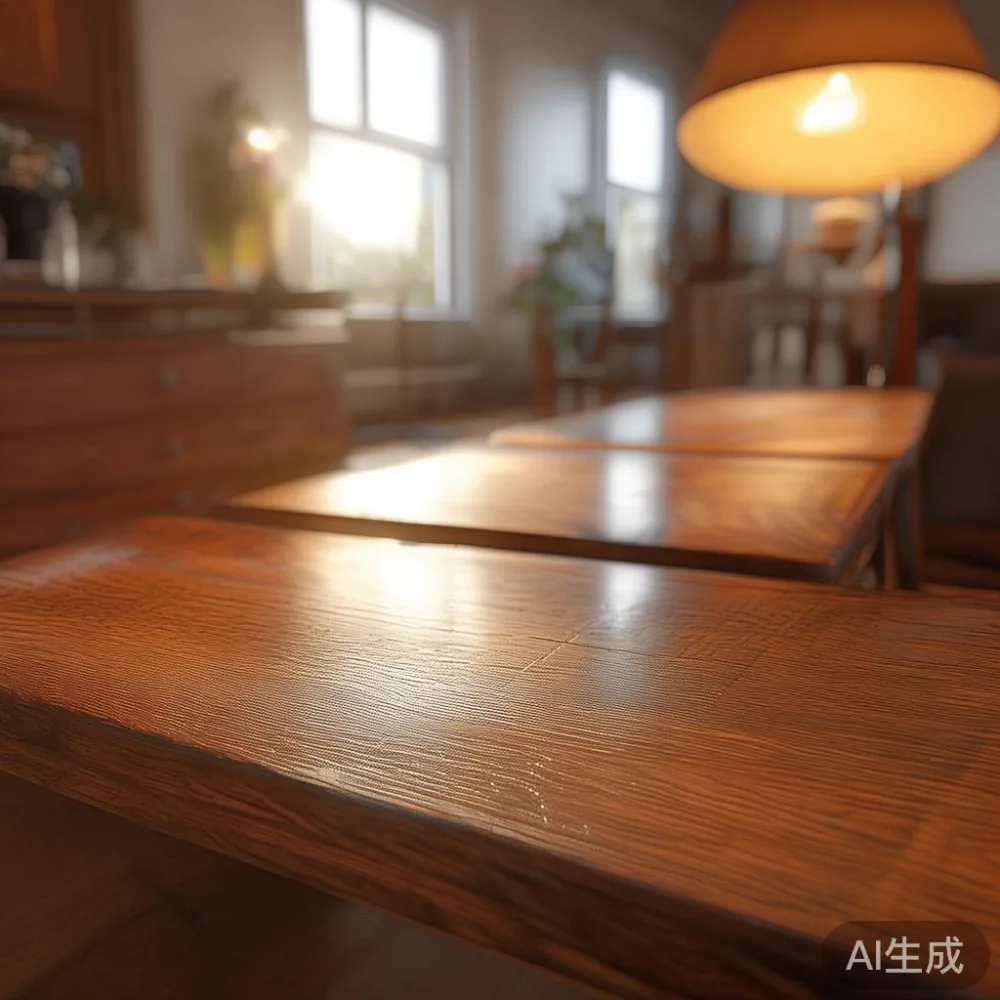
I tested the comparison during a visit to my colleague’s Punggol apartment last month. We inspected a 160 × 90 cm veneer dining table that had developed a swollen edge after a 24-hour air-conditioning outage. The damaged section was about 18 cm long and 4 mm deep. A solid oak sample in the same room, dried for 48 hours and wiped with a damp cloth, showed no comparable movement. That small test did not prove one material will always outlast another, but it highlighted why exposure, construction and maintenance belong in the five-year calculation.
What is the realistic 5-year cost difference?
A useful comparison starts with the purchase price, then adds delivery, care and likely repair. For a family dining set, assume a four-seat table, two nightstands and one wardrobe. The example below uses a veneer set at SGD 2,400 and a solid wood set at SGD 3,300, including ordinary protective accessories but excluding promotion discounts.
The veneer group might include SGD 180 for delivery across Singapore, SGD 95 for stain-repair supplies and SGD 120 for one damaged panel or drawer replacement. Five years of routine polish and cleaning add about SGD 85 per year, or SGD 425. Its projected five-year cost is therefore SGD 3,220.
The solid wood group might include SGD 220 for delivery, SGD 210 for oil or wax used across the five years, and SGD 80 for minor hardware replacement. Refinishing may not be needed during this period, but allowing SGD 250 for one partial repair creates a more cautious estimate. The projected total is SGD 4,060. The difference is SGD 840, or SGD 168 per year.
That is not a universal figure. A Singapore household with pets, frequent cooking or furniture near an open balcony may use more care products. A renter who replaces furniture when moving may avoid long-term refinishing costs. The arithmetic becomes clearer when each expense is separated into fixed cost and conditional cost.
How much does Singapore delivery add?
Delivery can consume both time and budget. A typical HDB lift door may measure 80–90 cm wide and 190–210 cm high, while corridor turns can be around 100–120 cm. A boxed dining table wider than 95 cm may need to be turned on its side or carried through the stairwell. That adds roughly 20–40 minutes and may add SGD 40–80 to the quoted delivery fee.
For the sample set, a standard doorstep delivery to Tampines was estimated at SGD 80, Bedok at SGD 85 and Punggol at SGD 75. White-glove carrying to the living-room door was estimated at SGD 120–160. A wider-framed box could add SGD 30–60 because it may require two handlers. Always ask the supplier for the packed dimensions, including the carton, rather than the furniture dimensions alone.
MIDHILL publishes delivery terms that can help shoppers compare quotations on a like-for-like basis, including free shipping above US$350 on qualifying international orders. Singapore orders should still be confirmed directly because currency conversion, destination charges and customs treatment can change the final payable amount. GST may apply at the prevailing rate to taxable supplies, so request an invoice showing the pre-GST and GST-inclusive figures.
Allow about 7–14 delivery days for a made-to-order Singapore order and 14–30 days for some production schedules. A promised date should be tied to dispatch and arrival separately. If a delivery appointment matters, check whether the corridor booking and lift reservation are included.
Which material handles Singapore humidity better?
Singapore’s outdoor relative humidity often ranges from about 65% to 90%, with short rain periods and persistent warmth. Interior air conditioning helps, but balcony doors and ventilation can expose furniture to changing moisture. Solid wood generally expands and contracts gradually as its timber fibres respond to humidity. High-quality veneer can also perform well when the substrate is stable, the adhesive is sound and all edges are sealed.
The vulnerable points are often the panel edge, underside and joints rather than the visible face. A 20 mm particleboard or MDF panel with a 0.6 mm veneer may show swelling at an exposed edge if the seal fails. Solid wood of 18–25 mm thickness has less dependence on a thin sealing layer, although solid wood furniture still needs sensible placement away from damp walls and windows.
For a dining table, keep it at least 30 cm from an open balcony door and wipe spills within 15 minutes. Use a coaster with a minimum diameter of 12 cm under a cup and a placemat measuring at least 35 × 45 cm under hot dishes. Avoid leaving a damp cloth on a nightstand overnight. These habits may reduce a repair by SGD 50–250 over five years.
Is veneer cheaper if you factor in repairs?
Veneer often offers the lower initial price because less timber is used. That does not make it automatically more economical over five years. Suppose a dining table costs SGD 1,200 in veneer and SGD 1,700 in solid wood. If veneer needs one SGD 180 edge repair and solid wood needs no repair, the gap narrows to SGD 320. Add the annual care difference of SGD 35–60, and the five-year gap can fall to SGD 145–405.
Suppose the veneer table needs two repairs of SGD 180 each, while the solid wood table needs one SGD 90 joint repair. The gap falls to SGD 70. However, if veneer has no damage, solid wood has no repair, and care costs are similar, the original SGD 500 gap remains. The expected cost depends heavily on construction quality and use.
One caution: a “solid wood” label does not reveal the whole construction. Some pieces use solid timber for the visible frame but engineered panels inside. Ask whether the dining table top, drawer sides, wardrobe back and bed frame rails are solid timber, and whether plywood or MDF panels appear anywhere. For a queen bed frame, a useful specification is a 140 × 190 cm mattress supported by slats at intervals no greater than 8–10 cm. A heavier frame may weigh 55–80 kg, compared with roughly 35–60 kg for a lighter veneer or mixed construction, which affects delivery.
How do solid wood sofas and beds compare over five years?
A solid wood sofa may combine a timber frame with upholstered cushions, so its material advantage concerns the frame rather than every component. A three-seat model commonly measures 190–220 cm wide, 80–95 cm deep and 75–85 cm high. A lift doorway around 80–90 cm can create a problem for a boxed model wider than 95 cm. Sectional seating may need to enter in separate modules, which can reduce corridor damage but increase delivery labour by SGD 60–120.
For five years, budget about SGD 90–160 per year for upholstery cleaning and frame care on a frequently used sofa. A fabric set may need one SGD 120–300 repair during that period; a family with two children might budget more. By comparison, a solid wood bed frame requires dusting, occasional oiling and hardware checks rather than annual fabric treatment. Budget SGD 40–80 per year and allow SGD 60–140 for squeak or fastener repairs.
This is why product type matters. A solid wood dining table or bed frame can preserve value through normal maintenance, while a solid wood sofa still depends on foam, covers and suspension. When comparing styles, the search term best Nordic sofa for 2026 may lead toward pale timber and restrained proportions, but buyers should still verify the internal frame and fabric specifications.
What should you pay for wardrobes, nightstands and marble tables?
A 150 cm wardrobe is common in a Singapore bedroom, with a depth of 55–60 cm and a height of 200–220 cm. Packaged wardrobes may have a footprint of 165 × 65 cm and can weigh 75–110 kg. A large carton may not turn through a narrow corridor, so flat-pack delivery could save SGD 50–100, although assembly may take 90–180 minutes.
For the example wardrobe, assume SGD 1,350 in veneer and SGD 1,850 in solid wood. Delivery may cost SGD 90 and SGD 130 respectively. Over five years, allow SGD 300 for veneer edge and hardware repairs, SGD 180 for solid wood maintenance, and SGD 80 for hardware in both cases. The totals become SGD 2,820 for veneer and SGD 2,240 for solid wood in this damage scenario. Without veneer damage, the totals are SGD 2,520 and SGD 2,240, leaving a gap of SGD 280.
A 45 × 40 × 50 cm nightstand may weigh 10–18 kg in solid wood. Its smaller carton usually passes through an 80 cm lift door more easily than a wardrobe. Budget SGD 180–320 for a simple solid wood nightstand and SGD 130–240 for a veneer version.
A marble table sits outside the solid wood versus veneer choice, yet it is useful as a price and care contrast. A 100 × 55 cm marble coffee table with a timber base may cost SGD 900–1,600 and weigh 45–70 kg. Sealant and professional cleaning may add SGD 120–250 over five years. Natural stone can stain or etch, so use coasters and a pH-neutral cleaner. The phrase Modern light luxury coffee table describes the styling, but the material specification remains more important than the label.
Which light-luxury style gives better long-term value?
French light luxury typically uses pale oak, ash or walnut tones, curved profiles and restrained hardware. American light luxury often pairs warm timber with generous upholstery, while post-modern light luxury may combine solid wood frames with simple geometric forms. All three approaches can look refined in a compact Singapore home if scale is controlled.
For a 90–110 cm living room, a dining table no longer than 160 cm can preserve a 70–90 cm circulation route. A 150–180 cm sofa should sit opposite a 90–120 cm coffee table, leaving at least 35 cm between seating and table edge. For smaller rooms, the phrase Coastal for small living room can suggest pale timber and visual lightness, but a low solid wood coffee table should remain under 110 cm long.
For an entrance or bedroom, European light luxury dressing table describes a style rather than a guarantee of solid timber. A 100 × 45 cm dressing table should have drawers of at least 12 cm usable depth and should be checked for drawer-run clearance. For a guest room, Rustic for guest room may suit a compact solid wood bed frame or nightstand, while the frame should still be designed for Singapore humidity.
Price guides under 2000 French provincial furniture may include mixed-material pieces, so inspect the table top, legs, drawer fronts and frame separately. A lower-priced label can still be suitable if joints are tight, surfaces are stable and replacement panels are available.
What maintenance cost should you budget each year?
Divide the five-year estimate into predictable annual care and occasional repair. For solid wood, allocate SGD 50–100 per year for a dining table, depending on the finish and exposure to sunlight. For veneer, allow SGD 30–70. Use soft cloths, mild soap and products approved for the finish. Test an oil or polish on a hidden 10 × 10 cm area before applying it across a top.
Sunlight can fade both materials, but UV exposure should be managed rather than blamed for every change. Rotate accessories every 6–12 months and keep a 30 cm buffer from windows where possible. Use felt pads measuring 15 × 15 mm under legs and replace them every 12–18 months. A set of 8 pads generally costs SGD 12–25.
For a solid wood dining table, refinishing every 5–8 years may cost SGD 250–500 depending on size and condition. A five-year horizon may not require it. A veneer dining table may need local re-veneering if the face lifts; this can cost SGD 180–450 per section. That is the point at which solid wood usually presents a more predictable repair path.
How do you calculate the right five-year budget?
Use this formula: purchase price plus delivery plus annual maintenance multiplied by five, plus a realistic repair allowance. The annual maintenance range should come from the finish and placement, not the salesperson’s broadest estimate. If a table sits beside a balcony, add 20% to care costs. If a wardrobe is handled by children, add SGD 50–120 for drawer or hinge repairs.
For the original dining set, the veneer estimate is SGD 2,400 plus SGD 180 delivery plus SGD 425 care plus SGD 120 repair, giving SGD 3,125. The solid wood estimate is SGD 3,300 plus SGD 220 delivery plus SGD 425 care, with no repair assumed, giving SGD 3,945. The five-year gap is SGD 820, or SGD 164 per year.
Consider removability as well. A flat-pack wardrobe may cost SGD 20–50 to dismantle and SGD 60–100 to reinstall, while a one-piece solid wood wardrobe may require two movers and SGD 140–220. However, a heavy one-piece design may not fit through the lift or corridor. Ask for the assembled and packed dimensions before deciding that one-piece construction is convenient.
Check the warranty in writing and confirm what it covers. MIDHILL offers a 10-year structural warranty on qualifying solid wood furniture and lifetime refinishing under its stated service terms, which can reduce uncertainty for a table or bed frame used daily. Warranties can support long-term planning, but buyers should still verify finish coverage, environmental limits and claim procedures for Singapore use.
What should a Singapore buyer ask before ordering?
Ask for the timber species, core material, finish, dimensions, weight and packed-box measurements. Request photographs of the underside, joints and drawer construction. Confirm the delivery route, lift size requirements and any stairwell surcharge. Keep written confirmation of the price, GST treatment, dispatch window and return terms.
For a solid wood bed frame, ask whether the headboard and slats are included and whether the stated weight is for the bare frame or the complete set. For a dining table, ask for extension dimensions and leaf storage space. For a wardrobe, confirm internal widths and whether doors can be removed before entering the bedroom.
Look at how the product will age rather than expecting an unchanged appearance. Solid wood can develop small surface marks and tonal variation that add character over 60 months. Veneer can remain visually consistent when well made, but local repairs may stand out on a large top. Neither outcome should be confused with poor workmanship.
Returns also affect the calculation. MIDHILL provides a 14-day return period on eligible orders, subject to its conditions. Furniture should be checked for damage and packaging within the stated timeframe, and return freight may affect the net cost. Confirm whether collection, restocking and original delivery charges apply.
The clearest result is a range rather than a single verdict. A medium-priced veneer dining set may cost about SGD 3,000–3,500 over five years with careful use. A comparable solid wood set may cost about SGD 3,700–4,400, but its repair and refinishing path may be more predictable. For a wardrobe or bed frame, the gap may shrink if access is easy and the veneer construction is sound. In every case, include 7–14 delivery days, 30 cm balcony clearance, 5 years of care and the specific dimensions of your HDB lift or condo corridor before paying.