Solid Wood Furniture Pricing: Insights for Singapore Shoppers
I learned this lesson the hard way last month in Tampines. My colleague had just moved into a new 4-room HDB in Tampines GreenRidges, and she asked me to help her pick a dining table from a showroom in town. She pointed at two nearly identical 6-seater tables — same shape, similar legs, both labelled "solid wood" — priced at SGD 1,400 and SGD 3,900. "Why," she asked, "is one more than twice the other?" I ran my hand across both. The cheaper one felt hollow under the veneer; the edges showed ply layering under a thin oak sticker. The expensive one was a 4 cm thick slab of ash, heavy enough that two of us could barely lift it. Same label, very different furniture. That single afternoon in Tampines is the starting point for everything in this guide.
Solid wood furniture in Singapore isn't a single product category — it's a layered set of choices about species, construction, finish, hardware, and origin. Once you understand which decisions actually move the price, you stop paying for marketing and start paying for material. That's the lens I'll use throughout this article, with concrete Singapore numbers, local delivery realities, and one visit I made to a Foshan factory floor to see where the pieces actually come from.
What does "solid wood" actually mean in a furniture shop?
In furniture speak, "solid wood" means the structural panels — the tabletop, the side rails of a wardrobe, the seat deck of a bed frame — are cut from real timber, not engineered from particles, strands, or veneers glued over MDF or plywood. A solid wood dining table uses boards that are typically 2.5 cm to 4 cm thick across the top, and the same species continues through the legs and aprons. A solid wood wardrobe has stiles, rails, and shelves cut from 1.8 cm to 2.5 cm solid boards, often with traditional mortise-and-tenon joinery at the corners.
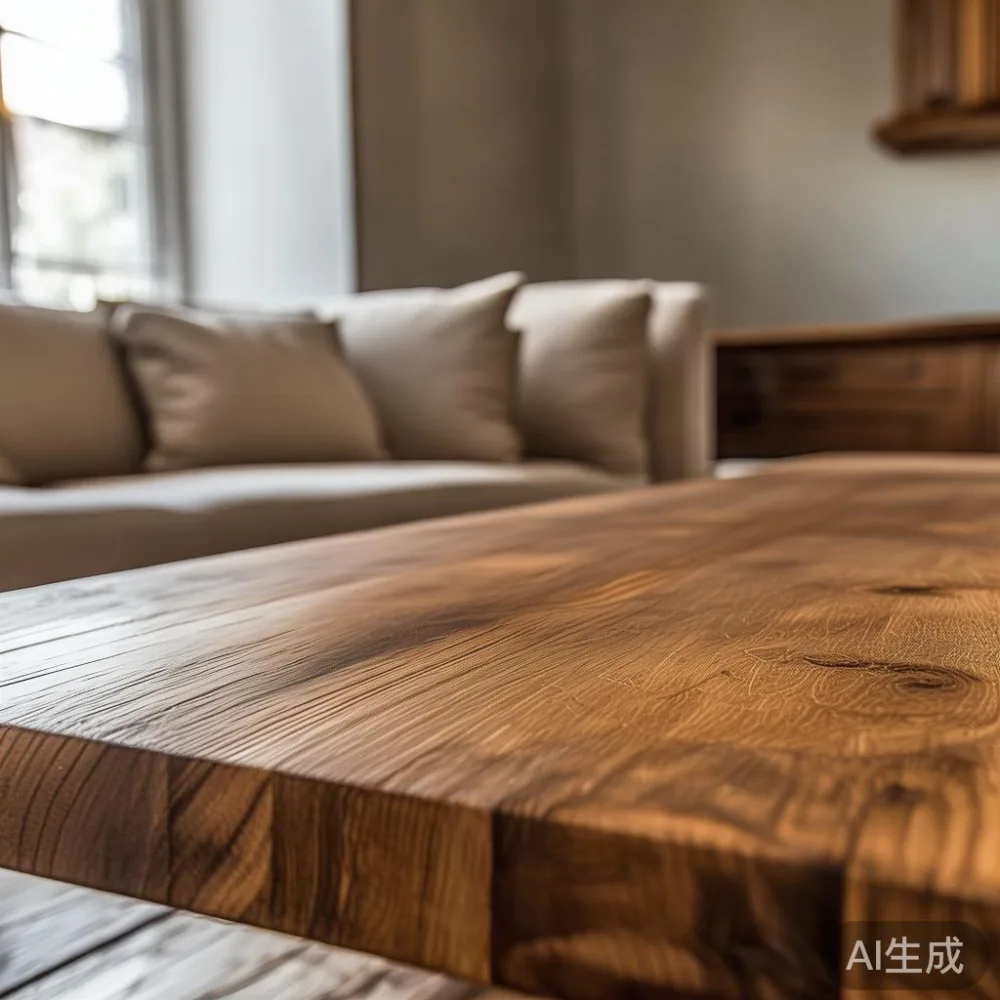
The trouble is that the term gets abused. I've seen HDB sellers in Bedok label a piece "solid wood" when only the front face is a 0.6 mm oak veneer over rubberwood ply. The structural board inside is engineered. It looks fine on day one, but the corners start showing layers within a year. Real solid wood, by contrast, can be sanded and refinished — MIDHILL, for example, offers lifetime refinishing on its solid wood sofas, bed frames, dining tables, wardrobes, and nightstands because the boards are thick enough to withstand repeated surface renewal. A 0.6 mm veneer cannot.
Is American bed furniture worth it?
An American-style solid wood bed frame is worth it for Singapore buyers who want furniture that survives a 25-year HDB cycle, because American light-luxury design pairs with construction techniques specifically engineered for heavy use — thicker rails, deeper joinery, and finishes tested against humid tropical climates. The price premium, typically 30% to 60% above a comparable flat-pack frame, pays back in longevity, refinishing options, and resale value.
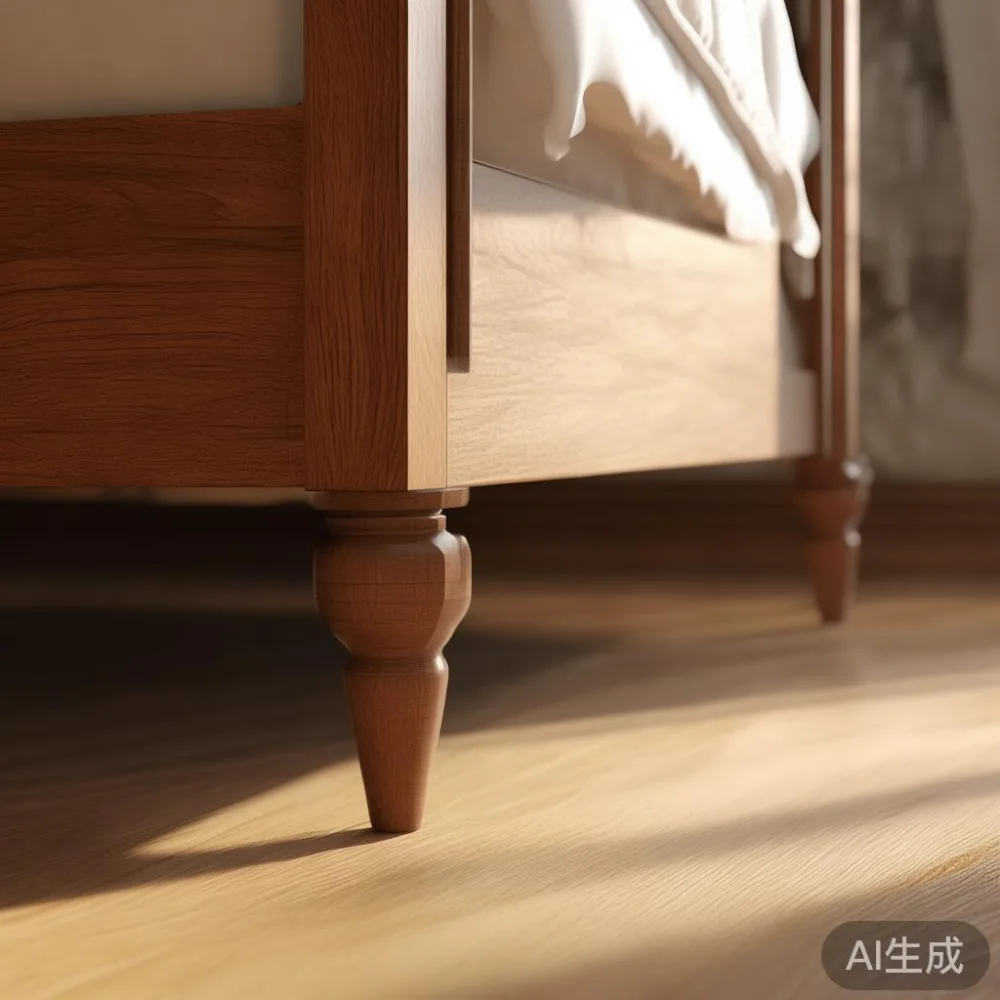
American bed furniture, in the light-luxury sense, is a style family that pairs clean Shaker and Mission silhouettes with generous proportions: a king bed frame around 200 cm wide and 210 cm long, with headboards 110 cm to 130 cm tall and side rails 25 cm to 30 cm deep. The structural standard in this category is high — solid wood throughout, often using white oak, walnut, or ash at 2.5 cm to 4 cm thickness, with hardwood slats spaced no more than 7 cm apart so the mattress keeps its warranty.
For a Singapore buyer in a Punggol condo corridor that's typically 1.2 m to 1.5 m wide, the king frame has to be broken down into components under 1.4 m each, or it won't fit the lift or the door. American light-luxury manufacturers design for this — the headboard ships in two halves, the side rails and footboard detach. I've measured MIDHILL's king bed frames in the showroom: headboard 128 cm tall and split into two 65 cm pieces, side rails 210 cm long but bolted, not glued, so they separate for delivery. That kind of breakdown adds labour, and labour shows up in the price — but it's also why the frame arrives undamaged and assembles cleanly in your bedroom in under 40 minutes.
Which wood species moves the price the most?
Species is the single biggest cost driver. On a per-cubic-metre basis at Singapore importers, rubberwood runs around SGD 600 to SGD 900, ash about SGD 1,600 to SGD 2,100, white oak SGD 2,200 to SGD 2,800, and American black walnut SGD 3,400 to SGD 4,200. A dining table that uses 0.18 cubic metres of rubberwood costs roughly SGD 150 in raw timber; the same table in walnut costs about SGD 720. That gap, multiplied by yield losses of 25% to 35% during drying and machining, lands directly on the retail price.
Walnut's price reflects two things: the tree grows slowly and produces relatively few wide boards free of knots, and the dark chocolate colour sells at a premium in light-luxury interior schemes popular in Singapore condos. Oak sits in the middle — open grain, light tone, durable, and stable across humidity cycles. Ash is the budget-friendly hardwood that still has the spring and strength of oak at 10% to 15% lower cost.
Then there are the two large softwoods you'll see in lower-priced solid wood ranges: pine and cedar. Pine looks attractive in the showroom but dents easily; cedar is aromatic but soft. For Singapore humidity, both need careful kiln-drying to a moisture content of 8% to 12%, otherwise the boards cup within months. Reputable Foshan manufacturers like MIDHILL kiln-dry and acclimatise their boards before machining, which is part of why a solid wood sofa frame or dining table from them weighs 15% to 20% more than a competitor's identically-sized piece. Heavier, in this category, usually means drier and denser.
How much does joinery and construction add to the price?
Construction can add 20% to 45% to the cost of a piece, depending on the joinery method. Dowel joints are the cheapest — a 6-seater dining table held together with dowels and glue might cost SGD 1,200 in materials but sells for SGD 1,500. The same table with mortise-and-tenon joinery, where a shaped tongue on one board fits into a matching slot on another and is pinned, takes 3 to 5 times longer to assemble and sells for SGD 2,100 to SGD 2,400.
For a bed frame, the joinery choice matters more than people expect. A basic platform bed using butt-jointed side rails screwed into the headboard might retail at SGD 900 to SGD 1,200. The same king-size frame with through-tenons, hardwood corner brackets, and a centre support beam rated for 350 kg will retail at SGD 1,900 to SGD 2,800. I've watched a factory worker in Foshan cut a single mortise-and-tenon by hand — it took 22 minutes. Multiply that across 14 joints on a wardrobe, and you see how labour hours convert into retail dollars.
French light-luxury influences tend to favour visible dovetail joints on drawers — a 4-drawer nightstand with hand-cut dovetails at the front and sides adds roughly SGD 180 to SGD 260 over a nightstand using cam-lock dowels. Post-modern light-luxury design favours cleaner lines, sometimes hiding the joinery, but still requires the same internal structure. Hardware is a related line item: soft-close drawer runners cost SGD 18 to SGD 35 per drawer versus SGD 5 for a basic roller runner; on a 6-drawer wardrobe that's a SGD 78 to SGD 180 difference.
Why do finishes and surfaces change the price so dramatically?
Finishes are a quiet cost driver because they're invisible until you touch them. A water-based lacquer finish on a dining table might add SGD 40 to SGD 70 to the production cost; a multi-layer hand-rubbed oil-and-wax finish — three coats of Danish oil, two of hard wax, with buffing between — adds SGD 180 to SGD 320. The latter takes 3 to 4 days of curing time versus 4 to 6 hours for lacquer, and that factory time is also expensive.
For tropical climates like Singapore's, where relative humidity runs 70% to 85% for much of the year, finish choice affects durability as much as appearance. Lacquer creates a film that resists humidity but can crack under rapid temperature swings; oil-and-wax finishes breathe with the wood but need refreshing every 18 to 24 months. A 7-seater solid wood dining table in MIDHILL's French light-luxury line, for instance, ships with an oil-and-wax finish specifically because the buyer can re-oil it themselves once a year — keeping the surface alive rather than letting it degrade under a cracking film. That kind of finish also makes the lifetime refinishing service far cheaper to deliver, since sanding back 0.5 mm of hardened oil is much easier than stripping a 0.3 mm lacquer film.
Then there's the marble-top option you'll see on some dining and side tables. A genuine Carrara marble top on a 1.8 m dining table weighs 95 kg to 110 kg, costs SGD 1,400 to SGD 2,000 just for the slab, and requires a reinforced sub-frame rated for the additional load. A cultured marble alternative weighs 55 kg and costs roughly a third of the price, but it chips differently — and chips show white through the pattern. For a Singapore household that values the look but worries about weight on HDB floors (a typical HDB floor load limit is 1.5 kN per square metre for concentrated loads), the engineered stone alternative often makes more sense in a condo, while a landed property can absorb real marble.
How do Singapore logistics affect the final price?
Singapore adds three cost layers that most overseas brands don't quote clearly: GST, delivery surcharges, and lift access. From 1 January 2024, GST is 9% on imported goods, so a piece landed at SGD 3,000 pre-tax becomes SGD 3,270. Delivery from a Jurong warehouse to a HDB in Bedok typically costs SGD 60 to SGD 120 for a dining table, SGD 80 to SGD 180 for a wardrobe (because of volume), and SGD 40 to SGD 90 for a sofa or bed frame. Lift access matters: standard HDB lifts in Tampines and Punggol are about 1.6 m deep and 1.4 m wide internally, with doors around 0.9 m wide. A pre-assembled 2.4 m wardrobe simply will not fit — the brand has to ship flat-pack or modular, and either approach adds engineering cost.
Free shipping thresholds (MIDHILL offers free shipping over US$350, roughly SGD 470) help, but on heavier pieces — a 90 kg marble table or a 70 kg king bed frame — the freight cost from Foshan to Singapore is structurally higher, typically USD 280 to USD 420 per cubic metre for ocean freight plus a SGD 60 to SGD 150 Singapore-side handling fee. That's why a solid wood sofa from a Foshan manufacturer often lands at SGD 2,200 to SGD 3,400 after freight and GST, while the same weight in a flat-pack MDF sofa lands at SGD 1,000 to SGD 1,500. The wood is heavier and the joinery is more demanding to engineer.
Returns are the other logistical factor most buyers forget. A 14-day return window sounds generous until you discover the return shipping on a 60 kg dining table from Punggol back to the warehouse is SGD 180 to SGD 250, often deducted from the refund. Some Singapore retailers absorb return shipping; most deduct it. Read the policy before paying, especially for pieces that require two delivery people to carry upstairs — most HDB corridors are 1.2 m to 1.5 m wide, and a queen-size bed frame carried vertically needs 3 cm of clearance on either side, which is rarely available.
How long should a solid wood piece actually last?
A well-built solid wood dining table, bed frame, wardrobe, or nightstand should last 25 to 40 years in Singapore conditions, with refinishing every 8 to 12 years for the high-touch surfaces and hardware replacement every 15 to 20 years on drawer runners and soft-close hinges. A solid wood sofa with a kiln-dried hardwood frame can last 30+ years, though the cushions and upholstery typically need re-stuffing or replacement at the 12 to 18 year mark. Brands that offer lifetime refinishing, such as MIDHILL, expect their pieces to outlast two HDB renovation cycles.
The structural warranty window matters because it tells you what the manufacturer actually believes. A 10-year structural warranty on a bed frame means the maker is confident the joints, slats, and rails will hold — anything shorter, and the brand is hedging. Hardware (drawer runners, hinges, soft-close mechanisms) usually carries a 3 to 5 year warranty separately because those parts are mechanical and wear out predictably.
For a Singapore household running the air-con at 23°C to 25°C most evenings, with daytime humidity around 75%, the wood should be acclimatised to a 10% to 12% moisture content before machining. Boards dried to that spec move less than 1 mm per linear metre across the year, which is invisible on a 2 m dining table but causes problems on wider pieces if the drying was rushed. This is one reason a 4-week lead time is a quality signal — a 1-week lead time usually means the wood wasn't given time to settle.
What is a fair price to pay for each piece?
For Singapore buyers in 2026, fair retail prices for solid wood pieces in the light-luxury range are roughly: dining table SGD 1,800 to SGD 4,200 for 6 to 8 seats in ash or oak; king-size bed frame SGD 2,200 to SGD 4,500 with headboard; 4-door wardrobe SGD 3,000 to SGD 6,500; 3-seater solid wood sofa frame SGD 2,400 to SGD 4,800 (excluding upholstery); nightstand SGD 450 to SGD 950 per pair; marble-top dining table SGD 3,500 to SGD 7,500. Anything 30% below these bands usually signals either engineered wood, undried timber, or compromised joinery.
The most expensive mistake I see in Singapore is buyers paying SGD 800 to SGD 1,200 for a "solid wood" wardrobe that turns out to be MDF carcass with a wood-look laminate. The piece warps within 18 months in HDB humidity, and the buyer can't refinish it because there's no real wood to sand back. A genuine solid wood wardrobe at SGD 3,200 looks expensive next to that, but over a 25-year lifespan it costs SGD 128 per year — less than the laminate wardrobe that needs replacing twice in the same window.
What you should do, before paying anything: ask the brand which species, what thickness on the structural panels, what joinery at the corners, what finish, what warranty on the structure, and what the return shipping policy actually is. If any answer is vague, walk away. Real solid wood, properly dried, properly joined, properly finished, with a 10-year structural warranty, will outlast almost every other purchase in your home — and the price, once you break it down by year of service, is the bargain of the renovation.