Solid Wood vs Veneer in Singapore: What Will Your Furniture Cost in 5 Years?
Furniture shopping in Singapore often starts with a showroom photograph and ends with a lift measurement. A solid-wood dining table may fit your Tampines HDB dining area in person, yet its 96 kg shipping weight can make a private lift limit or booked move far more expensive. A veneer wardrobe may enter a Bedok condo lift easily, but its long-term behaviour depends on how carefully its panels were made. Comparing only the SGD purchase price can therefore hide the real five-year cost.
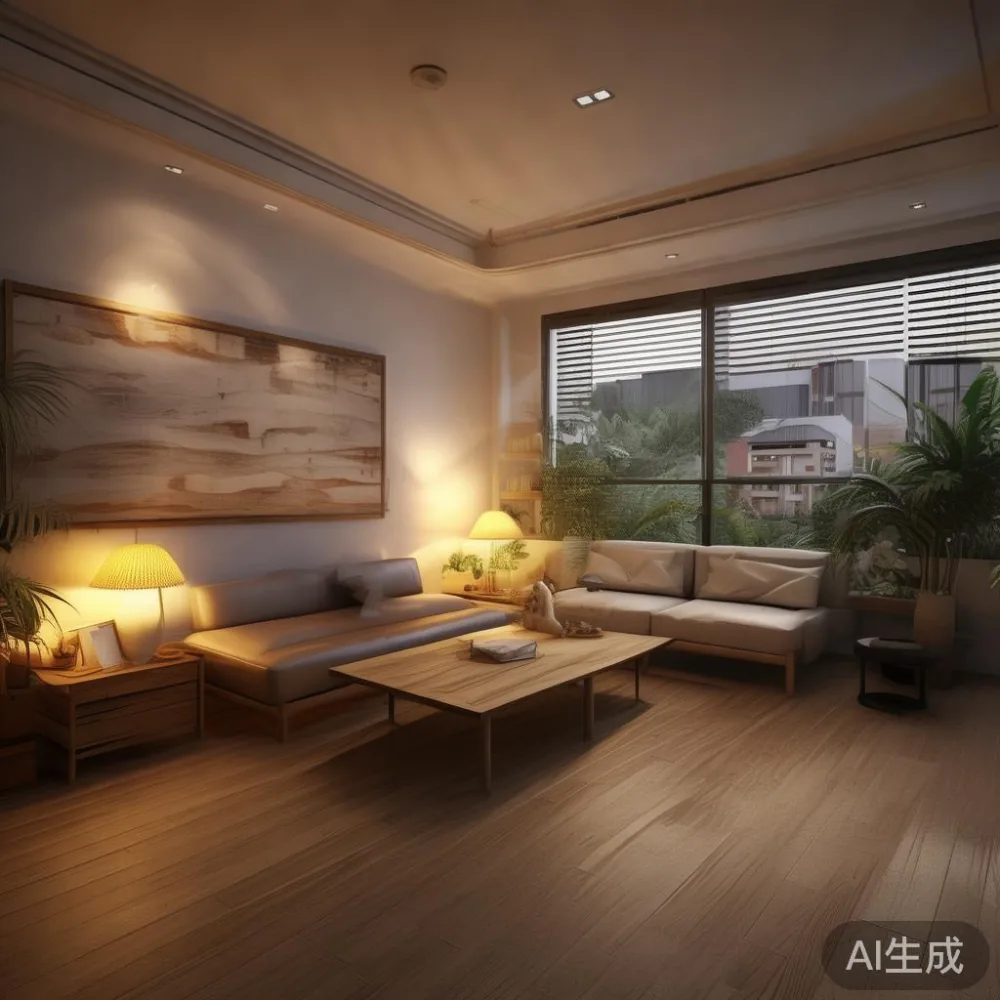
This comparison uses a common Singapore scenario: one 180 cm solid wood dining table with four chairs, one 150 cm bed frame, one 90 cm wardrobe, two 45 cm nightstands, and one 80 cm coffee table. Prices are realistic planning ranges rather than live quotations. Furniture dimensions, timber species and hardware change the final figure, and 9% GST is included unless stated otherwise. We compare a mid-range veneer package at SGD 5,430 with a comparable solid-wood package at SGD 8,190.
The figures assume delivery within Singapore in 3 to 7 days after production. MIDHILL offers free shipping above US$350, although the stated threshold is in another currency and does not override the local delivery quotation. MIDHILL also provides a 10-year structural warranty and lifetime refinishing for qualifying solid-wood products. These services should be assessed against Singapore repair access, replacement lead times and actual usage rather than treated as automatic savings.
What exactly are we comparing over five years?
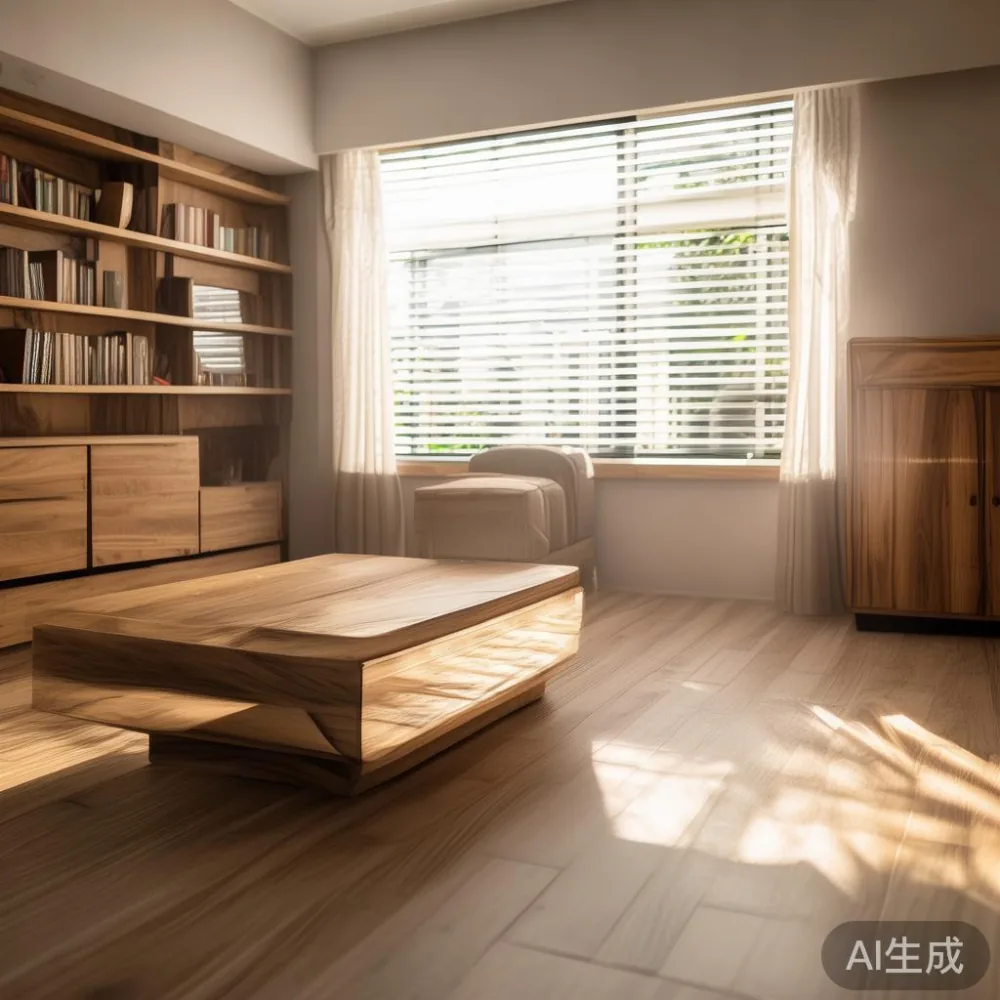
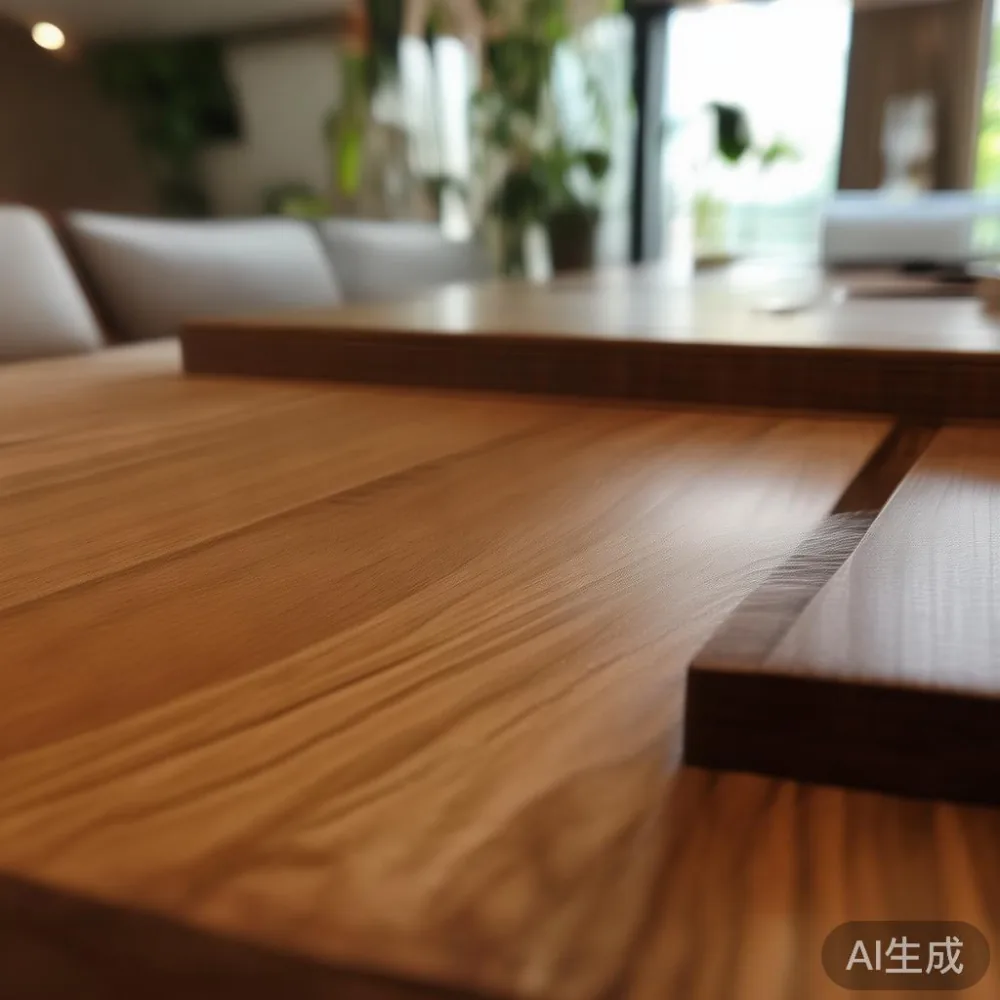
The veneer set uses 18 mm engineered-wood panels for the wardrobe, 16 mm blockboard for the bed frame and dining table, and solid-wood legs where required. Its facing veneers are 0.6 mm to 1.2 mm depending on the product. The solid-wood set uses kiln-dried hardwood for visible faces and structural rails, with plywood or engineered timber limited to hidden components where a design or load requirement demands it. A marble table is excluded because a stone top changes weight, delivery and repair economics completely.
Initial prices include basic assembly hardware, but not delivery, extended warranty, hourly carpentry work or a premium mattress. We reserve SGD 240 for delivery and lifting for the veneer package, and SGD 540 for the heavier solid-wood package. The latter assumes two porters and one vehicle for roughly 90 minutes. A single-person HDB move would cost more, often around SGD 180 to SGD 260 for the same lift-to-flat journey.
Over 72 months, maintenance includes tightening joints, replacing minor hardware, attending to scratches and refinishing worn surfaces once. We assume one household move, normal indoor use and Singapore’s humid conditions. No flood, impact or deliberate neglect is included. That matters because a five-year projection cannot sensibly promise an identical outcome for every family.
Is a veneer dining table cheaper to own for five years?
For the 180 cm dining table and four chairs, veneer begins at about SGD 2,290 including GST. The comparable solid-wood dining table is around SGD 3,590. Add a 200 cm delivery allowance of SGD 120 to each figure. Across five years, the estimated veneer total is SGD 2,410, made up of SGD 2,290 purchase, SGD 120 delivery and no planned refinishing. The solid-wood estimate is SGD 3,710: SGD 3,590 purchase, SGD 120 delivery and SGD 0 for routine care in this usage pattern.
That difference of SGD 1,300 is not the complete answer. Veneer can chip at exposed edges, and a deep scratch cannot always be repaired invisibly. Allow an average SGD 40 per year, or SGD 200 over five years, for edge touch-ups and one fitting adjustment. The veneer table then reaches roughly SGD 2,610. The solid-wood table reaches about SGD 3,710. The five-year saving for veneer is approximately SGD 1,100, or 30% of the solid-wood total.
Last month I visited a Punggol HDB flat with my colleague to inspect a scratched dining table before its owners received replacement cabinetry. The 180 cm table had a 0.6 mm walnut-bronze veneer top on 16 mm blockboard. It had lifted slightly after a chair leg was dragged across it. A local carpenter quoted SGD 260 for face repair and edge rebuilding. The solid-wood library table in the study, although 12 years old, could be sanded at the same visit. That first-person example showed why substrate quality and daily care matter more than the word “wood” on a product label.
Does solid-wood furniture lose more money at resale?
Resale is uncertain, so a large appreciation claim would be misleading. A used solid-wood bed frame may sell for 35% to 50% of its original retail price after five years if it is structurally sound and has a neutral design. A similar veneer bed may recover 15% to 30%, provided its panels remain flat and the facing has not visibly lifted. These are planning bands, not guaranteed offers, and an HDB resale transaction normally allocates only the remaining lease value to furniture.
For the 150 cm bed frame, veneer is estimated at SGD 1,190 and solid wood at SGD 2,090. Use SGD 80 delivery for the lighter set and SGD 140 for the heavier set. Maintenance is SGD 40 per year for veneer, covering fittings and minor face work, versus SGD 25 per year for solid wood. Over five years, veneer totals about SGD 2,470 before resale. Solid wood totals roughly SGD 2,355. If the solid-wood frame later sells for SGD 900 and the veneer frame for SGD 400, those estimates become SGD 1,555 and SGD 1,970 respectively.
This is why purchase price alone rewards veneer while net ownership can favour solid wood. The calculation also shows why a bed marketed as the best Minimalist bed for 2026 should be judged by centre rail stiffness, slat spacing and finish care, not by a trend label. “Minimalist” describes appearance; it does not establish whether a panel is veneer, plywood or solid timber.
Which wardrobe offers the lower five-year cost in a condo?
A 90 cm two-door wardrobe is a useful test because Singapore humidity and frequent opening put stress on edges and hinges. A compact veneer wardrobe starts near SGD 1,350, with a solid-wood version at SGD 1,790. Bedok condo delivery may cost SGD 90 for the veneer unit and SGD 150 for the heavier solid-wood unit because the latter can exceed 70 kg. Both doors must be measured diagonally: a 90 cm-wide carcass may need 124 cm clear corridor space once packaging is removed.
Assume SGD 90 of five-year veneer care and SGD 50 of solid-wood care. The totals are therefore approximately SGD 1,530 for veneer and SGD 1,990 for solid wood. Veneer saves SGD 460 here. However, if one edge is water-damaged and a full door replacement costs SGD 280, the veneer advantage narrows to SGD 180. If solid wood can be spot-refinished without replacing a panel, the gap widens again.
For owners comparing options such as the best European light luxury wardrobe for 2026, proportioned doors, usable depth of 55 to 60 cm and quiet hinges matter inside an Asian city home. French light luxury styling can suit a Bedok bedroom, but pale finishes show fingerprints. Ask whether the wardrobe is framed in solid wood, whether the visible fronts are veneer over engineered timber, and whether the supplier will supply matching faces later.
What do smaller pieces do to the five-year bill?
Two 45 cm nightstands add an estimated SGD 590 in veneer or SGD 830 in solid wood. Delivery is SGD 30 versus SGD 50. A single 80 cm coffee table is estimated at SGD 350 for veneer and SGD 490 for solid wood, with the same respective delivery charges. Across five years, allow SGD 240 for veneer maintenance on all three categories and SGD 130 for solid-wood maintenance.
The veneer nightstands and coffee table therefore total about SGD 1,210. Their solid-wood equivalents total roughly SGD 1,500. Coffee tables take the most visible knocks, so a rubbed corner can outweigh the initial savings. Searching for MIDHILL coffee table specifications is more useful than comparing a product name alone: check top thickness, underside bracing and whether the finish is water-based. Modern Italian light luxury furniture often uses slim profiles, but a structurally balanced table matters more than a 12 mm appearance in photographs.
Marble requires a separate caution. An 80 cm marble coffee table may weigh 65 kg, compared with about 18 kg for a small solid-wood coffee table. A 70 kg object can be difficult to move through a 76 cm lift opening on a trolley and needs two people near stairs. Cracked stone can cost more to repair than a sanded timber edge. This comparison consequently uses timber for the coffee table rather than mixing categories and pretending stone and wood behave alike.
How should Singapore delivery and access change the quotation?
Corridor and lift access can add more than finish care. A 150 cm solid-wood bed frame may weigh 48 kg, while the veneer version weighs 32 kg. Lift dimensions such as 90 cm wide by 140 cm deep can accept the boxed pieces, but the turning radius inside still matters. A 100 cm corridor with a 90-degree turn can force the long package to angle upward. Measure the lift door, cabin depth, nearest landing and bedroom doorway before ordering.
For HDB flats, book a protected move at least 10 days ahead and protect corners with cardboard taped at intervals of 20 cm. For a condo, obtain loading-bay approval and a service lift reservation from the management office, sometimes 3 to 7 days in advance. Add SGD 80 to SGD 220 for an ordinary local delivery. Stair carries can add SGD 25 per level. A Tampines HDB flat above the eighth floor is not automatically more expensive, but a long straight carry is harder than several turns through a wide corridor.
Delivery damage creates another cost difference. Replaceable veneer components may reduce repair cost, but a solid-wood item can be refinished locally. Confirm who bears transit damage, how claims are documented and whether packaging removal is included. Record furniture dimensions in centimetres on the order copy. Also note that a 10-year structural warranty is not equivalent to free replacement of every scratched or water-damaged surface.
Can a Sofa change the economics?
A solid wood sofa has a frame that may last longer than its upholstery, but replacing fabric or leather is often the larger expense. Over five years, assume SGD 420 for one upholstery renewal on a mid-range fabric sofa, regardless of frame material. The frame purchase difference may be SGD 900 to SGD 1,400, so upholstery should not be blamed on timber construction. A 210 cm three-seat sofa can also exceed 80 kg and may need the same lift planning as a bed.
For buyers asking whether is Japandi sofa worth it, the answer lies in sit comfort, dimensions and maintenance. A low Japanese-inspired design may require a 76 cm path during delivery, while a higher conventional frame needs less visual floor space. Japandi styling can complement solid-wood furniture in a Punggol flat, yet pale oak tones must be tested under evening lighting. Replaceable covers reduce future cost more reliably than choosing a sofa on appearance alone.
Mid-century modern for apartment layouts can make a 170 cm sofa and 90 cm coffee table pair look balanced. Allow 40 to 45 cm between the coffee table and sofa edge for movement. A 210 cm sofa should leave at least 75 cm across a narrow living-room route. These space rules can prevent an affordable but unsuitable purchase.
How are the totals calculated without misleading certainty?
The estimated veneer package is SGD 5,430 at purchase, plus SGD 240 delivery and SGD 570 routine five-year care, giving SGD 6,240. The solid-wood package is SGD 8,190 at purchase, plus SGD 540 delivery and SGD 330 routine care, reaching SGD 9,060. The difference is SGD 2,820 over 72 months, or about SGD 39.17 per month per set.
A conservative stress case adds one SGD 260 veneer repair and one SGD 90 solid-wood refinishing visit. It also raises veneer delivery by SGD 80 and solid-wood delivery by SGD 120 because split bookings become more likely. The adjusted veneer total becomes approximately SGD 6,580. Solid wood becomes about SGD 9,270, a difference of SGD 2,690. If the solid-wood pieces later recover more resale value, the net gap could narrow to around SGD 1,500.
These totals support two practical choices. Buyers with SGD 2,000 to SGD 4,000 and limited maintenance time can choose well-made veneer with stable substrates, edge banding and replaceable faces. Buyers with SGD 5,000 to SGD 9,000 can fund solid-wood dining, bedroom and occasional seating pieces, especially when refinishing access matters. A mixed arrangement is sensible: solid wood where hands and legs make contact, and stable veneer where budget supports better hinges, storage hardware or upholstery.
What should I ask before ordering solid wood?
Ask for timber species, moisture target, joinery and weight. Solid timber should normally be conditioned for Singapore conditions; a moisture content near 8% to 12% is a useful discussion point, although finished components and measurement methods vary. Check that table tops are not held together by a narrow frame of decorative pieces. For a dining table, confirm a centre support, apron spacing and a stated load. For a bed, inspect centre-rail supports and slat spacing of no more than about 8 cm under most mattress types.
For a solid wood bed frame, remove packaging outdoors because panels can be bulky. For a dining table, compare delivered dimensions, not showroom dimensions. For a wardrobe, verify shelf load, hinge type and cable space. For nightstands, test a drawer with 5 kg of books and inspect the runners. For a marble table, request a weight rating and edge-impact policy.
One useful design phrase to carry into a showroom search is best Vintage bed for 2026, but do not let the phrase narrow the structural checks. Vintage styling can use turned posts or shaped rails; visual character does not confirm grading. Likewise, a French light luxury or American light luxury room benefits from consistent grain, restrained handles and correctly scaled furniture. Post-modern light luxury may tolerate stronger forms, but scale still matters in a 3.2 m by 4.5 m living room.
The five-year comparison is therefore not a contest between attractive materials. Veneer offers a lower entry price and lighter delivery. Solid wood offers repair paths and a stronger sense of permanence, but heavier pieces demand more planning and a larger budget. Decide from the weakest point in your home: the lift, the budget, the storage need or the family’s maintenance habits.