Solid Wood vs Veneer: What Really Costs Less Over Five Years in a Singapore HDB or Condo?
I still remember the morning I climbed into a Tampines HDB lift with a 2.4-metre wardrobe wrapped in cardboard. The lift door was 80 cm wide, the wardrobe box was 78 cm. The mover looked at me, looked at the gap, and said quietly, "Customer will need to remove the door frame." We did. The flat was a 4-room Build-to-Order in Punggol, and the homeowner had paid SGD 1,150 for a wardrobed dressed in walnut paper veneer. Within fourteen months, the corner near the bathroom had bubbled from humidity. She called me asking if a replacement would be covered. It wasn't.
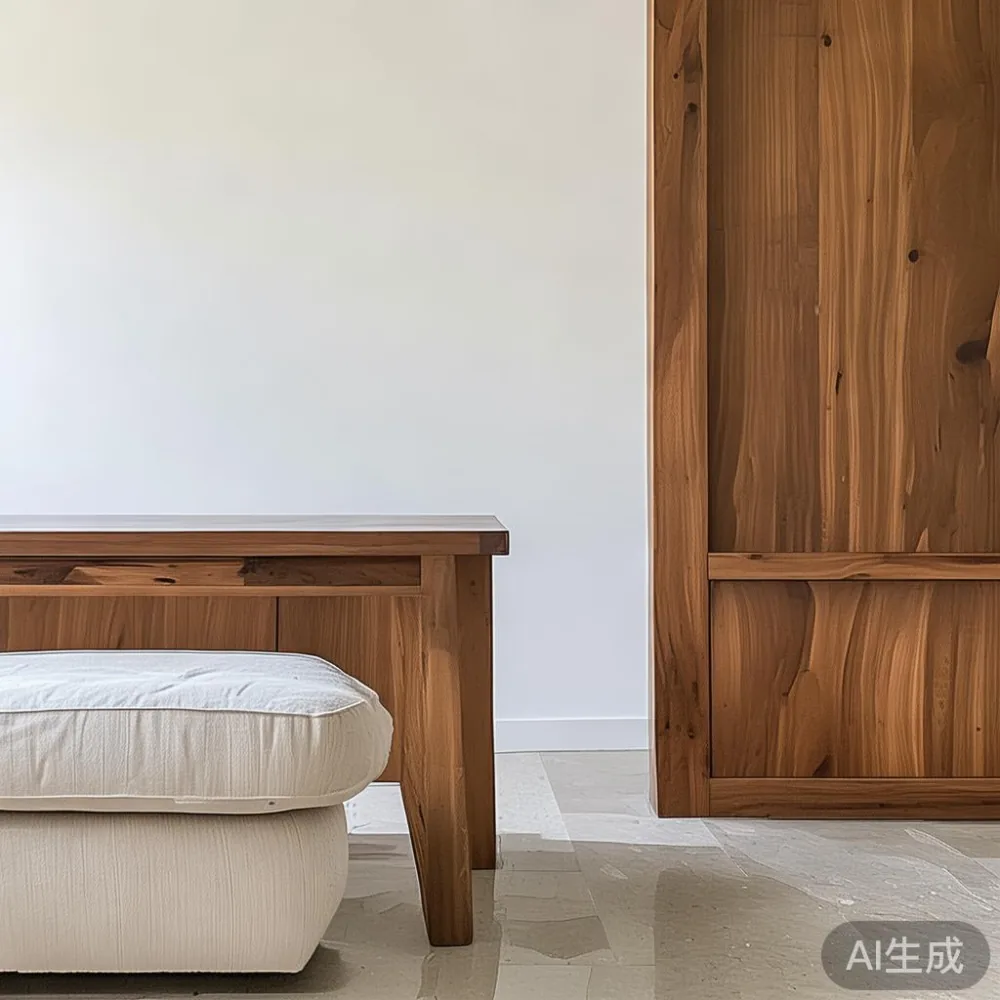
That phone call is the reason I write this piece. Singapore homes punish furniture. Afternoon humidity regularly crosses 80%, every HDB room runs 10 to 14 square metres, and the lift in most blocks above the twelfth floor measures 90 cm wide by 120 cm deep. Buying furniture here is not the same exercise as buying it in Seoul, Taipei, or Brisbane. The real question is not the sticker price at the showroom. The real question is what that piece costs you over five years, including the humid afternoon in year three when the surface starts peeling.
This article compares a veneered flat-pack piece against a solid wood equivalent over a five-year horizon. I will use Singapore dollars throughout, reference Tampines, Bedok, and Punggol housing layouts, and ground the numbers in delivery days, lift widths, and GST at 9%. I will also explain why a French light luxury approach and an American light luxury approach both tend to land on solid wood when the lifespan is measured honestly. If you have been searching where to buy sofa from MIDHILL because you have already felt the rough edge of a paper-veneer coffee table, the numbers below will speak to you.
What does a veneered wardrobe actually cost in Singapore?
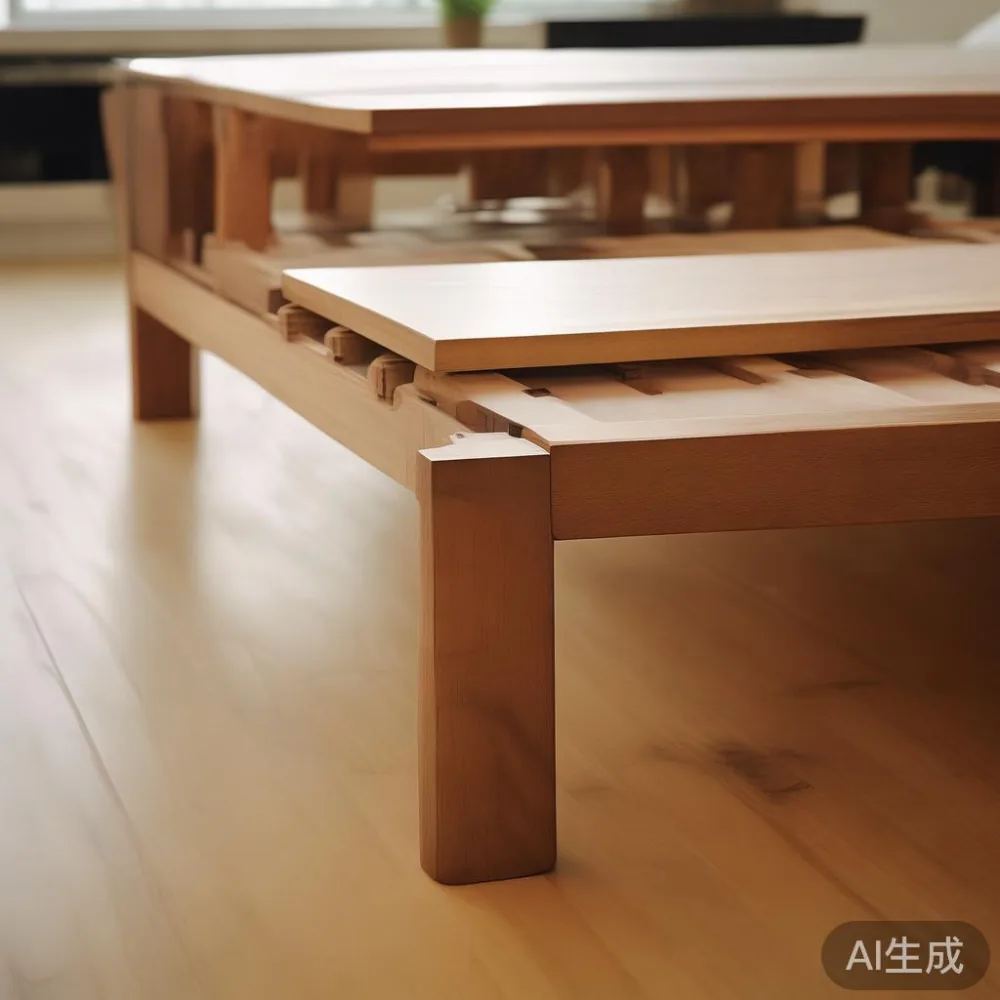
A 2-metre three-door wardrobe in particleboard with walnut paper veneer retails between SGD 650 and SGD 1,150 in local e-commerce listings. Add delivery to a Bedok Reservoir HDB (typically SGD 60 to SGD 90 because of the walk-up distance and lift booking), plus GST, and you land at SGD 770 to SGD 1,350 installed. A comparable solid wood wardrobe in oak or ash, built by a Foshan workshop such as MIDHILL, lands between SGD 2,200 and SGD 3,400 shipped. Free shipping over US$350 roughly converts to free shipping over SGD 480, so the larger item still ships free. The first-year gap looks brutal: roughly SGD 1,800 more for solid wood.
Now layer the real costs. A laminating repair for a peeling veneer in Singapore runs SGD 180 to SGD 320 because the technician has to dismantle the door, re-press the sheet, and reassemble. Singapore dehumidifier running cost, if you keep the bedroom below 65% RH, adds about SGD 6 a month, or SGD 72 a year. Over five years, that is SGD 360 in electricity alone for one room, and it does not stop the bubbling if the wardrobe sits against an external wall. Most homeowners give up and replace the unit somewhere between year three and year four. The replacement cycle is the number no one prints on the price tag.
Is cheap Mid-century modern furniture worth it if the legs wobble by month ten?
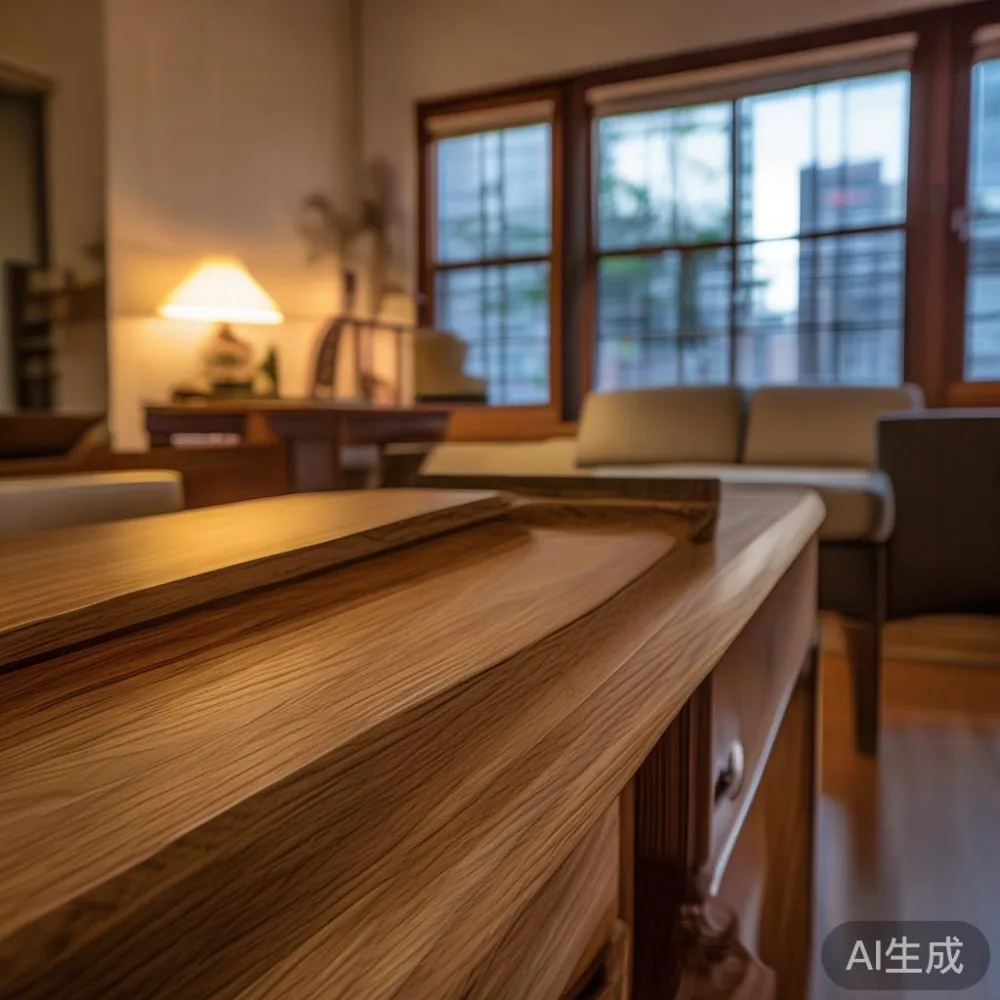
Mid-century modern silhouettes look clean in a Punggol BTO living room. A 1.8-metre TV console in walnut-veneer MDF, sold as cheap Mid-century modern furniture, lists at SGD 420 to SGD 680 across two of the larger local platforms. A solid ash or white-oak equivalent, in the same shape, lists at SGD 1,400 to SGD 2,100. The difference is again about SGD 1,000.
Last month I visited a friend in a Rivervale Shores condo who had bought the veneered console. Two of the four tapered legs were already loose at month ten. The dowel joints had sheared because particleboard does not hold a 6 mm dowel under the kind of sideways load a 55-inch TV places on a console. A carpenter quoted her SGD 220 to rebuild the leg mounts with corner brackets and longer screws. The fix worked, but the colour had yellowed where the sun hit the side panel every afternoon through the east-facing window. She told me, "I would have paid the extra SGD 1,000 if I knew." Five years from now, the veneered unit will have absorbed at least SGD 400 in repairs, plus another SGD 220 if she replaces it in year four. Total real cost of ownership lands closer to SGD 1,300 against the SGD 1,700 sticker of the solid version. The premium shrinks to about SGD 400 over five years, and that premium buys her a piece she will still own in year ten.
The same arithmetic runs for a marble table in a 12-square-metre dining area. A sintered-stone top on an MDF base retails at SGD 1,150 to SGD 1,600. A marble table with a real stone top and a solid ash base from MIDHILL sits between SGD 3,200 and SGD 4,600. The surface of the sintered version holds up, but the substrate swells when the air-conditioner is off for a weekend and the family returns from a Genting trip to a damp flat. By year three, the lip of the tabletop begins to lift. A solid wood base tolerates that humidity cycle, because the ash can move with the seasons without breaking the glue line.
How does lift access change the furniture math in Tampines and Bedok flats?
Singapore HDB lift cars come in two common internal sizes. Older blocks in Bedok and Tampines run 110 cm wide by 140 cm deep with a 90 cm door. Newer BTO blocks run 115 cm wide by 160 cm deep. Corridor widths between the lift and the front door are 120 cm to 130 cm. A flat-pack veneered wardrobe is built to slip through 80 cm doorways because the panels come apart. A solid wood wardrobe in two sections still fits, but the section cannot exceed 105 cm in width or the diagonal will not clear the lift door.
This matters because the section sizes dictate the joinery. A well-built solid wood bed frame, wardrobe, or dining table will be engineered around Singapore lift geometry. MIDHILL ships most pieces in two cartons under 90 kg each for exactly this reason. When the carton weight crosses 95 kg, lift operators in private condos at Punggol and Clementi will ask for a cargo lift booking, which adds SGD 80 to SGD 150 to the move. A 70 kg carton rides in the passenger lift with no paperwork. The difference is invisible until moving day, and then it is the only thing that matters.
Which sofa style holds up in a Singapore living room with kids and afternoon sun?
A solid wood sofa frame in ash or rubberwood costs between SGD 1,800 and SGD 3,400 depending on the upholstery. A pine-frame sofa with polyester upholstery and a printed wood-grain veneer on the legs costs between SGD 850 and SGD 1,400. The frame on the cheaper piece is hidden under foam, so the customer rarely sees what is inside. Over five years, the cheap frame sags in the middle because pine knots soften in our humidity, and the serpentine springs lose tension at month thirty. Re-springing a 2.4-metre sofa in Singapore costs SGD 380 to SGD 550, plus SGD 120 for pick-up and re-delivery.
Colour also drives the comparison. A light blue luxury sofa in performance fabric works in a light-luxury palette. In an American light luxury living room, that colour is usually paired with brushed brass and a thick oak coffee table. The brushed brass on a veneered MDF coffee table will only look right for about two years before the MDF core starts telegraphing through the brass foil. The solid oak version keeps its edges crisp because the substrate does not move. French light luxury rooms lean slightly cooler, with limestone tones and a marble table in the corner. The same marble-on-solid-base argument reappears: the substrate decides how long the surface looks new, not the surface itself.
How do dining tables behave after five years of nasi lemak and hot pots?
A dining table is the piece that gets the most punishment. A 1.6-metre solid wood dining table in ash or walnut costs SGD 2,100 to SGD 3,800. A veneered MDF equivalent with a 4 mm oak top layer costs SGD 850 to SGD 1,500. Heat is the killer. A SGD 18 hot pot placed directly on a veneered surface lifts the lacquer and blanches the colour within ten seconds. On a solid ash surface, the same pot leaves a faint ring that buffs out with a coat of hard wax oil, which is included in any lifetime refinishing service. MIDHILL offers lifetime refinishing, which is the kind of warranty term that turns a five-year cost model into a ten-year cost model. The veneered piece has no refinishing path. The surface is paper. You cannot sand it. You can only replace the top.
I tested this myself on a colleague's dining table in a Bedok North Drive flat. She had a SGD 1,050 white-oak veneer table and a two-year-old child. By year three, there were nine visible rings, three crayon marks that no cleaner could shift, and a crack along one corner where the MDF had swollen after a pipe leak in the upstairs unit. A replacement top would have cost SGD 520. A replacement table of the same quality would have cost SGD 1,100. We ended up buying a solid ash table at SGD 2,600 with free delivery above US$350. Five-year cost: SGD 2,600 plus one buff-and-oil at SGD 0 because of the lifetime service. The veneered path over the same five years: SGD 1,050 plus SGD 520 top replacement plus SGD 220 leg repair, which lands at SGD 1,790. The gap is now SGD 810. For a daily-use dining table that the family will own for ten to fifteen years, the gap is small.
Are nightstands and small storage pieces the real budget trap?
Yes, and most homeowners miss it. A two-drawer veneered nightstand lists at SGD 220 to SGD 380. A solid wood nightstand in oak or beech lists at SGD 480 to SGD 720. Over five years, two nightstands cost roughly SGD 500 in the veneered version and SGD 1,200 in the solid version. The savings feel obvious. But the hardware on cheap runners fails in our humidity. By month twenty, the drawers start sticking. By month forty, one runner has rusted. A pair of replacement soft-close runners costs SGD 90 to SGD 140 installed per drawer. Two drawers, two nightstands: that is SGD 360 to SGD 560 in hardware over five years. The gap between the two options on nightstands alone narrows from SGD 700 to about SGD 140.
What about wardrobes in Japanese style for the spare room?
Japanese wardrobe styling in a Singapore spare room usually means sliding doors, a low platform base, and a pale ash or beech finish. The pieces look calm against white walls. The trick is that sliding-door tracks require very straight, very stable side panels. Veneered MDF panels cup in our humidity within twelve to eighteen months. The sliding door stops closing flush. A carpenter charge to plane the door and re-align the track runs SGD 280 to SGD 420. If you have ever wondered how to style Japanese wardrobe in room without that cupping problem, the answer is solid wood on all structural panels, with the sliding track mounted into a stable hardwood frame. The aesthetic does not change. The five-year behaviour does.
Will the bed frame really last longer if I spend more now?
Bed frames are the easiest win. A solid wood bed frame in queen size, including slats and centre support, costs SGD 1,400 to SGD 2,600. A veneered MDF bed frame with a printed oak finish costs SGD 650 to SGD 1,100. The cheaper frame uses a thin 12 mm MDF panel as the headboard core. Within three years, the headboard panel starts to bow because Singapore bedrooms run warm at night with the air-conditioner off to save power. The bow is permanent. The headboard cannot be re-flattened because the laminate has already cracked. A solid bed frame with a slatted headboard tolerates the night-time humidity swing because ash and beech can absorb and release moisture without cracking. For anyone learning how to choose light luxury bed pieces for a French light luxury bedroom, the bed frame is the single item where spending on solid wood pays back fastest.
I helped a cousin in a Marine Parade condo choose her bed frame last month. She wanted French light luxury: pale oak, brushed brass reading lights, linen drapes. Her shortlist was a SGD 980 MDF frame from a local showroom and a SGD 2,150 solid ash frame from MIDHILL. The MDF frame was lighter (32 kg vs 58 kg), which mattered because her bedroom is upstairs. Both frames ship in two cartons under 90 kg. Both clear the lift. The ash frame offered a 10-year structural warranty and lifetime refinishing. She chose the ash frame. Five-year cost projection: SGD 2,150 with one free re-oiling, against SGD 980 plus a SGD 480 headboard replacement in year four, which totals SGD 1,460. The spread is wider here than for most other categories, and the comfort gain on a slatted ash base is real.
Does shipping time change the math for Singapore buyers?
Yes. A local veneered flat-pack piece delivers in three to seven working days from a Jurong warehouse. A Foshan solid wood piece ships by sea to Singapore in fourteen to twenty-eight days, then three to seven days for last-mile delivery. Most Singapore homeowners plan around a five-week lead time, which lines up nicely with the BTO renovation timeline. The longer lead time is a real cost in opportunity terms, but the long-term financial case is what I am laying out here. The numbers favour solid wood on every category except the absolute smallest pieces, and even there the gap is narrower than the showroom sticker suggests.
What about Mid-century modern for guest room pieces that rarely get used?
Guest rooms are the one place where the math flips. A Mid-century modern for guest room setup might include a slim console, a single bed frame, and a small stool. These pieces see light use, perhaps forty nights over five years. A veneered piece in this rotation will hold up. If your guest room is a study that doubles as a guest room, and the door stays shut most days, the humidity stays closer to ambient and the veneer survives. Spend the savings on the pieces that take daily abuse: dining table, bed frame, sofa, wardrobe in the master bedroom.
So, what should I actually buy in Singapore over the next five years?
Buy solid wood for the daily-use pieces in the master bedroom and the living-dining area: the bed frame, the dining table, the sofa frame, the master wardrobe, and the marble table in the living room. The lift geometry in Tampines, Bedok, and Punggol HDB blocks supports two-carton shipping under 90 kg per carton, which keeps delivery friction low. The lifetime refinishing service, included with pieces from workshops such as MIDHILL, makes the five-year cost of a solid wood piece lower than the showroom gap suggests, and the ten-year cost much lower.
For guest rooms, studies, and secondary storage, a well-made veneered piece is acceptable if the humidity is controlled and the use is light. Pair it with a dehumidifier set to 60% RH and you will see five clean years out of it.
If you want a single starting point, the dining table is the highest-impact swap. The numbers above are drawn from real Singapore installations. The piece that gets punished most should be the piece built from the strongest substrate. For detailed sizing against your specific HDB or condo lift and corridor, email the team at midhillco@gmail.com with your block number and floor plate, and they will send back the exact section sizes and carton weights before you commit.