Understanding Furniture Warranties in Solid Wood Singapore
A furniture warranty can look generous on a product page and still leave you with an expensive dispute. The difference often comes down to 4 details: what is covered, what counts as normal wear, who must transport the item, and how long the supplier will respond. For a solid wood dining table, bed frame, wardrobe, or nightstand, those details matter just as much as the headline number of years.
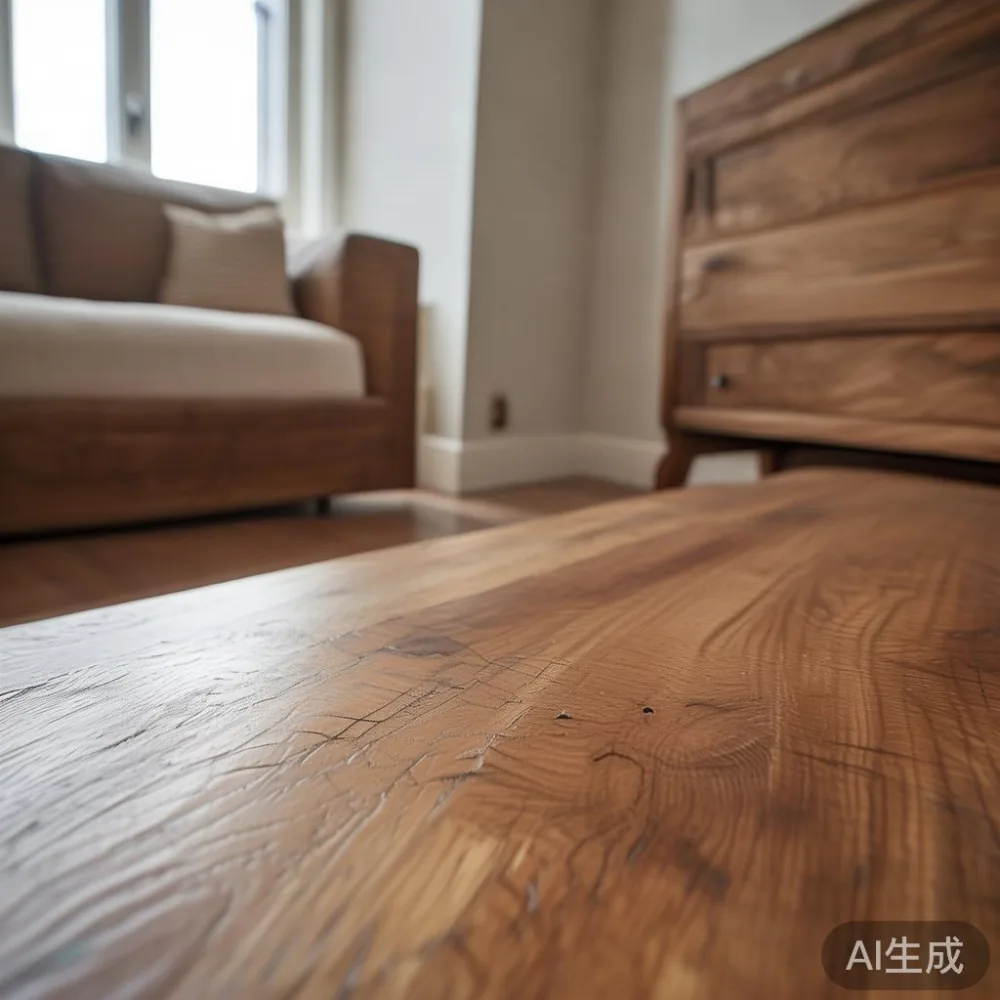
Singapore makes the practical questions particularly sharp. A sofa may fit inside an HDB flat in Tampines but not pass through the lift door or turn through a Bedok corridor. A dining table may be advertised at 180 cm, while the lift lobby gives you only 179 cm of turning clearance. A wardrobe assembled in your Punggol home may need to be moved again if a hinge fails during the first 18 months.
This guide explains how to read a furniture warranty line by line, with figures in cm, kg, SGD, days, and years. It also considers how a light-luxury purchase should be protected, whether your approach reflects French light luxury, American light luxury, or post-modern light luxury. The goal is not to hunt for fine print for fun; it is to know exactly what remedy you can reasonably request if something goes wrong.

What does a 10-year structural warranty actually cover?
A 10-year structural warranty usually refers to defects in the construction of the main frame, joints, or load-bearing components. It is not the same as a promise that every part of the furniture will remain free from faults for 10 years. A solid wood sofa may have a structural frame covered for 10 years while its cushions, mechanisms, upholstery, and surface finish follow separate terms. A bed frame may have a 10-year frame term but a shorter period for electrical components, if fitted, or for movement-related issues.
Look for the item named in the warranty. “Solid wood” should not be treated as a catch-all for every component. The document should identify the relevant solid wood bed frame, dining table, wardrobe, or nightstand, then explain which parts are covered and which are excluded. If the wording says “wooden components,” ask whether drawer runners, screws, brackets, and support legs count. If the product combines solid timber with metal or marble, the marble table may have a different warranty from its base.

The remedy also matters. A useful warranty might replace a defective part, repair it, refund the purchase price, or issue store credit. Store credit is less useful if the seller has no physical showroom in Singapore and the replacement item is unavailable. Ask whether the supplier pays freight, packaging, removal, assembly, GST, and the labour needed to put the item back into service.
Here are figures to clarify in writing:
- Term: 10 years for the structural frame, or 5 years for other parts.
- Response period: 5 business days for an initial inspection decision.
- Proof: invoice, order number, photographs, and the serial number under the product.
- Remedy: repair, replacement, refund, or credit, with the exact option stated for each case.
- Freight: seller-paid to the original Singapore delivery address, or customer-paid to a repair facility.
For MIDHILL, the stated 10-year structural warranty and lifetime refinishing offer are useful starting points, but you should still request the written terms that apply to your exact model. Lifetime can mean “for the life of the product,” “while the original owner owns it,” or “for the commercial life of the item.” It should not be read as a lifetime promise to replace an entire dining table because of ordinary changes in colour or sheen.
Is a solid wood warranty affected by humidity in Singapore?
Yes, because Singapore’s humidity can cause dimensional movement in solid timber. A solid wood bed frame, dining table, wardrobe, or nightstand may expand, contract, cup, or develop small gaps as moisture levels change. That behaviour is not automatically a manufacturing defect. The question is whether the maker designed and finished the piece for the environment and whether the movement falls within an acceptable measurement standard.
Ask the supplier for the expected moisture range, usually expressed as a percentage of the wood’s moisture content. A reasonable written specification might place indoor furniture within approximately 8% to 12% moisture content. That is a reference point, not a universal rule for every species. A warranty may also distinguish a minor gap of 2 mm from a wider split of 5 mm or more.
For a solid wood dining table, keep it away from direct air-conditioning vents, kitchen sinks, and sliding doors. A common arrangement is at least 60 cm from a high-humidity source and 30 cm from a vent. Do not place a hot vessel rated above 100°C directly on the timber; use a trivet. Clean with a lightly damp cloth, wrung out, and dry the surface within 10 minutes. Avoid a soaked cloth or a steam cleaner.
For a solid wood wardrobe, check that the unit is not pressed tightly against a wall or a wet bathroom. For a nightstand, do not charge a damp tablet on its surface overnight. These habits will not prevent every defect, but they protect your claim from being confused with ordinary care issues.
Seasonal movement can be especially noticeable in a HDB bedroom where the room is air-conditioned only at night. Photograph the furniture on delivery day, including close-ups of joints and surfaces. Keep one wide shot showing its position in the room and one close shot with a ruler beside any mark. That gives you a baseline before a later complaint.
What should “normal wear” and “commercial use” mean?
Normal wear includes scratches caused by grit, colour changes from sunlight, small surface marks, and the softening of cushions. A warranty may also treat “commercial use” as use in a cafe, shared office, or rental property rather than a private home. In Singapore, this distinction can affect a dining table in a condominium dining room, a solid wood sofa in a co-working lounge, or a nightstand in a serviced apartment.
Read examples rather than relying only on the label. A useful policy might say that light household use in a private home is covered, while use in a food-and-beverage outlet is excluded. It might define “surface scratching” as a mark visible from less than 1 metre, while deeper movement or finish separation is assessed as a defect. These thresholds should appear in the policy if they are going to be enforceable in practice.
Watch for one-sided language. A warranty that covers “wooden parts” but excludes “all surface finishes” may leave a peeling lacquer table unprotected. Ask whether lacquer, oil, wax, stain, and paint are covered for 5 years, 10 years, or only 30 days. For a marble table, ask about chips, cracks, sealer failure, and movement in the base separately from damage to the stone slab.
“Lifetime refinishing” also needs a practical definition. It may mean one refinishing service, or repeated refinishing at a fee. Ask how many times the service applies, who pays freight within Singapore, and whether the finish must match the original colour. It is sensible to request a written limit such as 1 service event within 12 months for a finish defect, with freight covered under the structural warranty only if the frame is also defective.
Will the warranty cover delivery damage or a mistake in my flat?
Not always. Delivery damage should be recorded before the driver leaves. Inspect the solid wood sofa carton at the door, then inspect the sofa after assembly. Photograph the outer packaging, the item, and any crushed corner. If a dining table arrives with a chipped edge or a wardrobe has a dented panel, note it on the delivery receipt in writing before signing.
Delivery terms should separate damage in transit from damage discovered after 7 days, 14 days, or a longer reporting period. A clear policy might provide a 48-hour damage-notification window and replace the affected part within 10 to 21 days. It should state who removes the damaged item and who bears the return cost.
Measure your route before ordering. For many HDB lift lobbies, the door width is around 90 cm and the lift car may measure approximately 110 cm deep by 140 cm wide, although building-specific dimensions vary. A sofa box longer than 220 cm may not fit diagonally. A dining table top of 180 x 90 cm can be difficult if the corridor turns are narrower than 120 cm. Check the lift door, car height, corridor width, and turning radius rather than relying on the flat floor plan.
For high-rise living rooms in Tampines or Punggol, ask whether delivery includes carrying the item to the unit, unpacking, assembly, and removal of packaging. It is also worth stating the maximum number of flights. A service that includes up to 4 flights and assembly within 30 minutes is more useful than an undefined “delivery” service.
Prices in Singapore should be clear about GST. If a dining table is listed at SGD 2,480 before GST, the total should appear as SGD 2,532.80 after 5% GST. For a marble table at SGD 3,200, GST adds SGD 160, producing a total of SGD 3,360. Ask whether floor protection, assembly, lift fees, and return collection are included. These small charges can otherwise obscure the real remedy available under the warranty.
Can I return a furniture item after 14 days?
Yes, if the supplier’s stated 14-day returns policy applies and the item is in resalable condition. Do not assume that a warranty starts after the return window. Warranty cover and return rights should run on separate tracks: one addresses defects, and the other addresses a change of mind.
Read the exclusions for returned solid wood furniture. Custom sizing, non-standard finishes, mattresses, and made-to-order wardrobes may be non-returnable. A seller might also deduct a 15% restocking fee, while another may charge the actual Singapore delivery cost in both directions. Damage caused by assembly in the customer’s home is different from a manufacturing fault and should be assessed as such.
Keep all packaging for at least 30 days after delivery. Use the original foam, cardboard, and corner protectors to reduce transit damage. If a solid wood bed frame must return to the workshop, a 25 kg headboard handled incorrectly can be damaged even when the frame is sound. Record the item’s weight before accepting a two-person delivery; a crew may need 2 people for items over 40 kg.
Free shipping over US$350 may be quoted in an international currency, while your invoice is payable in SGD. For local budgeting, confirm the Singapore delivery charge before checkout. If a later return is not covered by free shipping, ask for the exact amount, such as SGD 80 for a first-floor HDB unit or SGD 120 for a lift with a restricted service slot.
Do not wait for a structural failure before testing the process. Last month I visited a colleague’s three-room Bishan flat to inspect a dining table delivered in 2 cartons. One carton had split at a corner, but the table was undamaged. Because they had photographed the packaging and noted the issue on the driver’s handheld device before the driver left, the seller sent replacement corner protection in 3 business days. That small check took under 4 minutes and avoided an argument about who caused the damaged carton.
Which questions should I ask before paying?
Send the seller a short written question list and keep the replies with the invoice. A useful message includes the model name, finish, dimensions, delivery date, and the exact clauses you want clarified.
- Does the 10-year structural warranty cover the frame, joints, drawer mechanisms, and support hardware, or only selected components?
- Which parts have a different term, and does that term run for 1 year, 2 years, 5 years, or 10 years?
- Is the remedy repair, replacement, refund, or credit, and who chooses?
- Are delivery, removal, repair labour, GST, and return freight covered?
- What response time applies, such as 5 business days for approval and 21 days for a part?
- Does the policy apply to private residential use only, and what happens if the furniture moves to another Singapore address?
- Can the claim be submitted by email with photographs, or is a physical inspection required?
Ask for the warranty in a PDF, not only a chat message. A 4-page document with defined terms is more useful than a 1-line statement on a product page. Check the company or supplier’s legal name, Singapore contact details, governing law, and dispute process. A claim form should require no more than 6 documents, including the invoice, serial number, defect photos, delivery proof, and access information.
Style and use should also influence the question. If you are comparing European sofa vs Modern sofa options, ask whether the reclining mechanism and frame have separate terms, not just whether both products are described as modern. If you are searching for best Modern light luxury furniture, treat a polished marketing phrase as a style description, not evidence of warranty quality. If your interest is Modern light luxury for office use, request explicit commercial-use terms because many residential warranties exclude shared workspaces.
For a bedroom, best Vintage wardrobe for 2026 may refer to a retro-inspired solid wood design, but the warranty should still name the drawer runners, doors, hinges, and finish. In a study, Modern light luxury TV console may include a marble table top or a solid wood cabinet; ask for separate terms if the console combines stone, timber, and electrical fittings. A search for Mid-century modern for small living room can lead to a compact solid wood sofa, but the dimensions and lift-access conditions remain more important than the period label.
How do light-luxury details affect the warranty claim?
Light luxury changes the expectations around finish consistency, joinery, and service, but it does not remove normal care requirements. French light luxury often draws attention to proportion, restrained colour, and fine materials. American light luxury commonly pairs a solid wood bed frame or dining table with softer upholstery and a more generous silhouette. Post-modern light luxury may combine a marble table with clean-lined cabinetry or mix periods deliberately.
These references should help you describe the item precisely. Instead of saying “the table looks wrong,” note that the dining table’s veneer edge shows a 3 mm gap that was not visible on the delivery photographs and appeared within 30 days. Instead of calling a solid wood sofa “broken,” specify that the left front support developed a 4 mm diagonal split under a documented load of approximately 120 kg. Details like these let the maker distinguish a construction issue from ordinary movement or impact.
Ask how the finish is protected. A light-luxury dining table might use a hand-rubbed oil, a matte lacquer, or a low-sheen coating. Oiled timber may need an application every 12 to 24 months; lacquer may need less maintenance but can chip if struck. A marble table should be separated from the solid wood base in the claim record, especially if the stone has an 8 mm thickness and the crack runs through the slab.
Insist on realistic remedies. If a replacement wardrobe door arrives in a different grain pattern, ask whether a partial refund or professional adjustment is allowed. If a nightstand is replaced, confirm that the old unit is collected and that the replacement carries at least the remaining structural term, not only a fresh 90-day service period. For a solid wood sofa, a replacement cushion should match the original density, such as 35 kg/m³ foam, and carry the same upholstery warranty as the original.
What proof should you keep after delivery?
Create a delivery folder before the furniture enters your home. Save the order confirmation, invoice, warranty, product specifications, assembly instructions, and delivery message. Add photographs taken within 24 hours of arrival: 4 views, 4 close-ups of visible joints, and at least 1 image of each serial label.
Measure and record the furniture. A dining table listed at 180 x 90 x 75 cm should be checked against those figures, with a tolerance confirmed by the supplier. A bed frame may be sold as 200 x 180 cm, while the assembled outer dimensions can be slightly larger because of posts. A wardrobe might be advertised at 120 x 60 x 210 cm, but a wall recess of only 118 cm will create an installation dispute unrelated to the warranty.
Keep maintenance records for the life of the piece. Note the month you applied oil, the product used, and the area refinished. Retain refinishing invoices for at least 5 years. If a defect appears in year 7, the supplier may ask whether the surface received appropriate care. A simple record can prevent an unnecessary back-and-forth.
Review the file every 12 months. Confirm that the email address and phone number still work, that the order can be located by invoice number, and that the product identifier is attached to the correct warranty. If you sell the bed frame or dining table, pass on the document and clarify whether cover transfers to the new owner. Some warranties remain with the original purchaser; others follow the product for a stated period.
What happens if the furniture is damaged but the claim is rejected?
Stay with the written process. Reply with the photographs, invoice, measurements, and a short chronology. If the first response simply says “not covered,” ask the seller to identify the exact exclusion and provide the evidence for it. This forces a more useful conversation than a general refusal.
For a Singapore consumer dispute, you may need independent evidence from the seller, a repairer, or an impartial inspector. A SGD 180 inspection report may be worthwhile if the disputed amount is SGD 900 or more. Keep the report and ask the supplier whether it accepts third-party assessment. If the matter remains unresolved, check whether the business is registered with Singapore’s Accounting and Corporate Regulatory Authority and follow the applicable dispute process for the contract.
Do not repair a load-bearing joint with household glue before the maker has assessed it. That action can erase evidence and weaken the claim. A temporary solution should be safe and documented: remove the load, block a wardrobe door, or stop using a dining table with a split support. If continued use creates a SGD 1,200 risk to the flooring, inform the seller in writing and request instructions within 2 business days.
The strongest warranty is not simply the one with the largest number of years. It is the one that defines the product, parts, cause of failure, remedy, response time, freight responsibility, and claim evidence in plain language. Review those 7 points for every solid wood purchase. You will know whether the promise is commercially useful in your Singapore home, and you will be less likely to be caught out when a hinge, joint, drawer, or finish needs attention.